
5 Important Davos 2026 Signals Leaders Mustn’t Ignore
17 March 2026
Geopolitical tensions between the U.S. and Europe may have monopolized mainstream media coverage of the World Economic Forum’s annual conference at Davos 26.
But as other discussions continue out of the limelight, business leaders who focus solely on the news headlines risk missing important signals about the future of work, technology, and enterprise.
Davos is a discussion forum, and conversations between the elites of business, politics and academia provide critical insights into the key trends that will drive growth, or failure, over the coming year.
So, here’s my rundown of five critical but under-the-radar themes that emerged in Switzerland this week, and what they mean to anyone doing business in 2026.

AI’s Transition From Hype To Value
Once again, when the discussion at Davos 26 turned to the future of business technology, AI took center stage. However, in comparison to the breathless enthusiasm of previous years, the talk was centered firmly on value. Specifically, when will companies start to see returns from the huge investments they’ve made in AI infrastructure? A recurring topic of conversation was the need to see an uptick in metrics beyond cost reduction, such as data quality, customer satisfaction and workforce upskilling. The question of how to scale was high on the agenda, with one of the key conversations being how to “deploy innovative technologies at scale and responsibly.” This shift in the tone of the conversation between leaders makes it clear that now is the time to move beyond hype and generate real-world value.
Fragmentation Of The Global Technology Landscape
The changing face of geopolitics is causing the AI landscape to move away from shared standards, frameworks and regulations. This was another important message bubbling under the surface at Davos 2026, pointing to important challenges AI leaders will face in the years ahead. Talk centered on nations increasingly building their own infrastructure, and protectionist trade policies throwing up barriers to collaborative development and rollout of new technologies. The issue of digital sovereigntyand the ability of nations to control the deployment of technology across borders was a hot topic, with leaders warning that divergent rules and governance models risk stalling innovation and stifling growth.
Supply Chain Volatility Is The New Operating Normal
Volatility brought about by geopolitical change and uncertain economic times means resilience is no longer just about contingency, but is becoming a key driver of growth. The message echoing through the halls of Davos this year was that businesses and governments should no longer be putting plans in place to navigate periods of temporary disruption. Instead, they should think of political and economic turbulence as the new normal, and move towards a new operating environment of “structural volatility.”
The overarching theme is that technology breakthroughs, labor and skill shortages, and climate change have made disruption permanent, forcing an ongoing reconfiguration of global trade. Canadian Prime Minister Mark Carney had a simple message for those hoping for a return to the good old days: “Nostalgia is not a strategy.”
Action Must Be Taken Now To Solve The Tech Skills Crisis
If the potential benefits of AI and digital transformation are to be achieved, then businesses must act now to reskill and retrain staff. This was another critical message coming from business experts, and leaders gathered in Davos. While it’s forecasted that AI will create 170 million new roles (while eliminating 92 million existing ones) by 2030, businesses are still struggling to recruit, as workers are not being trained and reskilled at the necessary pace. Central to the discussion at Davos this year were findings by Manpower Group that 55 percent of employees across all roles received no workplace training in the last 12 months. This suggests employers are failing to implement the culture of continuous, ongoing learning needed for industries to capitalize on the opportunities created by new technology. Davos 2026 told us that the challenge leaders must tackle is moving beyond isolated, piecemeal training and reskilling programs, and developing comprehensive strategies for integrating education into the world of work.
Trust As A Barometer Of Business Success
The latest Edelman Trust Barometer index was unveiled at Davos 2026, showing that the business mindset is moving towards “insular”. This indicates an erosion of trust across the board, affecting the way we view governments, corporations, technology and the media.
In discussion panels, this was framed as an unwillingness to trust AI, as well as doubt that governments have the ability to steer us through these times of political and economic uncertainty. These findings, and their impact on the discussion at Davos, were described by Fortune as Grim, an assessment that’s hard to disagree with. The message here is that lack of trust threatens to stall growth, transformation and innovation, and businesses must put in the effort to earn credibility through transparency, accountability and a commitment to aligning themselves with customer values.
Davos 2026 made one thing clear: the advantage will go to leaders who can turn uncertainty into a disciplined operating model. Focus on measurable AI outcomes, treat fragmentation as a design constraint, build resilience for continuous disruption, invest seriously in skills, and earn trust through transparency and accountability. The headlines will move on, but these signals will keep shaping decisions all year.
Related Articles
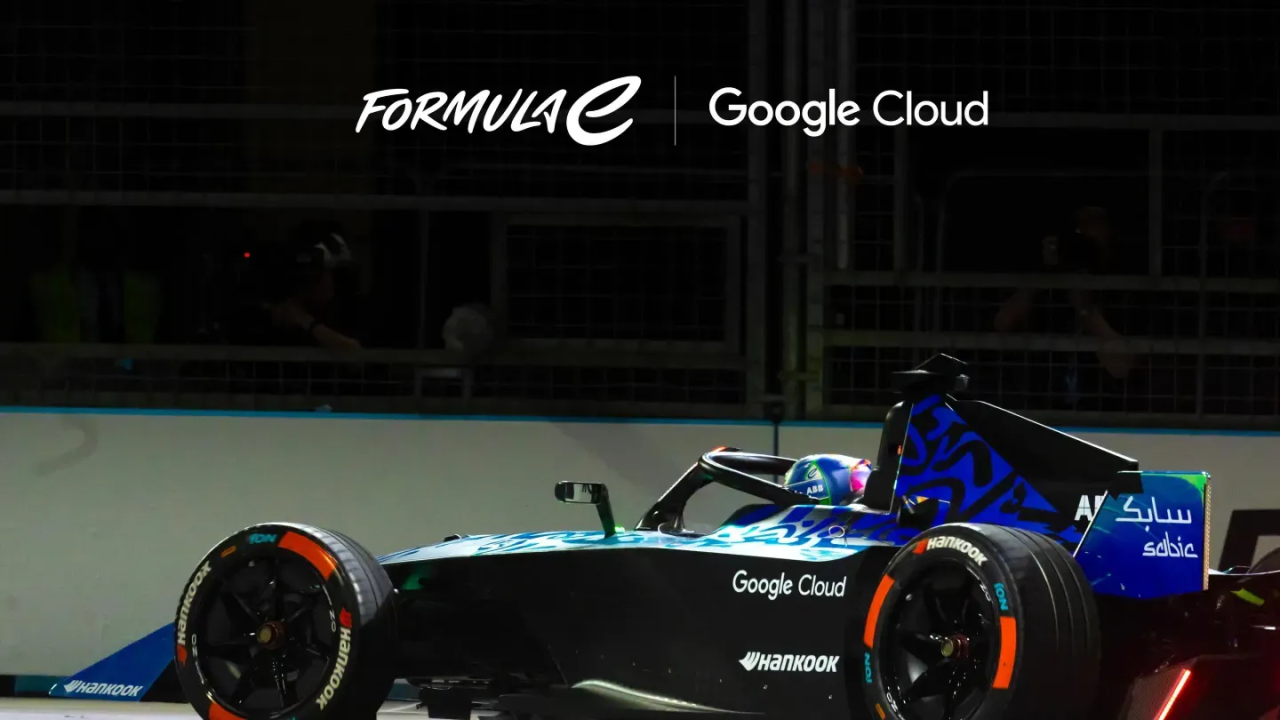
How Google Cloud Put An AI Agent Inside Formula E’s GEN4 Car
At 150 miles per hour, there is very little time to ask an AI assistant where you are losing speed. Yet[...]

Why The AI Race Is Really An Infrastructure Race
The most dangerous mistake in the AI race is assuming that the smartest model will win it. For the past few[...]

The 5 AI Scaling Mistakes That Could Derail Your Business
AI pilots can make AI look deceptively manageable. Scale is where reality arrives. A system that works brilliantly for 50 people[...]

Tesco’s AI Agents Could Soon Do Your Shopping For You
Tesco, the UK’s largest supermarket chain, has spent 30 years learning what millions of people buy. Now it wants AI agents[...]

8 Companies Proving AI Can Deliver Real ROI
Most businesses are investing in AI. Far fewer can prove that it is actually paying off. An MIT study found that[...]

How Insilico Medicine Is Using AI To Reinvent Drug Discovery
Drug discovery has always been one of the slowest and most expensive games in business, often taking around a decade and[...]

Sign up to Stay in Touch!
Bernard Marr is a world-renowned futurist, influencer and thought leader in the fields of business and technology, with a passion for using technology for the good of humanity.
He is a best-selling author of over 20 books, writes a regular column for Forbes and advises and coaches many of the world’s best-known organisations.
He has a combined following of 4 million people across his social media channels and newsletters and was ranked by LinkedIn as one of the top 5 business influencers in the world.
Bernard’s latest book is ‘Generative AI in Practice’.
Social Media