
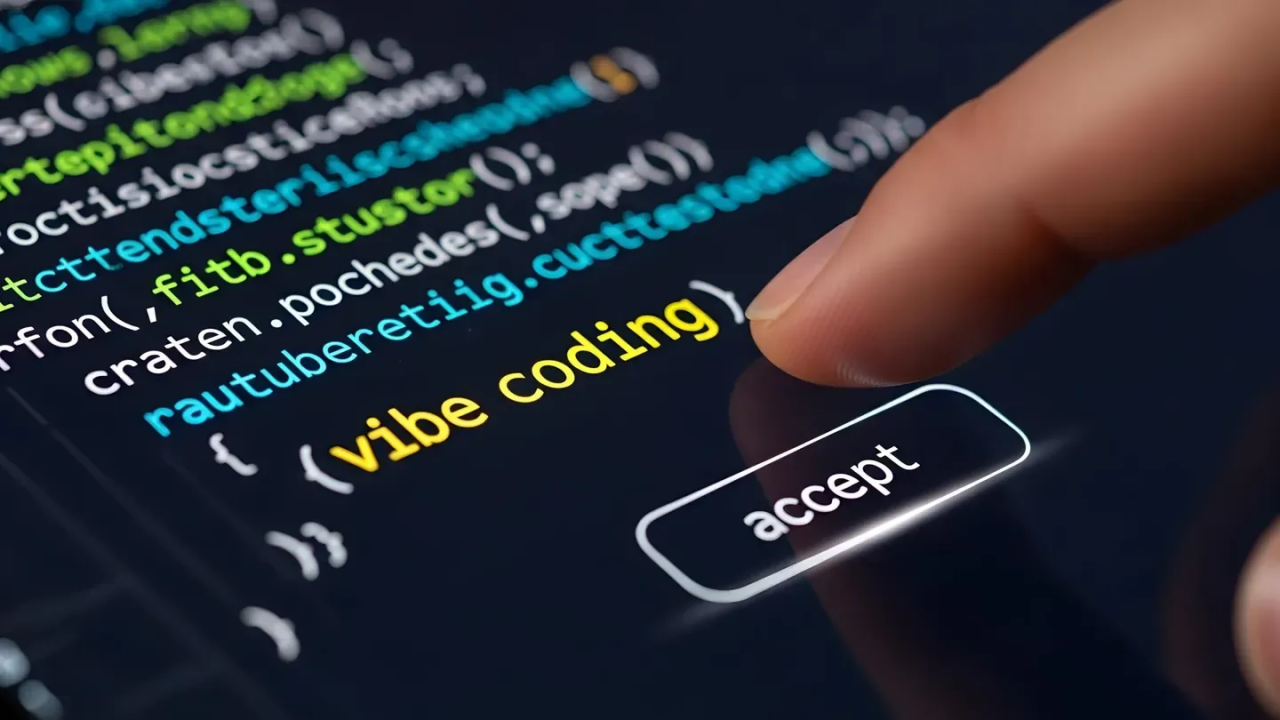
5 Real-World Vibe Coding Success Stories That Show What AI Can Really Do
22 September 2026
Not too long ago, building software meant either spending years learning to code or paying someone a hefty fee to do it for you.
Thanks to the emergence of vibe coding, that’s no longer the case. Simply describe what you want in plain English and sit back as AI codes, tests and deploys it for you.
But how does it work in reality? After all, there’s a world of difference between being able to “build anything” and building something genuinely useful.
Luckily, in the short time since the term was coined in early 2025, plenty of examples have emerged to demonstrate what’s possible.
So let’s take a look at some of the businesses that have successfully leveraged this powerful new ability, using it to develop new products, internal processes or customer experiences.
Booking.com
Online travel agent Booking.com deployed AI coding assistants across its 3,500-strong engineering team in early 2025. According to Bruno Passos, group product manager for gen AI, uptake was initially slow. However, this quickly picked up after developers were given training on how to get the most out of the powerful new tool. Job satisfaction increased, and the productivity of developers, measured by their output of finished, reviewed work, increased by 30 percent. The lesson here is clear: Businesses must invest in training and developing a culture that rewards experimentation, as well as putting tools into the hands of their workforce.
Zapier
When Zapier growth marketing manager Matt Brown realized he needed to track data relating to influencer partnerships, he turned to vibe coding for a solution. Using Claude and Zapier’s own systems, he was able to quickly create a custom internal dashboard giving him instant access to all the information he needed. This involved generating the data architecture, JavaScript and HTML on the fly, and automatically spotting and fixing bugs. His tool was able to quickly surface stories and insights that weren’t apparent from looking at the data alone, and is now routinely used during Zapier’s weekly team briefings.
Adidas
The legendary sportswear manufacturer also reported that it was able to increase developer productivity by giving them the power to vibe code. As with Booking.com, developers were initially hesitant, with 90 percent of those involved “hating” the tools and describing them as “a complete waste of time”. However, a second pilot achieved far more promising results. This time, developers reported feeling 20 to 25 percent more effective when using the tools. More importantly, they said that vibe coding increased the amount of “happy time”, meaning time spent actually coding rather than on administrative tasks, by 50 percent.
Northern Health
UK GP Dr Fahim Hussaun was quoted £75,000 to £100,000 to build a remote healthcare platform he had envisaged for patients at his Northern Health practice. This was a huge financial risk for a small company to take on, and the long development timeline of 12 to 18 months meant it would be a long time before he would see any revenue from it. However, using the vibe coding platform Replit, he was able to put together 16 of the features of the My Doctor platform, including appointment booking, prescription requests, a subscription-based payment system, and integration with Fitbit tracking devices, in just four days, at a reported development cost of just £165.
Leatherman
Leatherman is far better known for building physical tools than software ones, but all that might be about to change. The company has firmly embraced the vibe coding ethos by encouraging staff across manufacturing, marketing, finance, HR and operations to vibe code solutions to the specific problems they tackle every day. This has resulted in over 250 projects going into production across the company, including apps, dashboards and automations.
Final Thoughts
These are five businesses that each approached vibe coding in a different way, but all learned the same lesson. Thanks to the opportunities it creates, even those without technical skills can build tools that will save time and drive growth. The secret is giving workers the freedom to experiment and developing business cultures that reward innovation and problem-solving.
Frequently Asked Questions
Related Articles

AI Tokenomics Explained: What Every Business Leader Needs To Know
Every time someone asks an AI model a question, summarizes a document or generates a piece of code, tokens are being[...]

5 Ways To Measure The True ROI Of AI Agents
AI agents are moving rapidly from experimental pilots into the heart of everyday business operations. But as investment accelerates, one critical[...]
How To Get Your Business Data Ready For AI Agents
Give an AI agent bad data, and it can make bad decisions at machine speed. AI agents are ushering in a[...]
The Amazing Robot Innovations At The Goodwood Future Lab
A humanoid, a wheeled rover and a dog-like robot are trying to push a giant inflatable ball up a ramp. It[...]

How Klarna’s AI Agent Strategy Backfired But Became A Useful Lesson
Klarna’s AI customer service rollout looked like a textbook success. Its autonomous agent handled 2.3 million conversations in its first month,[...]

Revolut Is Building An AI Brain For Banking, And It Could Change Finance Forever
Revolut is taking a very different approach to AI in banking. While many financial services companies are using off-the-shelf AI tools[...]

Sign up to Stay in Touch!
Bernard Marr is a world-renowned futurist, influencer and thought leader in the fields of business and technology, with a passion for using technology for the good of humanity.
He is a best-selling author of over 20 books, writes a regular column for Forbes and advises and coaches many of the world’s best-known organisations.
He has a combined following of 4 million people across his social media channels and newsletters and was ranked by LinkedIn as one of the top 5 business influencers in the world.
Bernard’s latest book is ‘Generative AI in Practice’.
Social Media