

7 Media Trends That Will Redefine Entertainment In 2026
6 January 2026
The future of technology is rarely hidden in research labs; it usually appears first on our screens. Entertainment has always acted as a preview of what is coming next in business and society, from the first experiments with film and sound to the rise of AI-generated video. Today, the industry is once again revealing the next wave of change as studios, creators, and platforms explore powerful new tools that reshape how stories are made and how audiences engage with them. The opportunities are huge, and the questions around ownership, creativity, and the role of humans are growing just as quickly.
So here are the trends that I believe will define the future of the media and entertainment industry in 2026 and beyond.
1. Generative Video Hits Prime Time
In 2026, we will see generative video move from supporting act to leading role. Experiments using it to create filler scenes and environmental effects are breaking into primetime, as seen in Netflix’s El Eternauta. Executives believe it will enable shows to become “better, not just cheaper”, but the technology remains controversial. Audiences, creators, and actors have all raised concerns over its impact on human jobs, creativity, IP and authorship rights. Regardless, the implications of tools like Sora and Runway, which let anyone create scenes with a few key presses that once required large budgets and teams, are huge. Over the next year, we’ll start to get a better picture of what this means for the future of film, TV and every visual entertainment medium.
2. Synthetic Celebrities
Virtual actors, AI idols and synthetic celebrities are set to light up the big and small screens in the coming year. Today, computer-generated pop stars and influencers like Lil Miquela and Noonoouri are already a regular fixture of social media feeds. Next year and beyond, they will become infused with AI personalities, taking on lives of their own and carving out careers in acting and modelling. Tilly Norwood, created by talent studio Xicoia, has already prompted protests by actors, concerned that AI could be coming for their jobs. For studios, however, they offer access to a new pool of affordable, flexible talent. The real litmus test will take place in 2026, when we start to find out what audiences and fans think.
3. Immersive Sports Broadcasting
Watching sports has never been an entirely passive activity, but in 2026, technology and media will come together to create experiences that are more immersive, interactive and participatory than ever before. Virtual reality (VR), as seen in partnerships like those between the NBA and Meta, lets audiences feel like they're sitting court-side with fellow fans, and Apple offers “spatial computing” to enhance the experience of soccer audiences. Thanks to camera arrays, lidar and edge computing, the full 3D environmentcan be captured and manipulated, allowing audiences to watch, replay and review from any angle, including first-person views from the eyes of players themselves. This will unlock new monetization models for broadcasters and richer, more engaging experiences for fans.
4. Rich, Immersive Virtual Game Worlds
We’ve already seen AI creating images, audio, video and text. Next up, anyone will have the power to literally create worlds, thanks to the world models being developed by companies including Google and X-AI. These digital environments will become the building blocks of the next generation of video games, where landscapes, environments, ecosystems and even the laws of physics will be defined by simple prompts. Generative AI will also allow these worlds to be populated by highly realistic NPCs with real personalities and lifelike interactions, generated through tools like Nvidia’s Avatar Cloud Engine.
5. Content Editing For The Attention Economy
In 2026, the entertainment industry knows that audience attention span is a currency they have to compete for. This will include dynamically altering episode lengths to fit individuals’ time constraints, generating recaps and catch-up edits intelligently to counter attention fatigue, and developing modular storytelling methods. Amazon offers X-Ray Recaps, while Disney+ and Netflix are exploring AI-generated highlight and summary versions of episodes. Reimagining strategies around the attention economy, to combat content fatigue and audience drop-off, will be a hot trend.
6. IPTech For The Synthetic Age
The emergence of AI trained on human creative works raises huge question marks around ownership and IP rights, but could technology also offer solutions? 2026 will see the rise in prominence of IPtech — tools and methods that help artists protect their work, assert ownership and ensure they receive fair payment. The Coalition For Content Providence, backed by Adobe, Microsoft and the BBC, is developing tools for embedding invisible digital watermarking into content that can be used to prove who created it. Other technologies based on tamper-proof blockchain technology are also being developed by media owners like Fox and startups like Numbers Protocol. The importance of solving this thorny issue means IPTech is a field where we can expect an explosion of activity in 2026.
7. Small-Screen Storytelling
Video content consumption is now predominantly mobile, with research finding that 60 percent of stream viewing happens on phones and tablets. Content providers are increasingly optimizing for this format, reshaping storytelling to fit audience habits. Netflix’s Fast Laughs takes cues from the short format video found on YouTube and TikTok, redefining how shows are cut, paced and consumed. At the same time, platforms are offering micro-dramas designed to be watched in one-minute to 90-second bursts, in a vertical format, mixing the snackable content of TikTok with professional production values.
From AI-generated video and movie stars to immersive sports and mobile-first storytelling, the entertainment industry continues to act as a showcase for technological innovation. Will AI lead to a new wave of creativity and artistry as the technical and financial barriers to creativity crumble? Or will real, human-centric content become rare as media companies increasingly lean on machines to do creative work? Time will tell, but 2026 marks the moment the industry steps into an entirely new world.

Related Articles
Why Prompt Engineering Isn’t The Most Valuable AI Skill In 2026
By now, “smart” versions exist of just about every home appliance, gadget and gizmos we can think of. However, manufacturers continue[...]
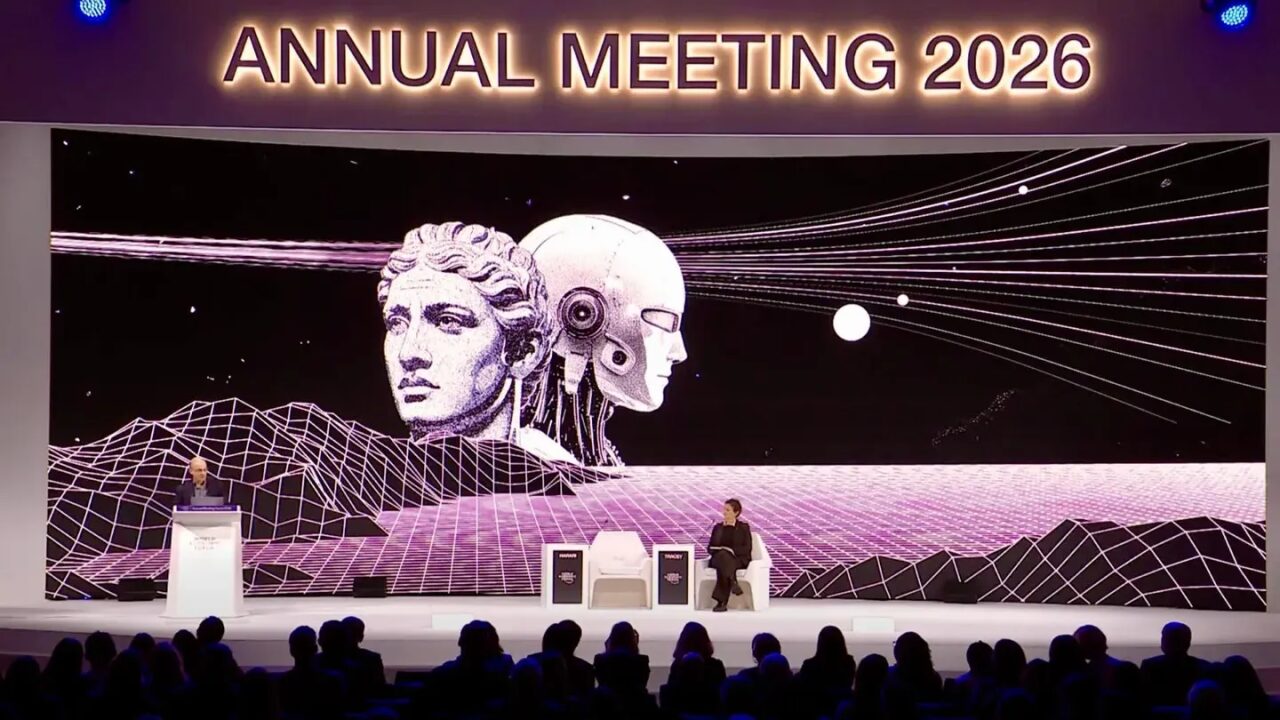
When AI Becomes The New Immigrant: Yuval Noah Harari’s Wake Up Call At Davos 2026
By now, “smart” versions exist of just about every home appliance, gadget and gizmos we can think of. However, manufacturers continue[...]
MWC 2026: The IQ Era Is Here, And These Are The Trends Every Business Leader Needs To Watch
By now, “smart” versions exist of just about every home appliance, gadget and gizmos we can think of. However, manufacturers continue[...]

AI Will Change The Internet Forever: Why Networks Must Evolve For The AI Supercycle
By now, “smart” versions exist of just about every home appliance, gadget and gizmos we can think of. However, manufacturers continue[...]
What We Didn’t See At CES 2026, And Why That Matters
By now, “smart” versions exist of just about every home appliance, gadget and gizmos we can think of. However, manufacturers continue[...]
How Do You Manage AI Agents Before Your Tech Stack Spins Out of Control
By now, “smart” versions exist of just about every home appliance, gadget and gizmos we can think of. However, manufacturers continue[...]

Sign up to Stay in Touch!
Bernard Marr is a world-renowned futurist, influencer and thought leader in the fields of business and technology, with a passion for using technology for the good of humanity.
He is a best-selling author of over 20 books, writes a regular column for Forbes and advises and coaches many of the world’s best-known organisations.
He has a combined following of 4 million people across his social media channels and newsletters and was ranked by LinkedIn as one of the top 5 business influencers in the world.
Bernard’s latest book is ‘Generative AI in Practice’.
Social Media