
8 Skills You Need To Manage The New AI Agent Workforce
6 January 2026
The workforce of the future is already arriving. AI agents — autonomous co-workers capable of executing complex business tasks without human intervention — are moving from concept to reality across enterprises worldwide.
These digital workers are handling everything from marketing campaign execution to HR automation, financial processing, supply chain logistics, and manufacturing oversight. Agents have become the defining technology shift of 2025.
Their purpose is augmentation, not replacement. Agents excel at repetitive, data-intensive work, freeing humans to focus on what machines cannot do: creative problem-solving, strategic thinking, high-stakes decision-making, and relationship building.
This shift creates a new imperative for human workers: learning to manage AI colleagues. Managing algorithms demands fundamentally different skills from managing people.
The eight capabilities outlined below represent what professionals and leaders at every level must master to succeed in this emerging landscape. Most are uniquely human skills that machines cannot replicate and may never fully possess.

1. Strategic Thinking
The point of any new technology is to help a business achieve its strategic goals. In this regard, AI agents are no different than previous waves of disruptive innovation like mechanization or the internet. The point isn’t to implement them just because everyone else is, or to tick boxes. Because agents autonomously implement plans towards defined objectives, they’re powerful tools for executing strategy, but they don’t think strategically. That’s still up to you.
2. AI Literacy
While humans don’t need to be AI specialists or computer scientists to manage agents, they still need a thorough grounding in how AI works and what agents can and can’t do. This includes understanding the basics of prompt engineering — designing the natural-language commands we use to tell them what we need them to do. We need an overview of the tools and technologies available, the jobs they’re suitable for, and the ability to weigh up the pros and cons of automating a task versus leaving it to humans.
3. Implementing Responsible AI
AI agents are immensely powerful, capable of carrying out many repetitive, data-oriented tasks far more efficiently than humans. But with this comes the obligation to ensure they’re being used responsibly. This means we have to be sure we can trust them to get things right, and that they work transparently and accountably, so we don’t just understand what they’re doing, but how they’re doing it, and the risks they could be exposing us to.
4. Agentic Workflow Design
This is the ability to define the workflow that agents will follow to automate processes and hit strategic business goals. It involves defining triggers, actions and outputs to make sure your agentic workforce is augmenting the work of your human workforce rather than causing more headaches because it isn’t doing what you need. Clear, structured and transparent workflows that deliver consistent results will create the scalable benefits that justify the investment in agentic infrastructure.
5. Human Interpersonal Communication Skills
While robots will carry out a growing number of tasks, humans will always be the essential backbone of the workforce. And in an age where machines work tirelessly 24/7 with no real concerns for work/life balance, understanding the essential needs of humans becomes exponentially more important. This also includes empathy and emotional intelligence, fostering the ability to make sure human workers still feel valued and understand their significance to the success of the business.
6. Change Management
Implementing an agentic workforce can bring huge organizational and cultural shifts, and understanding the impact this will have on the business and its people is critical. Humans may be worried or even scared by the prospect of handing tasks they’ve carried out for years to machines, and managers capable of dealing with this in a sensitive way will be needed in every business. From a process point of view, it means restructuring workflows, redefining roles and aligning operations to ensure we make the most of every opportunity afforded by automation.
7. Data Governance
All AI is only as reliable as the data it's given, and strong data governance skills help to make sure the information flowing into your agentic systems is accurate, secure and compliant. Clear policies around data ownership, access and quality mean agents won’t amplify errors and bias, or put your organization’s or customers’ data at risk. Getting this wrong can lead to prosecution and hefty fines, or loss of trust in your business—an existential risk that no organization can afford to make.
8. Continuous Learning
Learning is a skill in itself, and developing the ability to quickly identify gaps in your ability and predict what you’ll need to know in the future is critical in the age of agentic AI. The shelf-life of skills is decreasing, as new technologies make older ones redundant at an increasing rate. Luckily, opportunities for learning and upskilling are increasing too, thanks to online courses, distance learning and the growing awareness among employers that keeping workforce skills up-to-date is essential. Understanding how to leverage these opportunities as well as fit learning around day-to-day responsibilities is now more critical than ever before.
The Workforce Of The Future
Businesses that learn to leverage the opportunities agents offer today can create a considerable competitive advantage. But this will only happen if they can get to grips with the new challenges around overseeing and managing AI workers.
A critical element of this is remembering that, powerful as they are, there are still many things they can’t do, and human workers will remain a business’s most valuable asset for a long time yet.
To a large extent, managing AI workforces is about managing the coming together of human and machine workers. Agents must be deployed in ways that empower people to work more effectively and innovatively, focusing their time on creative and strategic possibilities.
Get this right, and organizations can not only change the way they work but also unlock doors to entirely new business models and opportunities.
Related Articles

Why Prompt Engineering Isn’t The Most Valuable AI Skill In 2026
By now, “smart” versions exist of just about every home appliance, gadget and gizmos we can think of. However, manufacturers continue[...]
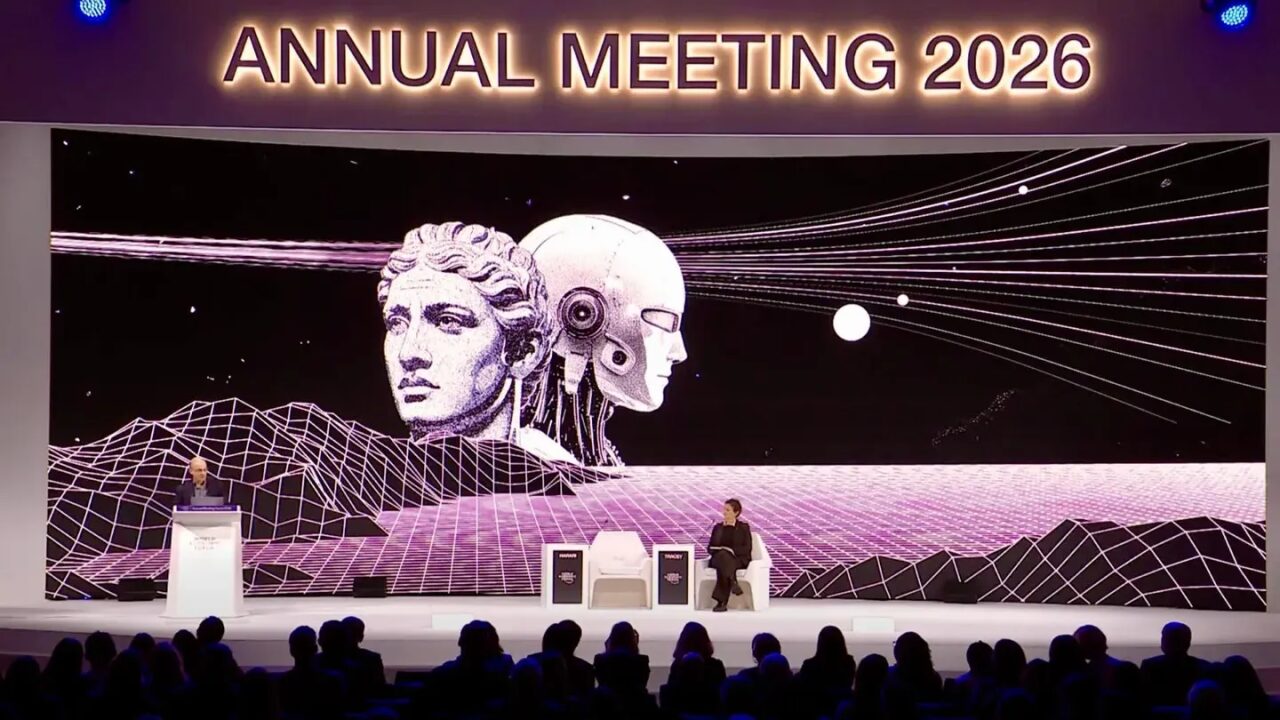
When AI Becomes The New Immigrant: Yuval Noah Harari’s Wake Up Call At Davos 2026
By now, “smart” versions exist of just about every home appliance, gadget and gizmos we can think of. However, manufacturers continue[...]

MWC 2026: The IQ Era Is Here, And These Are The Trends Every Business Leader Needs To Watch
By now, “smart” versions exist of just about every home appliance, gadget and gizmos we can think of. However, manufacturers continue[...]

AI Will Change The Internet Forever: Why Networks Must Evolve For The AI Supercycle
By now, “smart” versions exist of just about every home appliance, gadget and gizmos we can think of. However, manufacturers continue[...]
What We Didn’t See At CES 2026, And Why That Matters
By now, “smart” versions exist of just about every home appliance, gadget and gizmos we can think of. However, manufacturers continue[...]

How Do You Manage AI Agents Before Your Tech Stack Spins Out of Control
By now, “smart” versions exist of just about every home appliance, gadget and gizmos we can think of. However, manufacturers continue[...]

Sign up to Stay in Touch!
Bernard Marr is a world-renowned futurist, influencer and thought leader in the fields of business and technology, with a passion for using technology for the good of humanity.
He is a best-selling author of over 20 books, writes a regular column for Forbes and advises and coaches many of the world’s best-known organisations.
He has a combined following of 4 million people across his social media channels and newsletters and was ranked by LinkedIn as one of the top 5 business influencers in the world.
Bernard’s latest book is ‘Generative AI in Practice’.
Social Media