
Toyota’s City Of The Future
2 August 2021
Toyota, the world’s largest automaker, is building the world’s first “smart city” in Japan.
Woven City, located near the base of Mt. Fuji, will be a 175-acre, fully autonomous community designed to test new technologies like automated driving, robotics, and artificial intelligence (AI) in a real-world environment.
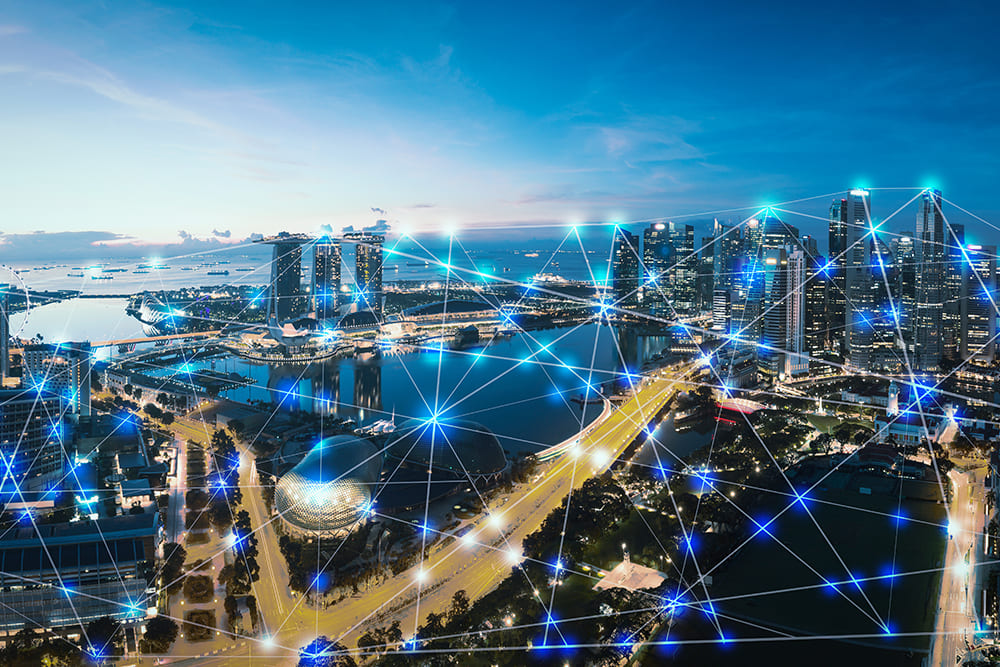
The prototype "city of the future" will be built from the ground up on the site of the former Higashi-Fuji Plant, which drew its decades-long car-making history to a close in December 2020.
Woven City as a Living Laboratory
The idea of Woven City is that all the people, buildings, and vehicles can communicate with each other via real-time data and embedded sensors. This connectivity will allow Toyota to test out how advanced AI technology works in the real world, with minimal risk.
The city's fully connected ecosystem is powered by clean energy sources like solar energy, hydrogen fuel cells, and geothermal energy.
Woven City will have three types of streets interwoven with one other on the ground level: one dedicated to pedestrians, one for people with personal mobility vehicles, and one for automated driving.
Residents of this city of the future will be transported by zero-emissions, autonomous cars, and Toyota will likely use the e-pallet autonomous delivery vehicles the company designed for the Tokyo Olympics to transport goods throughout the city.
Cities Custom-Built for Autonomous Cars
Experts predict that more than 33 million autonomous vehicles will be sold globally in 2040 – but today, even the most advanced self-driving cars still require some degree of human supervision.
For the full adoption of autonomous cars, cities need to be fully wired to funnel massive amounts of data to the vehicles. Sensors and cameras scattered throughout roads, traffic lights, and buildings can supply that data to cars, including everything from weather patterns to cyclist behaviors. Once autonomous cars have that data, they can process it and use it to safely navigate the city.
Right now, modern-day cities aren't set up this way – and that's why Toyota is building its sensor-laden Woven City from the ground up. The new community will allow the car company to try out a completely new city infrastructure so they can create safer systems.
Toyota broke ground on Woven City in February 2021. The city will eventually have a population of over 2,000 researchers and residents who will test and develop a range of technologies.
You can learn more about how companies like Toyota are using artificial intelligence and big data to create a smarter future on my website and in my book, The Intelligence Revolution.
Related Articles
Why The AI Race Is Really An Infrastructure Race
The most dangerous mistake in the AI race is assuming that the smartest model will win it. For the past few[...]
The 5 AI Scaling Mistakes That Could Derail Your Business
AI pilots can make AI look deceptively manageable. Scale is where reality arrives. A system that works brilliantly for 50 people[...]
Tesco’s AI Agents Could Soon Do Your Shopping For You
Tesco, the UK’s largest supermarket chain, has spent 30 years learning what millions of people buy. Now it wants AI agents[...]
8 Companies Proving AI Can Deliver Real ROI
Most businesses are investing in AI. Far fewer can prove that it is actually paying off. An MIT study found that[...]
How Insilico Medicine Is Using AI To Reinvent Drug Discovery
Drug discovery has always been one of the slowest and most expensive games in business, often taking around a decade and[...]

Sign up to Stay in Touch!
Bernard Marr is a world-renowned futurist, influencer and thought leader in the fields of business and technology, with a passion for using technology for the good of humanity.
He is a best-selling author of over 20 books, writes a regular column for Forbes and advises and coaches many of the world’s best-known organisations.
He has a combined following of 4 million people across his social media channels and newsletters and was ranked by LinkedIn as one of the top 5 business influencers in the world.
Bernard’s latest book is ‘Generative AI in Practice’.
Social Media