
AI Is Breaking Jobs Into Tasks, And That Changes Everything
24 March 2026
We frequently hear that AI won’t make jobs disappear, but it will change them. To me, one sign that this is already happening is that many job descriptions already feel strangely out of date.
For example, if LinkedIn job posts are to be believed, prospective marketing managers are still being asked to write email copy and prepare reports on campaign performance. Applicants for financial analyst roles are still expected to build and manage dashboards. And customer support agents are still filtered during selection based on their ability to triage and escalate tickets.
This is despite the fact that all of these tasks can easily be automated and that this has, in fact, led to hiring cuts and layoffs in roles focused on those skills.
So, what’s really happening? Well, to understand it, I think we need to stop looking at automation in terms of job titles becoming redundant wholesale. Instead, we should focus on how AI breaks work down into tasks and reshapes roles from the inside out.

What Is Actually Being Automated?
What has become apparent is that AI doesn’t actually automate jobs. Instead, it automates the individual tasks that make up jobs.
This is how it works: On an operational (rather than strategic) level, businesses need employees to complete tasks. These tasks are bundled into “roles”, groups of tasks that go well together. However, we are increasingly finding out that AI is pulling those roles apart, hence my use of the word ‘disassembled’.
Here’s another example: recruitment. HR professionals and hiring managers write job descriptions, screen CVs, shortlist candidates and schedule interviews. These are all tasks that can easily be (and often are) automated.
Meanwhile, in software engineering, a tester’s job comprises tasks such as writing test scripts, logging bugs and maintaining documentation. Again, these are increasingly being handled by machines.
Much of this work is quietly being “deleted”; moved out of the domain of humans and passed to machines. This is what creates the current mismatch between job descriptions and the realities of today's jobs.
So, what isn’t being automated?
Well, strip out these repetitive, data-driven tasks and decision-making processes, and what we’re really left with is the ‘internal logic’ of the task.
This is the strategic thinking that pulls everything together, work that even the best AIs are still some way from carrying out.
Why Organizations Are Struggling To Respond
Failing to differentiate between jobs disappearing and being “disassembled” is the reason many businesses are coming unstuck in their preparations for the future of work.
Corporate cultures are still built around clear job titles with neatly defined responsibilities and related skillsets. Workforce planning, performance management and career development are all built around the assumption that a job involves a fixed set of tasks.
AI changes this paradigm. Tasks are disappearing or becoming automated more quickly than roles can be redesigned.
And new responsibilities are quickly emerging, many focused around using AI, or using human skills like creativity, communication or leadership, in ways that complement the work carried out by AI.
Often, this is happening so quickly that there’s no opportunity to put training and management frameworks in place to accommodate these changes.
This can leave employees doing work that no longer aligns with their job descriptions or with the expectations they had when taking on roles. At the same time, managers become unsure how to evaluate contributions or to assign human resources efficiently.
Because headcount and job titles don’t change, this often goes unnoticed at the leadership level; there’s no clear cut-off where automation has come in and taken over human tasks.
All of these risks create a gap between how organizations think work is being done, and how it’s really being done on the ground in the AI age.
So What’s The Solution?
The challenge businesses are facing today isn’t mass human redundancy, but mass, unmanaged fragmentation of roles and tasks.
Often this is happening without thought going into what changes need to be made to the ‘internal logic’, the strategic thought, that underpins the job.
To overcome this, I think leaders should think beyond job titles and focus on the tasks themselves to understand where value is really created and where strategy will always be needed.
A starting point is making strategy-driven decisions around which tasks should be automated, which should be augmented and which should remain exclusively human. Rather than making these decisions on the basis of what automation is possible.
Just as critically, it means updating training programs, workforce planning frameworks, and HR procedures to reflect how roles are evolving today.
And it means thinking hard about what goes into job descriptions to ensure we’re communicating the responsibilities of roles today, not ten years ago.
Related Articles
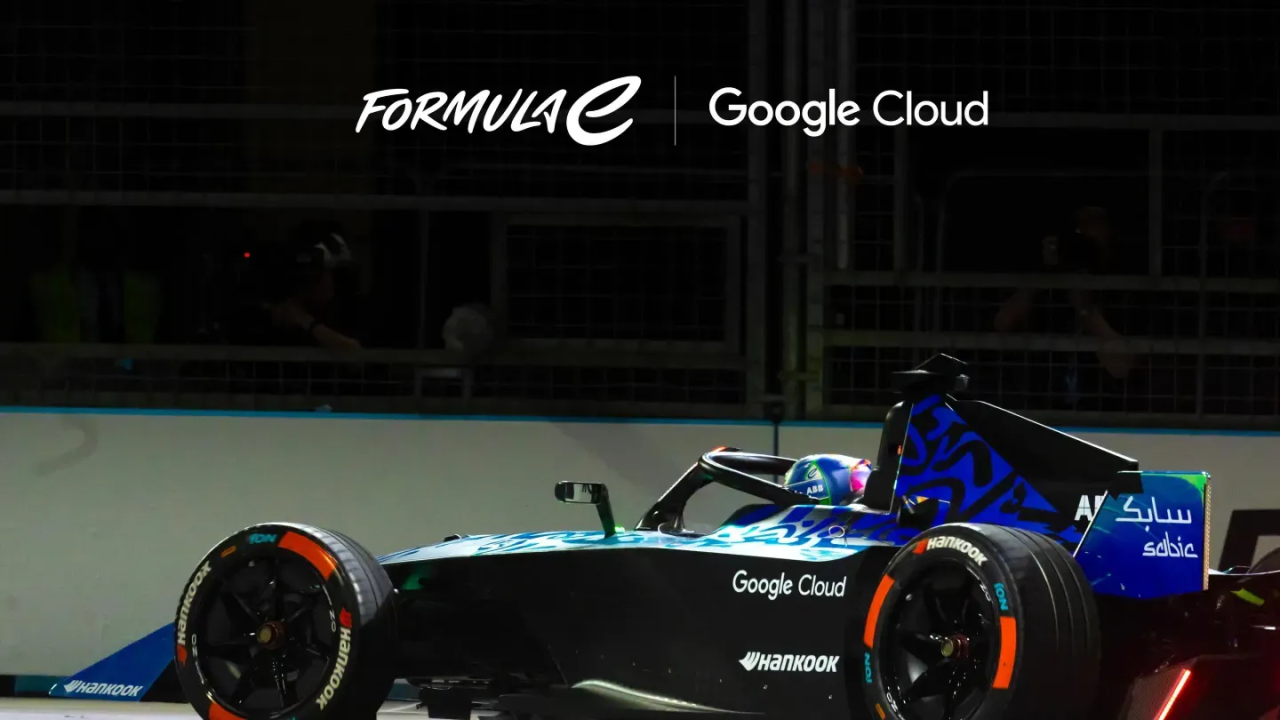
How Google Cloud Put An AI Agent Inside Formula E’s GEN4 Car
At 150 miles per hour, there is very little time to ask an AI assistant where you are losing speed. Yet[...]
Why The AI Race Is Really An Infrastructure Race
The most dangerous mistake in the AI race is assuming that the smartest model will win it. For the past few[...]
The 5 AI Scaling Mistakes That Could Derail Your Business
AI pilots can make AI look deceptively manageable. Scale is where reality arrives. A system that works brilliantly for 50 people[...]

Tesco’s AI Agents Could Soon Do Your Shopping For You
Tesco, the UK’s largest supermarket chain, has spent 30 years learning what millions of people buy. Now it wants AI agents[...]

8 Companies Proving AI Can Deliver Real ROI
Most businesses are investing in AI. Far fewer can prove that it is actually paying off. An MIT study found that[...]

How Insilico Medicine Is Using AI To Reinvent Drug Discovery
Drug discovery has always been one of the slowest and most expensive games in business, often taking around a decade and[...]

Sign up to Stay in Touch!
Bernard Marr is a world-renowned futurist, influencer and thought leader in the fields of business and technology, with a passion for using technology for the good of humanity.
He is a best-selling author of over 20 books, writes a regular column for Forbes and advises and coaches many of the world’s best-known organisations.
He has a combined following of 4 million people across his social media channels and newsletters and was ranked by LinkedIn as one of the top 5 business influencers in the world.
Bernard’s latest book is ‘Generative AI in Practice’.
Social Media