
AI Agents Are Coming For Your Industry: Here’s Who’s First In Line
18 March 2025
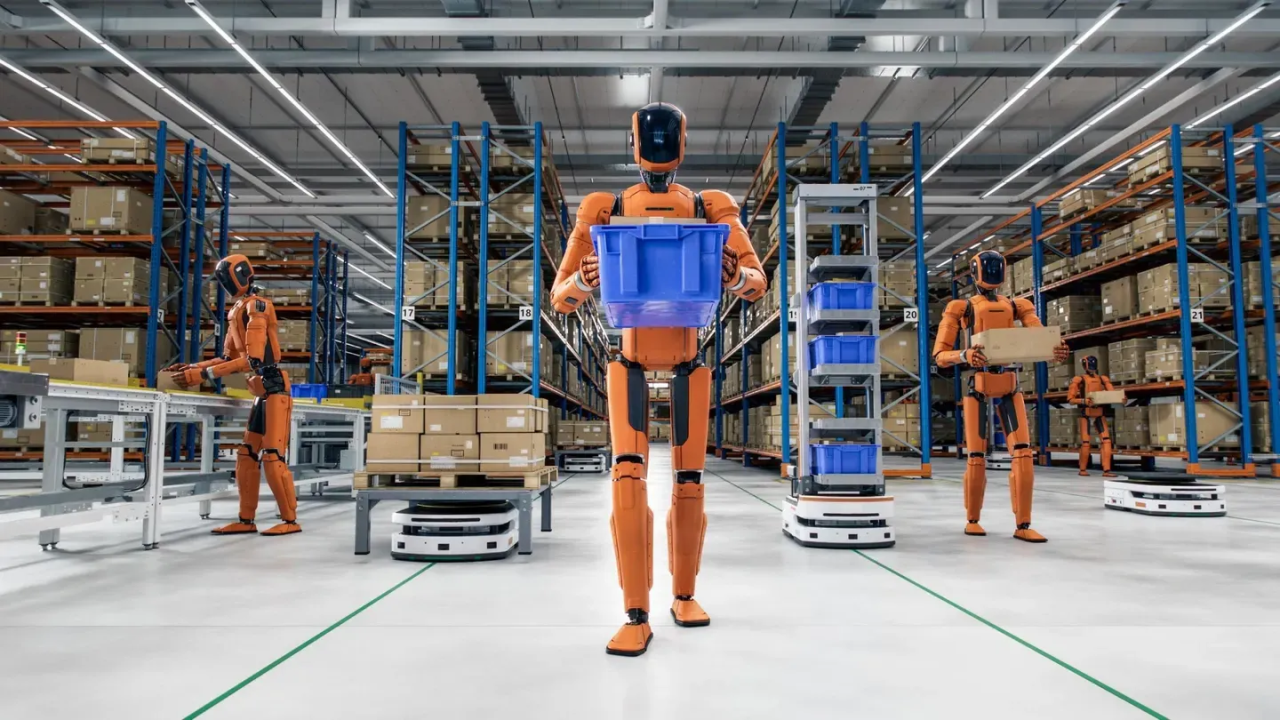
Agents – the AI buzzword of the moment – work autonomously, utilizing external tools to perform complex tasks with far less human direction needed.
They’re capable of working 24/7 without breaks, don’t get sick, and won’t down tools over pay and conditions. It’s no wonder that some big companies, like Nvidia, are already welcoming them into the workforce.
And they won’t just be doing simple, mundane tasks. The most significant opportunities lie in tapping all that planet-scale robot intelligence to create entirely new business opportunities and amazing new products and services.
Every industrial sector will be impacted by agentic AI, but some will be quicker to adopt it than others. These will be first in line for the growth and productivity benefits it will bring.
This means that understanding the specific factors that will either drive or hinder adoption in your industry is essential if you want to be able to predict its timescale and impact.
To get an idea, you can start by asking these three questions:

Is There A Secure Regulatory Environment?
If the big players in a sector, such as finance, healthcare or manufacturing, aren’t confident that they’re covered against anything going wrong, they won’t feel confident implementing agentic AI.
There are shareholder expectations to meet and audits to pass. In the field of agentic AIs and automated virtual employees, all of the questions in the air over the adoption of generative AI still apply, and then some.
There are legal grey areas, not to mention ethical quandaries, that are still muddy enough to elicit a wait-and-see approach from the cautious. No company wants to be the first to get sued because an automated agent employee caused a data breach, a copyright infringement, or broke DEI rules.
When industry leaders are sure that the framework is in place to use agents in a way that drives growth, is compliant with current regulations, and doesn’t leave them open to the risk of breaching future regulations, it will be all systems go. I see industries such as technology, telecoms, e-commerce, and logistics as being mature here.
Is There A Business Case?
There has to be a way to make money. Businesses need to see a path to demonstrable, measurable benefits, such as cost savings, efficiency gains or customer experience improvements. They will invest when they have a clear view of this. The effect of this is that businesses with less measurable key metrics – education, government, or social care, for example - may find it challenging to identify and define business cases.
These are the types of industries where its impact on other softer metrics could be substantial. For example, a reduction in hours spent on marking papers by teachers could mean more hours spent face-to-face with students. For leaders in these fields, finding the business cases is a particularly pressing challenge, if they don’t want to miss the revolution.
Are We Ready?
There are two parts to this – technological readiness and cultural readiness.
Tech readiness means having access to the infrastructure, data, platforms and tools – and many people consider that to be the easier part.
Cultural readiness covers a vast spectrum. From skillsets and the ability to build a workplace where continuous learning and training are valued to establishing trust in the way, technology will grow the business to the ability to deploy AI agents strategically in alignment with business goals.
Many companies may be technologically capable of deploying AI agents but lack the cultural framework needed to do it safely and effectively. Or vice-versa.
Industries that might face challenges integrating agentic AI for these reasons include those where there may be a fear that AI threatens human redundancy, for example, in the legal or media fields. Sectors that are encumbered with legacy systems or have traditionally found it difficult to attract tech talent, such as government, public sector and utilities.
On the other hand, industries and sectors that are well-positioned to move first include technology, finance, and retail. Here, businesses have continuously honed their technological and cultural readiness throughout many previous waves of digital transformation. By doing this, they've already laid the groundwork for digital and connected systems needed to see agentic AI really fly.
The Agentic Opportunity
Agentic AI will upend the traditional business order. Just like the internet revolution, old rulers will fall, and new champions will emerge.
The value and use cases are more evident for some sectors and industries than for others, but opportunities are there for all.
Those organizations that have spent the previous decades investing first in computers, then the internet, cloud computing and eventually AI, have a clear head start.
But that doesn’t mean anyone has to be left behind, and understanding the challenges and opportunities today should be a priority for anyone wanting to benefit from it tomorrow.
Related Articles
Workers Are Going On Strike Over Humanoid Robots, And This Is Just The Beginning
When workers go on strike because they fear robots taking their jobs, the age of humanoid automation suddenly feels very real.[...]

The AI Cold War Is Here, And Every Business Will Feel The Impact
In 2026, the decisions that will impact the future of AI and business are increasingly being taken outside of boardrooms and[...]

Humanoid Robots Are Coming, Here’s What Everyone Needs To Know
More than one billion humanoid robots could be living and working alongside us by 2050. That is Morgan Stanley's forecast, and[...]
How Maersk Is Using AI To Survive The New Era Of Tariff Chaos
In recent years, chaotic and unpredictable changes to international trade tariffs and regulations have created turbulence for companies importing and exporting[...]

AI Girlfriends Are Reaching Children, And We Need To Talk About What That Could Mean For Boys
What happens when a boy learns about intimacy from a girlfriend who is always available, endlessly customizable and incapable of saying[...]

How Siemens Is Bringing Generative AI To The Factory Floor
Generative AI is moving out of the chatbot and onto the factory floor. Siemens is putting the technology to work to[...]

Sign up to Stay in Touch!
Bernard Marr is a world-renowned futurist, influencer and thought leader in the fields of business and technology, with a passion for using technology for the good of humanity.
He is a best-selling author of over 20 books, writes a regular column for Forbes and advises and coaches many of the world’s best-known organisations.
He has a combined following of 4 million people across his social media channels and newsletters and was ranked by LinkedIn as one of the top 5 business influencers in the world.
Bernard’s latest book is ‘Generative AI in Practice’.
Social Media