
AI Agents Lead The 8 Tech Trends Transforming Enterprise In 2026
6 January 2026
Enterprise leaders enter 2026 with a new reality taking shape, one where AI agents automate entire workflows, industry cloud platforms define competitive advantage, and quantum threats move from theory to planning. These technologies are reshaping the foundations of enterprise strategy and raising the stakes for any organization that wants to stay relevant in a crowded market. The next year will reward those who shift from hype toward practical value creation.
So here are the eight technologies I believe will define 2026 — focusing on those that will cut through the hype to deliver real growth, separating the leaders from the laggards over the year ahead:
1. Agentic Platforms
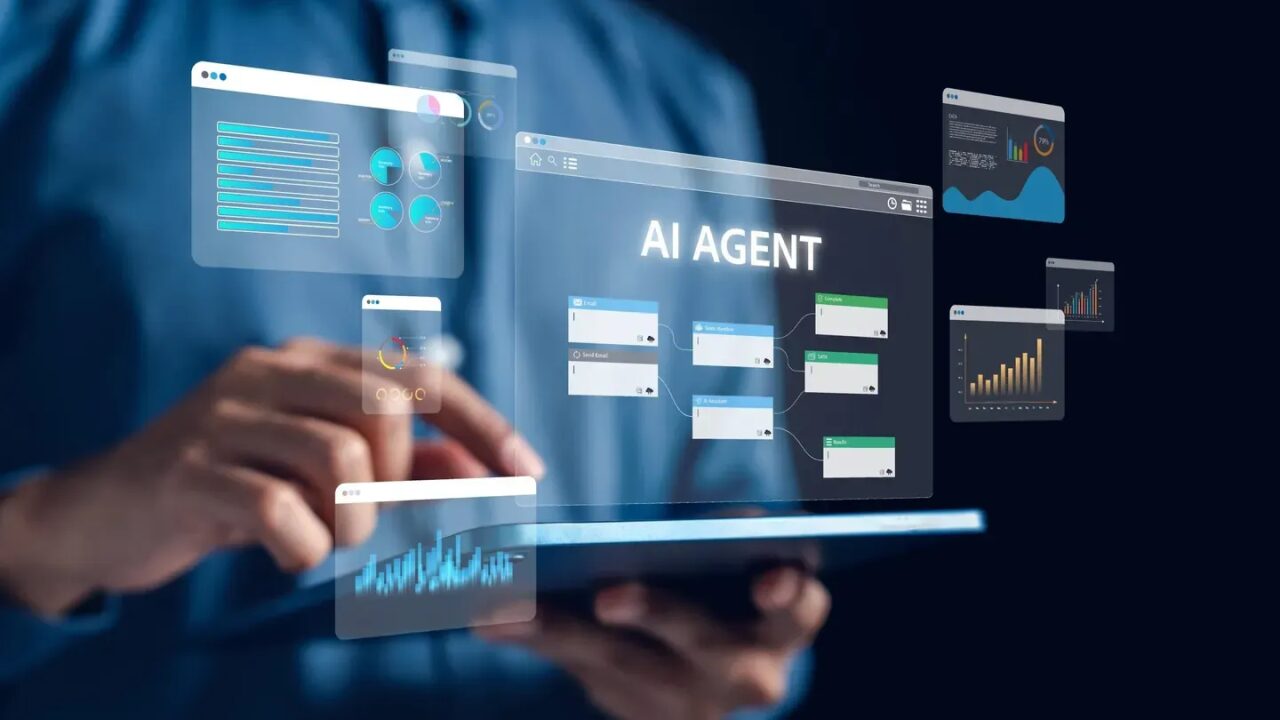
Step aside chatbots; agents are the next stage in the evolution of enterprise AI, and 2026 will be their breakout year. Rather than simply answering questions or generating content, agents can carry out complex, multi-step processes and interface with third-party services. Think of virtual co-workers, always-on assistants monitoring and adjusting processes in real-time, and end-to-end automated workflows requiring minimal human intervention. Platforms allow enterprises to deploy them at scale via low-code/no-code interfaces, while managing essential compliance, ethics and governance of their autonomous actions.
2. GenAI Copilots
GenAI is moving rapidly from enterprise pilots to operational adoption, transforming knowledge workflows; generating code for software engineers, drafting contracts for legal teams, and creating schedules and action plans for project managers. It’s not about replacing humans, it’s about augmenting their abilities — in fact, IDC predicts that in 2026, AI copilots will be embedded in 80% of enterprise workplace applications, helping us work smarter and more efficiently.
3. Industry-Specialized Cloud Platforms
Enterprise organizations are outgrowing generic cloud platforms and increasingly looking to adopt Industry Cloud Platforms (ICP), offering vertical solutions encompassing infrastructure, applications and data. Major cloud providers such as Google and Microsoft now offer platforms tailored to industries and sectors like healthcare, science or finance, featuring pre-built data models and compliance configurations. Garner predicts that by the end of 2026, 70 percent of enterprises will use ICPs, up from under 15% in 2023.
4. Quantum Computing
There are two aspects to quantum computing’s relevance to enterprise in 2026: First, there are the transformational opportunities it provides in sectors such as finance, logistics and pharmaceutical research. Here, its ability to solve complex calculations that could realistically never be solved by classical computers will lead to new efficiencies and breakthroughs. Secondly, there’s the issue of quantum readiness; with quantum posing a threat to encryption standards used to keep information and communications secure, 2026 is a deadline for enterprises to begin planning their transition to quantum-safe forms of encryption, making it a strategic priority in the coming year.
5. Zero-Trust Edge
This enterprise trend is driven by both the proliferation of smart, connected IoT devices and the behavioral shift to remote and hybrid working. The zero-trust edge (ZTE) concept refers to security functionality built into edge devices, from industrial machinery to smartphones, via cloud platforms, to ensure consistent administration of security functionality. With 72 percent of organizations adopting or planning to adopt zero-trust frameworks, the focus will be on verifying identity and access rights directly at the point where data is accessed and created. In 2026, this means delivering real-time protection while minimizing risks of man-in-the-middle attacks between endpoints.
6. Extended Reality
Extended reality (XR) refers to virtual reality and augmented reality, a technology that’s been bubbling under the surface of enterprise adoption for several years but in 2026 is predicted to break into the mainstream in a big way. With headsets becoming smaller, lighter and more powerful and the arrival of new smart glasses devices, the XR market is predicted to hit $380 billion in 2036, reflecting enterprise adoption, with use cases including immersive training, remote expert assistance, hands-free access to on-the-job information, and real-time warnings in dangerous environments.
7. Sustainable Technology
This year, building sustainability into enterprise technology strategy has become a regulatory requirement for many, due to the implementation of the EU Corporate Sustainability Reporting Directive. From January, all large companies must prepare detailed sustainability reports that address their environmental impact and the steps they are taking to improve it. Enterprises are responding by adopting green software engineering principles for carbon efficiency and adopting AI to monitor their activities. In 2026, the strategy is “green by design”, reflecting the integration of sustainability into enterprise DNA.
8. Digital Twins
This year, digital twins are evolving from simulations of isolated, discrete systems to modeling entire processes, facilities (such as factories) or even organizations. By integrating data from multiple sources, including real-time sensing and AI modeling, enterprises are shifting from reactive to predictive modelling, delivering reduced product development times, reduced downtime due to system failures, and improved workflow optimization. In 2026, Digital Twins aren’t just engineering tools; they are becoming nerve centers of enterprise operations, allowing the outcome of mission-critical decisions to be simulated with zero real-world risk or expense.
From agentic platforms to zero-trust edge, the key tech trends driving growth in 2026 are not operating in isolation, but as integrated elements of the digital enterprise fabric. While the trends here all relate to specific technologies, leaders also face human-centric challenges, including addressing the skills gap, mitigating the impact of technology on human co-working and creativity, and adopting ethical guardrails to ensure transparency and protect against AI harm.
Related Articles
MWC 2026: The IQ Era Is Here, And These Are The Trends Every Business Leader Needs To Watch
By now, “smart” versions exist of just about every home appliance, gadget and gizmos we can think of. However, manufacturers continue[...]

AI Will Change The Internet Forever: Why Networks Must Evolve For The AI Supercycle
By now, “smart” versions exist of just about every home appliance, gadget and gizmos we can think of. However, manufacturers continue[...]
How Do You Manage AI Agents Before Your Tech Stack Spins Out of Control
By now, “smart” versions exist of just about every home appliance, gadget and gizmos we can think of. However, manufacturers continue[...]

What Are The Real Questions Leaders Will Be Asking At Davos 2026?
By now, “smart” versions exist of just about every home appliance, gadget and gizmos we can think of. However, manufacturers continue[...]
5 AI Agent Mistakes That Could Cost Businesses Millions
By now, “smart” versions exist of just about every home appliance, gadget and gizmos we can think of. However, manufacturers continue[...]
Build Or Buy AI Agents: Why This Choice Matters More Than You Think
By now, “smart” versions exist of just about every home appliance, gadget and gizmos we can think of. However, manufacturers continue[...]

Sign up to Stay in Touch!
Bernard Marr is a world-renowned futurist, influencer and thought leader in the fields of business and technology, with a passion for using technology for the good of humanity.
He is a best-selling author of over 20 books, writes a regular column for Forbes and advises and coaches many of the world’s best-known organisations.
He has a combined following of 4 million people across his social media channels and newsletters and was ranked by LinkedIn as one of the top 5 business influencers in the world.
Bernard’s latest book is ‘Generative AI in Practice’.
Social Media