
AI’s Shocking Pivot: From Work Tool To Digital Therapist And Life Coach
2 June 2025
It’s been just over two years since the launch of ChatGPT kickstarted the generative AI revolution. In that short time, we’ve seen it evolve to become a powerful and truly useful business tool.
But the ways it’s being used might come as a surprise. When we first saw it, many of us probably assumed that it would mainly be used to carry out creative and technical tasks on our behalf, such as coding and writing content.
However, a recent survey reported in Harvard Business Review suggests this isn’t the case. Rather than doing our work for us, the majority of users are looking to it for support, organization, and even friendship!
Topping the list of use cases, according to the report, is therapy and companionship. This suggests that its 24/7 availability and ability to offer anonymous, honest advice and feedback is highly valued.
On the other hand, marketing tasks—such as blog writing, creating social media posts or advertising copy—appear far lower down the list of popular uses.
So why is this? Let’s take a look at what the research shows and what it could imply about the way we as humans will continue to integrate AI into our lives and work.

Insights And Implications
One thing that’s clear is that although generative AI is quite capable of doing work for us while we put our feet up and relax, many prefer to use it for generating ideas and brainstorming.
This could simply come down to the quality of AI-generated material or even inbuilt bias in humans that deter us from wanting to consume robotic content. It's often noted that generative AI writing style can come across as very bland and formulaic. When asked, most people still say they would rather read content created by humans. Even if, in practice, we can’t always tell the difference.
As the report’s author, Marc Zao-Sanders states, “the top 10 genAI use cases in 2025 indicate a shift from technical to emotional applications, and in particular, growth in areas such as therapy, personal productivity and personal development.”
After therapy and companionship, the most common uses for generative AI were "organizing my life," "finding purpose," and "enhancing learning."
The first technical use case, “creating code” ranked fifth on the list, followed by “generating ideas”.
This upends some seemingly common-sense assumptions about how society would adopt generative AI, suggesting it will be used in more reflective, introspective ways than was at first predicted.
In particular, therapeutic uses topping the list may seem surprising. But when we consider that worldwide, there is a shortage of professionals trained to talk us through mental health challenges, it makes more sense.
The survey’s findings are supported by the wide range of emerging genAI applications designed for therapeutic use, such as Wysa, Youper and Woebot.
A growing need to continuously learn and upskill in the face of technological advancement could also explain the popularity of using AI to enhance our education and professional development.
Overall, these insights indicate that generative AI is being adopted into a broader range of facets of everyday life, rather than simply doing work that we don’t want to do ourselves.
Future Thoughts
The current trajectory of AI use suggests a future where AI is seen as a collaborative and supportive assistant, rather than a replacement for human qualities and abilities.
This has important implications for the way it will be used in business. Adopting it for use cases that support human workers, rather than attempting to replace them, is likely to lead to happier, less stressed and ultimately more productive employees.
There is already growing evidence that businesses see investing in AI-based mental health companions and chatbots as a way of mitigating the loss of productivity caused by stress and anxiety.
As generative AI continues to evolve, we can expect it to become better at these types of tasks. Personalized wellness support, guided learning and education opportunities organizing workflows and brainstorming ideas are all areas where it can provide a huge amount of value to many organizations while removing anxiety that it is here to replace us or make us redundant.
Understanding how AI is being used today is essential if we want to influence how it evolves in the future. While it’s easy to imagine a world where robots take over all our tasks, the real opportunity lies in using AI to help us work more intelligently, collaborate more effectively, and support healthier, more balanced ways of working.
Related Articles
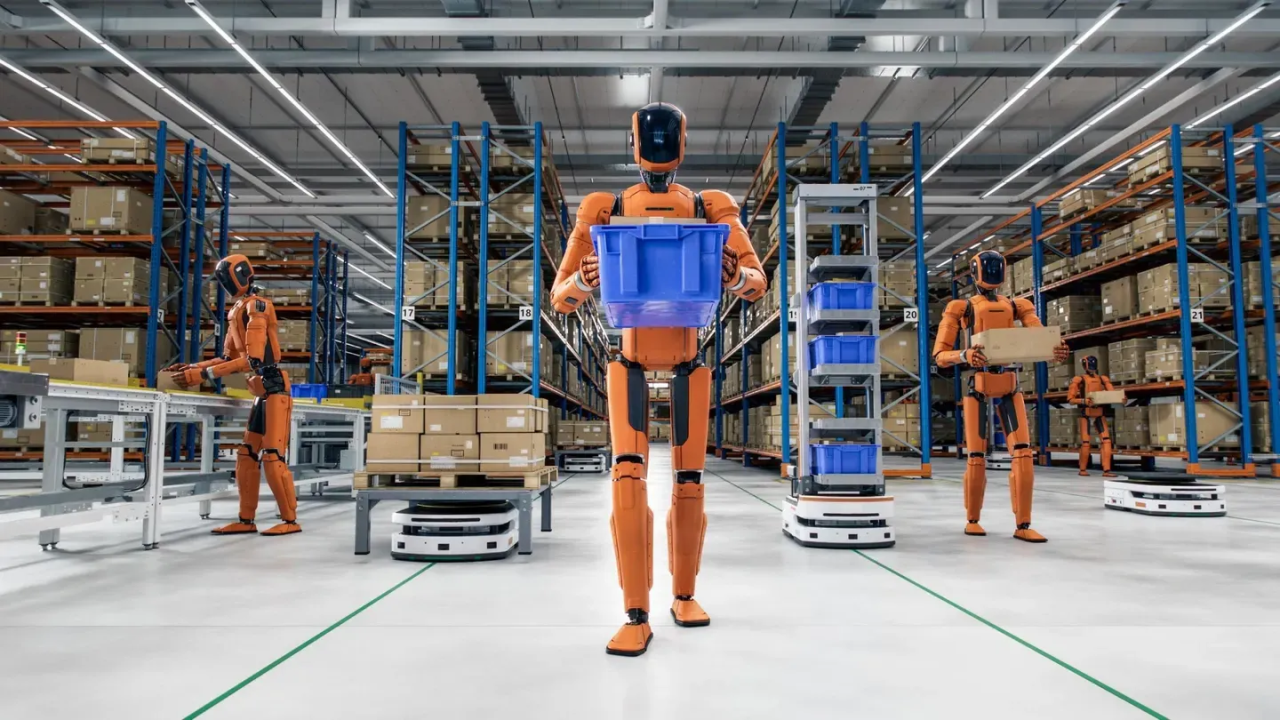
Workers Are Going On Strike Over Humanoid Robots, And This Is Just The Beginning
When workers go on strike because they fear robots taking their jobs, the age of humanoid automation suddenly feels very real.[...]

The AI Cold War Is Here, And Every Business Will Feel The Impact
In 2026, the decisions that will impact the future of AI and business are increasingly being taken outside of boardrooms and[...]
Humanoid Robots Are Coming, Here’s What Everyone Needs To Know
More than one billion humanoid robots could be living and working alongside us by 2050. That is Morgan Stanley's forecast, and[...]

How Maersk Is Using AI To Survive The New Era Of Tariff Chaos
In recent years, chaotic and unpredictable changes to international trade tariffs and regulations have created turbulence for companies importing and exporting[...]

AI Girlfriends Are Reaching Children, And We Need To Talk About What That Could Mean For Boys
What happens when a boy learns about intimacy from a girlfriend who is always available, endlessly customizable and incapable of saying[...]

How Siemens Is Bringing Generative AI To The Factory Floor
Generative AI is moving out of the chatbot and onto the factory floor. Siemens is putting the technology to work to[...]

Sign up to Stay in Touch!
Bernard Marr is a world-renowned futurist, influencer and thought leader in the fields of business and technology, with a passion for using technology for the good of humanity.
He is a best-selling author of over 20 books, writes a regular column for Forbes and advises and coaches many of the world’s best-known organisations.
He has a combined following of 4 million people across his social media channels and newsletters and was ranked by LinkedIn as one of the top 5 business influencers in the world.
Bernard’s latest book is ‘Generative AI in Practice’.
Social Media