

Build Or Buy AI Agents: Why This Choice Matters More Than You Think
24 February 2026
For most organizations, the question about AI agents is no longer whether to use them. That debate is already over. The real question now is how you deploy them, and that choice will shape your costs, capabilities, speed to value and competitive edge for years to come.
AI agents, autonomous digital assistants that can take action, coordinate tasks, and automate complex workflows, are moving rapidly from pilots to production. They promise significant gains in efficiency and innovation, but they also introduce new architectural, operational, and strategic decisions that leaders cannot afford to treat lightly.
One of the earliest and most consequential decisions is this: do you buy an off-the-shelf agentic platform or build your own?
At first glance, this might feel like a technical implementation detail. In reality, it is a strategic choice that affects flexibility, data control, compliance risk, skills requirements and your ability to differentiate from competitors. Get it right, and AI agents can become a powerful force multiplier for your business. Get it wrong, and you may find yourself locked into tools that limit innovation or struggling with complexity you were not prepared to manage.
The real focus is on the “how”, how to choose between ready-made and custom-built AI agents based on the problems you want to solve, the data involved and the capabilities of your organization. By examining the trade-offs of each approach, it becomes easier to see which path aligns best with your strategy, constraints and ambitions.
What’s The Difference?
There are off-the-shelf solutions available right now for anyone who wants to dive straight into deploying agents. Commonly, these are built into existing platforms that businesses are already using, for example, Salesforce’s Agentforce platform for deploying sales agents, or Hubspot’s Breeze Agents for CRM and marketing workflows.
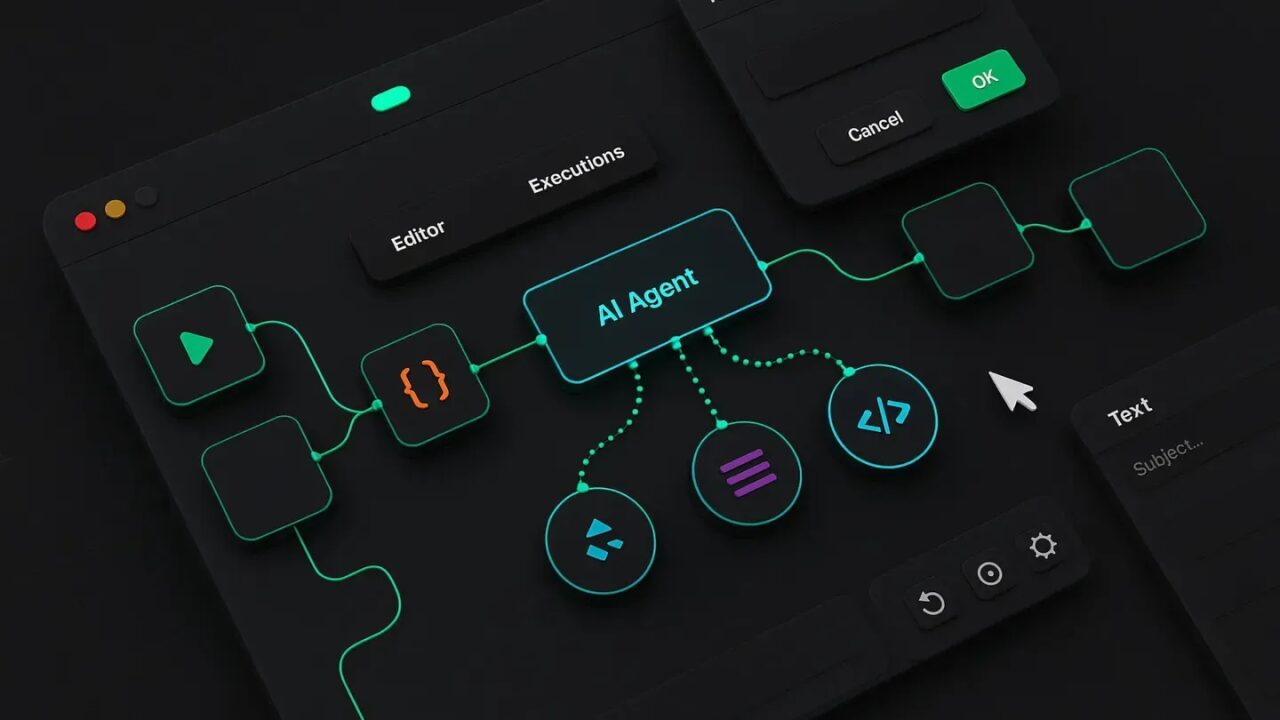
The alternative is building your own, although this doesn’t always mean starting from scratch with coding. Platforms exist that let you design and deploy from low-code/environments (“vibe coding”), and automate many of the data processing and connectivity tasks required.
So let’s take a look at each option in more detail, covering the pros and cons and different situations where each might be suitable.
Ready-Made/ Off-The-Shelf Agentic Tools
These are designed to slot into existing processes with minimal time spent developing and deploying. Increasingly, software vendors are making them a key element of existing platforms you may already be using.
SalesForce, Hubspot, QuickBooks and Xero, for example, are all popular business SaaS platforms that all have baked-in agentic functionality.
The obvious advantage is that they’re very quick to get up and running, perhaps in as little as a few minutes, and configuring them is easy if you’re already familiar with the way the platforms handle workflows.
Up-front cost is typically low, particularly if you’re already using the software. If you aren’t, there’s usually a free or low-cost introductory tier you can use to see if it seems like a good fit.
Typically, these tools will have compliance and data-protection functionality built in, too, helping you avoid common pitfalls in these areas.
Overall, they’re a great option if you want to quickly get a pilot off the ground and understand how AI agents can save you time and effort. However, they do have some drawbacks.
The main one is that what you gain in convenience, you sacrifice in flexibility. Off-the-shelf options may not be as adaptable and configurable, with fewer options for customizing them for edge use cases.
Lock-in may also become an issue, meaning it becomes more difficult if you want to offload specific functions to different tools or software outside of the vendor ecosystem.
You might have problems connecting them to legacy systems, particularly bespoke builds using proprietary code.
Finally, they also make it more difficult to differentiate yourself from competitors based on technology. Platforms are likely to be widely used, meaning everyone using them gets the same benefits and opportunities.
Do-It-Yourself / Build-Your-Own Agents
The alternative is to design and build a custom agentic framework in-house, tailored to your specific workflows and requirements.
This will mean greater investment in terms of time and technical knowledge, but it doesn't mean you have to code everything from scratch.
Plenty of DIY-focused tools and platforms like Replit, Retool, and Zapier are available. On top of this, the main Cloud providers have frameworks and toolkits for building agents using simple low-code and no-code interfaces. You can try out Google Vertex, Microsoft Autogen and Amazon Bedrock AgentCore.
This method lets you build exactly what you need, down to the level of getting your hands dirty with actual coding for real niche use cases no one else has thought of yet.
It lets you build agents that can interact and control proprietary or legacy systems that might not be able to communicate with off-the-shelf tools designed for more generic use cases.
And it gives you ultimate control over what happens to your data, which might be necessary for organizations working with particularly sensitive and protected information.
On the downside, you have to take responsibility for all aspects of compliance and data protection yourself, and getting this wrong can leave you open to fines or prosecution.
Depending on how custom you want to get, you might need to learn or hire in skills like project management, prompt engineering or system integration.
And your agents are likely to need continuous tweaking and training as job requirements change or different elements of your technology stack are upgraded, replaced or become obsolete.
How To Decide
The best way to start is by asking some basic questions.
How unique or niche is your agentic use case? For everyday tasks that almost all businesses carry out day-to-day, off-the-shelf might be the best place to get started. For specialist tasks that you rely on to differentiate yourself from competitors, DIY might be worth investigating.
Do you already have engineering, process design and project management skills in-house? If not, an off-the-shelf tool can bridge those skill gaps. But an in-house team taking a DIY approach may build something more specific to your needs.
Do you intend to process sensitive or personal data? DIY approaches let you keep everything in-house, which could be a data protection requirement for some. If you go the off-the-shelf route, you’ll need to verify that your data can safely be fed into external and third-party tools.
How quickly do you need results? If you’re shooting for “quick win” initiatives as proof-of-concept that agents can drive value, then off-the-shelf tools probably have the edge here.
Ultimately, when deciding between off-the-shelf and DIY, you’ll need to think carefully about many aspects of your project, your organization, your people and the skills you have available.
It’s also important to note that there are many factors other than the choice of tools that will be critical to success or failure; these include good agentic workflow design, data readiness and a thorough understanding of the principles of ethical and trustworthy AI.
But when it comes to tools, the right choice will be the one that aligns with your goals, capabilities and timelines. Get this right, and you’ll be ready to take your first steps on the path to unlocking the game-changing potential of agentic AI.

Related Articles

Why Companies Are Paying Huge Money For AI Labelers
By now, “smart” versions exist of just about every home appliance, gadget and gizmos we can think of. However, manufacturers continue[...]

How AI Is Redefining Enterprise Cloud Competition
By now, “smart” versions exist of just about every home appliance, gadget and gizmos we can think of. However, manufacturers continue[...]

MWC 2026: The IQ Era Is Here, And These Are The Trends Every Business Leader Needs To Watch
By now, “smart” versions exist of just about every home appliance, gadget and gizmos we can think of. However, manufacturers continue[...]

AI Will Change The Internet Forever: Why Networks Must Evolve For The AI Supercycle
By now, “smart” versions exist of just about every home appliance, gadget and gizmos we can think of. However, manufacturers continue[...]

How Do You Manage AI Agents Before Your Tech Stack Spins Out of Control
By now, “smart” versions exist of just about every home appliance, gadget and gizmos we can think of. However, manufacturers continue[...]

What Are The Real Questions Leaders Will Be Asking At Davos 2026?
By now, “smart” versions exist of just about every home appliance, gadget and gizmos we can think of. However, manufacturers continue[...]

Sign up to Stay in Touch!
Bernard Marr is a world-renowned futurist, influencer and thought leader in the fields of business and technology, with a passion for using technology for the good of humanity.
He is a best-selling author of over 20 books, writes a regular column for Forbes and advises and coaches many of the world’s best-known organisations.
He has a combined following of 4 million people across his social media channels and newsletters and was ranked by LinkedIn as one of the top 5 business influencers in the world.
Bernard’s latest book is ‘Generative AI in Practice’.
Social Media