

Could Your AI Content Land Your Business In Court?
12 August 2026
Generative AI makes it easy for businesses to create images, videos, marketing materials or even their own bespoke software and tools. But there’s a big catch.
Much of the data that AI is trained on is created by humans. So if it comes up with something that looks a little too close to someone’s trademarked or copyrighted work, or breaches a patent, you could end up in legal hot water.
This has led to creative people suing developers of AI tools (for example, Disney v Midjourney) for training AI on their work without permission, enabling others to create derivative work.
But recent developments, most notably Alcon Entertainment’s pursuit of Tesla over the use of genAI imagery closely resembling its Blade Runner 2049 IP, suggest end users are increasingly finding themselves in the crosshairs.
This is important because the amount of AI content being created is increasing by the day, and in many cases, it’s being presented to the public with little thought about potential copyright issues. This suggests to me that many organizations still haven’t fully understood the risks.
Yet again, we are seeing a developing situation where technology is simply moving too quickly for the law to keep up. So, let’s explore why this is dangerous and what you can do to keep yourself and your business out of court.
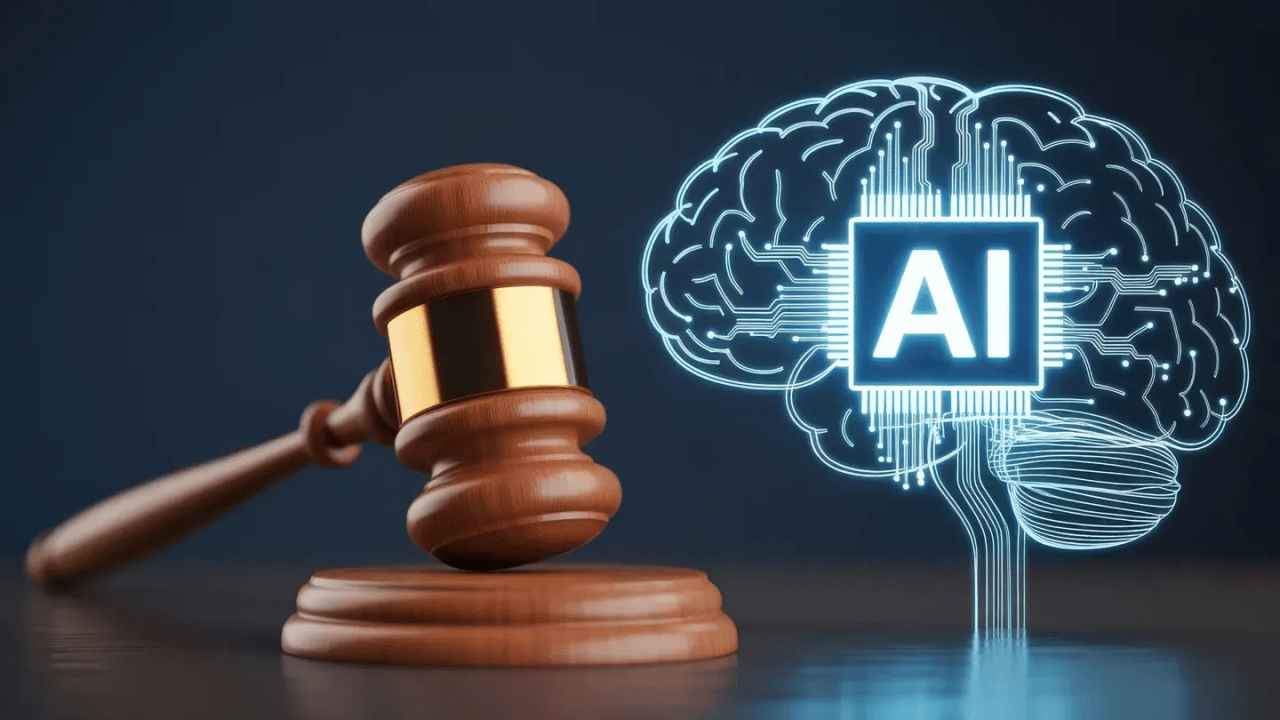
AI Plagiarism
The important thing to remember is that copyright infringement doesn’t have to be deliberate.
Many businesses using genAI are probably not trying to copy anyone’s work; they’re simply looking for efficiencies when it comes to generating content.
The problem is that recognizable creative elements of other people’s work that appear in the training data can sometimes be included in the AI output.
Remember, there are two distinct issues around genAI copyright theft. First, there’s the alleged unlawful use of creative works to train AI models. This is what companies like Disney, as well as scores of individual artists, writers and musicians, are currently suing the AI companies for.
This is only a business concern if you’re training your own models. The real risk for most businesses is that AI models’ output may breach IP regulations. No one knows for sure how courts will rule on these matters in the future, and it’s possible they could find that copyright or trademark violations have occurred even if it’s accidental.
As AI use evolves beyond content creation and becomes widely used across science, engineering and design, the need to mitigate against unknowing IP breaches will become even more critical.
This is what makes the Tesla case significant, as it targets the end user directly.
Exactly how this will play out is unclear and depends on upcoming interpretation and clarification of IP law by the courts and legislators. This means the situation is an ongoing business risk for anyone using AI to generate content. So, what do they do to mitigate these risks?
What Does This Mean For You?
The golden rule is to always remember that AI itself won’t be held legally accountable for IP theft; the companies and individuals using it will.
So here are a few things to bear in mind.
First, if you’re creating content that’s going to be public, avoid giving AI prompts that will encourage it to copy others; work, like “draw it in the style of Studio Ghibli”. This should go without saying, but obviously doesn’t!
Images, videos, marketing copy and anything else public-facing should be reviewed thoroughly before publication, with specific focus on identifying elements that might resemble existing creative works or trademarks.
It’s also important to understand the indemnification provided by certain AI service providers, including Adobe, Microsoft and Google. These offer access to models trained purely on proprietary IP, or IP to which they have negotiated the rights. This adds another layer of protection compared to simply relying on public tools, where the data provenance is unknown.
Critically, keep records of how public-facing AI content was created in order to show that you took reasonable steps to respect IP and avoid infringement.
Finally, remember that the legal framework around AI and IP is evolving, and future court rulings or legislation could significantly change the implications of using AI to create content.
If you’re in a business where speed and scale of generative AI create tangible opportunities, however, you may not have the privilege of waiting for complete clarity on the situation.
So, while you don’t need to become a copyright expert overnight, you do need to learn to treat AI content with diligence and accountability, and create processes that ensure it’s used safely and responsibly.
All of this is the sort of thing that should be covered in as much detail as possible in your company AI policy, so there’s minimal chance of mistakes slipping through the cracks.
But getting it right is the key to using AI to create content at scale that doesn’t infringe on the rights of others and won’t cause trouble further down the road.
Related Articles
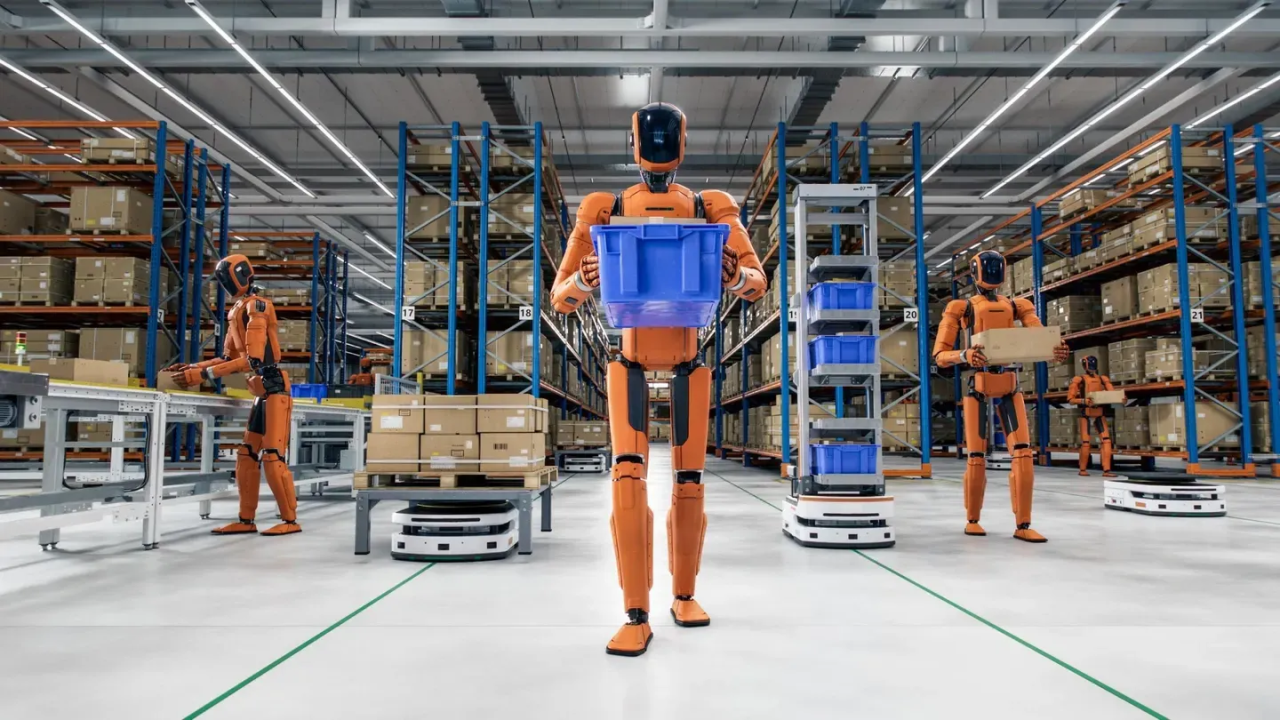
Workers Are Going On Strike Over Humanoid Robots, And This Is Just The Beginning
When workers go on strike because they fear robots taking their jobs, the age of humanoid automation suddenly feels very real.[...]

The AI Cold War Is Here, And Every Business Will Feel The Impact
In 2026, the decisions that will impact the future of AI and business are increasingly being taken outside of boardrooms and[...]
Humanoid Robots Are Coming, Here’s What Everyone Needs To Know
More than one billion humanoid robots could be living and working alongside us by 2050. That is Morgan Stanley's forecast, and[...]

How Maersk Is Using AI To Survive The New Era Of Tariff Chaos
In recent years, chaotic and unpredictable changes to international trade tariffs and regulations have created turbulence for companies importing and exporting[...]
AI Girlfriends Are Reaching Children, And We Need To Talk About What That Could Mean For Boys
What happens when a boy learns about intimacy from a girlfriend who is always available, endlessly customizable and incapable of saying[...]
How Siemens Is Bringing Generative AI To The Factory Floor
Generative AI is moving out of the chatbot and onto the factory floor. Siemens is putting the technology to work to[...]

Sign up to Stay in Touch!
Bernard Marr is a world-renowned futurist, influencer and thought leader in the fields of business and technology, with a passion for using technology for the good of humanity.
He is a best-selling author of over 20 books, writes a regular column for Forbes and advises and coaches many of the world’s best-known organisations.
He has a combined following of 4 million people across his social media channels and newsletters and was ranked by LinkedIn as one of the top 5 business influencers in the world.
Bernard’s latest book is ‘Generative AI in Practice’.
Social Media