
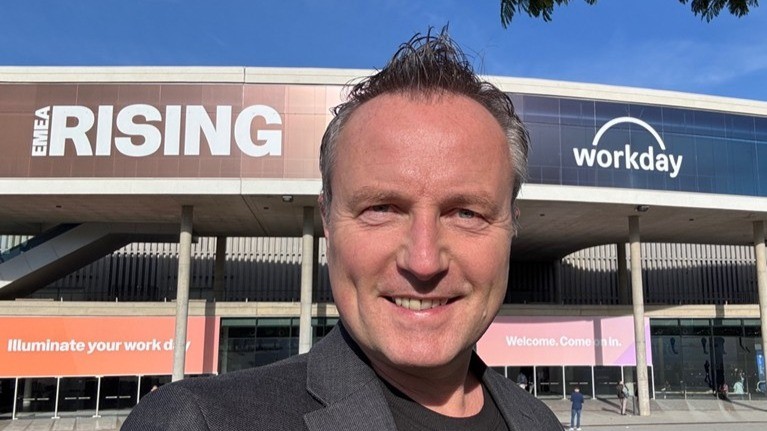
Enterprise AI Meets The Digital Labor Economy: My Highlights From Workday Rising EMEA
2 December 2025
Barcelona has always been a city that understands transformation. From Gaudí’s unfinished masterpiece to its reinvention as a tech hub, this Catalan capital knows something about building for the future while respecting the foundations of the past. So perhaps it was fitting that Workday chose Barcelona as the venue for Workday Rising EMEA 2025, where the company unveiled a vision that goes beyond incremental software updates to something more fundamental: the emergence of what I call the digital labor economy.
I spent two days in Barcelona, where I had the opportunity to meet with CEO Carl Eschenbach h and numerous leaders across Workday’s organization, dive deep into technical announcements, and, most importantly, speak with customers who are actually implementing these technologies. Those customer conversations with organizations like Signify, NatWest, AIRE Ancient Baths , and insights from Siemens proved invaluable. I am always keen to look beyond vendor hype to understand what enterprises are genuinely doing with AI, and what I discovered represents a fundamental shift in how companies think about capacity, productivity, and growth.
From AI Tools To AI Agents: Understanding The Shift
The distinction between AI as a tool and AI as an agent might seem semantic, but it represents a profound change in enterprise technology strategy. Think of it like the difference between getting a better hammer and hiring a skilled carpenter. A tool makes you faster at tasks you already do. An agent takes entire categories of work off your plate.
What struck me most at Workday Rising EMEA was how Workday is architecting its entire platform around this agent-based future. The company is building what amounts to an operating system for digital workers, complete with the connectivity, context, and controls that these agents need to function within enterprise environments.

The €175 Million Bet On European AI Innovation
Workday announced a €175 million AI Centre of Excellence in Dublin, representing serious infrastructure investment in European AI capabilities at a time when concerns about digital sovereignty and data residency are reshaping enterprise technology decisions.
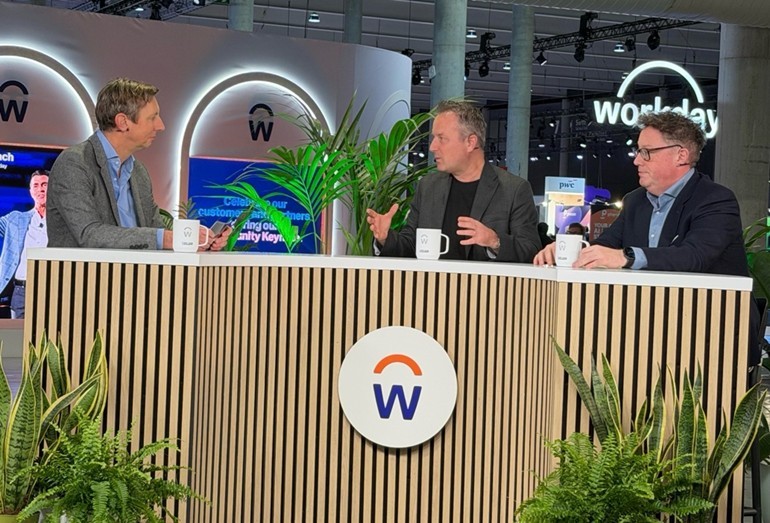
During my discussions in Barcelona with Graham Abell, Vice President of Software Development Engineering at Workday, and Daniel Pell, Vice President and UKI Country Manager, it became clear that this Centre of Excellence is about more than just development capacity. It is about ensuring European customers have local innovation, local data control, and local talent developing solutions that understand European regulatory requirements from the ground up.
Workday's EMEA presence now spans more than 4,250 employees across 19 countries, with additional regional offices opening in Dubai and expanded teams in Warsaw to serve Central and Eastern Europe.
EU Sovereign Cloud: Trust Architecture For The AI Era
Perhaps the most significant technical announcement was the launch of Workday EU Sovereign Cloud. For enterprises navigating the EU Data Act, GDPR, and the emerging AI Act, data sovereignty has moved from a compliance checkbox to a strategic imperative. More than 80% of business leaders now cite data sovereignty as a strategic business priority.
Workday’s solution ensures that customer data stays entirely within EU borders, with all operations, including AI processing, data center access, support, and maintenance managed by EU-based personnel. Built on AWS's secure cloud foundation, it maintains EU jurisdictional control while spanning multiple geographically separated data centers.
This matters because AI agents need access to trusted data to function effectively. By solving the sovereignty challenge at the infrastructure level, Workday enables European organizations to deploy AI agents without compromising on data control or regulatory compliance. The sovereign cloud becomes available to European customers in 2026.
Pipedream Acquisition: Connecting The Digital Labor Force
The announcement that Workday has entered into a definitive agreement to acquire Pipedream, an integration platform with more than 3,000 pre-built connectors, represents the connectivity layer that transforms AI agents from intelligent assistants into autonomous workers.
Workday has been the trusted system of record for people and money for more than 20 years. The platform understands organizational structures, approval chains, financial rules, and security permissions. However, work happens across Asana, Hubspot, Jira, Recurly, Slack, and thousands of other applications. Pipedream provides the connectivity that allows AI agents to pull data and execute tasks wherever work actually happens.
Combined with Workday's recent acquisitions of Sana and Flowise, this creates an end-to-end platform for building AI agents that can understand business context, orchestrate workflows, and take action across enterprise systems. An AI agent could accelerate performance reviews by using Workday's understanding of organizational structure, pulling project details from Jira or Asana, requesting peer feedback through Slack, and updating performance records directly in Workday.
The acquisition, expected to close in the fourth quarter of Workday's fiscal year 2026, brings an active builder community that will accelerate connector creation. Together with Flowise's open-source community, this expands Workday's support for open development.
Workday GO: Enterprise AI For Midsize Organizations
Midsize businesses represent nearly 90% of companies worldwide, drive up to 70% of employment, and contribute up to 70% of global GDP. Yet these organizations often struggle to access the technology available to larger enterprises. Workday GO, significantly expanded at Workday Rising EMEA, aims to close that gap.
The expanded solution brings enterprise-grade HR, payroll, and AI to midsize organizations through a simplified platform. The new Workday GO Global Payroll, delivered through an expanded partnership with Remote, enables seamless international payroll. The Workday GO Partner Network unifies global payroll, benefits, and deployment partners including Benefit Harbor, BNB Chain, HR Path, Kainos, OneSource Virtual, Remote, TopBloc, and Three Link Solutions.
Most interesting is the new Deployment Agent, an AI-powered assistant that guides implementation teams step by step. Early results show implementation time reductions of up to 25%. Master Builders Solutions went from kickoff to go-live in just 42 working days. The next release will be available in February 2026 in the US, Canada, UK, Ireland, Germany, and France.
Opening The Ecosystem: Developer Network And Google Partnership
Workday launched a global developer network that opens access to Workday Build, enabling developers to build, certify, and apply Workday skills. The company is partnering with universities, including Chennai Institute of Technology and KL University, as well as staffing partners such as ConsultNet Technology Services and Solutions, Helios Consulting LLC, and Randstad Digital. Developers who complete the program earn a Workday Pro Developer Certification and can be featured in the Workday Talent Directory.
Workday also announced that Google BigQuery has joined Workday Data Cloud, giving customers direct, zero-copy access to their Workday HR and finance data within Google Cloud. Customers can build predictive models like cash flow forecasting without complex integrations and bring AI-driven insights back into Workday. Google Cloud joins ecosystem partners Databricks, Salesforce, and Snowflake, expanding customer choice in analytics and AI tools.
What Customers Are Actually Doing: Beyond The Hype
My conversations with customers provided crucial reality checks on what enterprises are genuinely accomplishing with AI transformation.
Signify, the global leader in lighting and IoT, is building a skills-powered organization using Workday's Career Hub with AI from partner TechWolf. Natasja Mol, Skills Transformation Project Leader, emphasized something I have been advocating for years: ensuring the right skills data foundation. AI is only as good as the data beneath it. Signify uses AI-generated insights as conversation starters between managers and employees, validating data through candid career discussions rather than treating AI as absolute truth. The EU AI Act has also pushed their HR team to develop new competencies around AI evaluation and bias testing.
NatWest, a 300-year-old bank with 19 million customers, is removing administrative burdens through digital assistants that orchestrate tasks with Workday at the center. What impressed me was their focus on adoption through experimentation, with leaders encouraging teams to play and gain confidence, making AI accessible rather than threatening.
Siemens provided perhaps the most candid perspective. Nanda Burke, Global Head of Talent, sat down with Carl Eschenbach to discuss what AI transformation at scale actually requires. Siemens employees have built thousands of AI agents, enabled by what Burke calls a "joyous performance" culture that combines high expectations with psychological safety for experimentation. Their "AI Base Camp" gamified the up-skilling experience and solves the overwhelm problem, helping employees find their entry point rather than drowning in extensive training.
Burke was direct about the challenge: "Experimenting with AI is easy, scaling it is not easy." Most compelling was her electricity analogy. When electricity arrived, factories just replaced steam engines with electric motors while keeping old layouts. It took years before someone reimagined factory design around electricity's capabilities. We are at that inflection point with AI, still using it to do what we have always done rather than reimagining what is possible.
The Digital Labor Economy Thesis
What emerged from my time at Rising EMEA goes beyond any single announcement. Workday is building toward what I call the digital labor economy, a fundamental reconception of how enterprises think about capacity and growth.
In the industrial economy, growth required hiring more people. In the knowledge economy, we added productivity tools. The digital labor economy represents something different: adding capacity through autonomous agents that complete entire workflows. This changes the economics of scale. Instead of linear growth tied to headcount, organizations can add digital capacity that handles routine tasks and complex workflows, freeing humans for judgment calls, creative problem-solving, and relationship-building.
Workday's architecture reflects this future. The trusted data foundation provides agents with context. The sovereign cloud ensures data control. Pipedream connectivity allows agents to work across applications. The developer network creates the talent pipeline. And customer success stories demonstrate this transition is happening now.
What This Means For Enterprise Leaders
Workday Rising EMEA offered several clear lessons for executives grappling with AI strategy.
Data foundation matters more than algorithms. Signify's experience demonstrates that AI agents are only as good as their underlying data. Organizations rushing to deploy AI without clean, contextualized data will struggle.
Sovereignty and compliance cannot be afterthoughts. Enterprises cannot deploy AI agents at scale if regulatory concerns prevent full data access. Solving these challenges at the infrastructure level unlocks organization-wide deployment.
Connectivity determines capability. An AI agent confined to a single system delivers limited value. Agents need the ability to execute tasks wherever work happens.
Adoption requires trust. NatWest's approach of encouraging experimentation reflects a crucial insight. Organizations that treat deployment as purely technical will struggle with adoption.
The human element remains essential. AI agents handle the routine and repeatable. Humans bring empathy, judgment, and creativity. The goal is freeing workers to focus on work that genuinely requires human insight.
The Agentic Enterprise
As I reflected on my time in Barcelona, speaking with executives, customers, and industry leaders, a clear picture emerged. We are transitioning from systems of record and engagement to what might be called systems of agency, platforms that enable autonomous agents to understand context, make decisions, and take action across enterprise workflows.
Workday Rising EMEA 2025 was about articulating a vision for how enterprises will operate in the digital labor economy and demonstrating this future is being built today. The €175 million Dublin investment, EU Sovereign Cloud, Pipedream acquisition, expanded Workday GO, developer network, and Google partnership all serve this larger strategic vision.
The shift from AI tools to AI agents represents a fundamental change in capacity economics. Organizations that understand this transition will be able to scale in ways that were previously impossible. Like Barcelona itself, the future Workday envisions respects the foundations of the past while building something genuinely new, bridging traditional systems of record and the agentic future taking shape around us.
I am partnering with Workday on content creation.
#WorkdayPartnership #WDAYRisingEMEA
Related Articles

Why Companies Are Paying Huge Money For AI Labelers
By now, “smart” versions exist of just about every home appliance, gadget and gizmos we can think of. However, manufacturers continue[...]

How AI Is Redefining Enterprise Cloud Competition
By now, “smart” versions exist of just about every home appliance, gadget and gizmos we can think of. However, manufacturers continue[...]

How AI Is Rewiring Filmmaking, And Why Craft Still Wins
By now, “smart” versions exist of just about every home appliance, gadget and gizmos we can think of. However, manufacturers continue[...]

Why Threat Intelligence Is Becoming A Must Have In Fraud Prevention
By now, “smart” versions exist of just about every home appliance, gadget and gizmos we can think of. However, manufacturers continue[...]

Why Vibe Coding Is About To Change Work In Every Industry
By now, “smart” versions exist of just about every home appliance, gadget and gizmos we can think of. However, manufacturers continue[...]
How AI Is Transforming The Communications Industry: Lessons From FleishmanHillard
By now, “smart” versions exist of just about every home appliance, gadget and gizmos we can think of. However, manufacturers continue[...]

Sign up to Stay in Touch!
Bernard Marr is a world-renowned futurist, influencer and thought leader in the fields of business and technology, with a passion for using technology for the good of humanity.
He is a best-selling author of over 20 books, writes a regular column for Forbes and advises and coaches many of the world’s best-known organisations.
He has a combined following of 4 million people across his social media channels and newsletters and was ranked by LinkedIn as one of the top 5 business influencers in the world.
Bernard’s latest book is ‘Generative AI in Practice’.
Social Media