

How To Design Multi-Agent Workflows That Actually Work
22 September 2026
AI agents are increasingly being pitched as virtual workers capable of running entire business processes with minimal supervision. But there’s a problem: the more you ask one agent to do, the harder it becomes to understand what went wrong when it fails.
For complex jobs, from running a marketing campaign to managing an end-to-end QA process, a better approach is often to build a team of specialized AI agents. Each agent handles one clearly defined part of the workflow before passing the work on.
This can make AI automation easier to manage, measure and improve. But it introduces another challenge: getting all those agents to work together effectively.
So, here’s an overview of the multi-agent approach to automating business processes, some tips on putting it to work, and advice on some of the obstacles you may encounter along the way.

What Is A Multi-Agent Workflow?
Think of a multi-agent workflow as a small team of AI specialists that are each expert at a particular job.
For example, if you’re using AI to create social media posts as marketing copy, one agent could research the messaging most likely to persuade your audience, one could draft the copy, one proofreads and fact-checks, another publishes it and makes sure the right people see it, and another manages your advertising budget.
Another example: In customer service, rather than a single agent handling every inquiry end-to-end, one agent could classify incoming requests, another consults the knowledge base on how to solve problems, another drafts responses, and another decides when to escalate complex cases to human agents.
The primary advantage is that rather than a single agent having to understand and execute an entire, complex workflow, each agent only has one relatively simple and clearly defined task. This simplifies the design process while making it easier to spot where errors are occurring.
Individual agents that aren’t doing their job properly can then be swapped out or retrained without risking breaking other elements of the workflow. It also makes it easier to update or adapt the process as business requirements evolve.
How To Make It Work
There are some simple steps that can be taken when designing this type of workflow to improve the chances it will work out.
First, pick a job where the results can be easily measured and success objectively defined. If you can’t precisely identify what “good” looks like, you won’t know whether your agents have succeeded or failed.
Then, move on to designing the workflow, rather than the team. Map out every task that needs to be done, then decide how many agents are needed and what they all have to do.
Give each agent a narrow, clearly defined job with consistent inputs and outputs. It should be obvious what each agent is meant to do, with no duplicated work or overlapping responsibilities.
Make sure your hand-offs are clearly defined. Each agent should know exactly what information it should expect to be passed from the agent responsible for the prior step of the workflow, as well as what information it needs to be ready to pass to the agent in charge of the next step.
Next, make sure you’re tracking the performance of every agent, not just the final outcome. This will let you identify bottlenecks and understand where your agents may be tripping up. Evaluate the quality of your agents’ output at each step, not just whether the end results look okay.
Finally, make sure you know where the human-in-the-loop is non-negotiable. Decide in advance what needs human involvement or approval, such as a payment being made or a customer request being declined. When judgment calls carry heavy consequences, there's no substitute for this.
Final Thoughts
As agents become more powerful and capable, many of us might be tempted to keep giving them more responsibility. I believe this urge should be resisted, and we should instead focus on building teams of simpler, specialist agents and improving their ability to collaborate effectively.
For most organizations, the real value of agents won’t come from replacing humans with ever more complex autonomous systems, but from breaking complex business processes down into manageable, measurable steps that can be improved iteratively.
This is most easily achieved by starting with a simple workflow that we can use to better understand where automation and collaboration add value, and that can be refined over time, rather than trying to get everything right in one shot.
First attempts won’t always work out as planned, and it’s worth remembering that designing agentic workflows, particularly involving multiple agents, is something that’s new to everyone, not just you.
If things don't work as expected from the start (and they probably won't), then treat it as a learning experience rather than a failure. A big advantage of the multi-agent approach is being able to diagnose and adjust one component at a time until you get the results you want.
Frequently Asked Questions
Related Articles
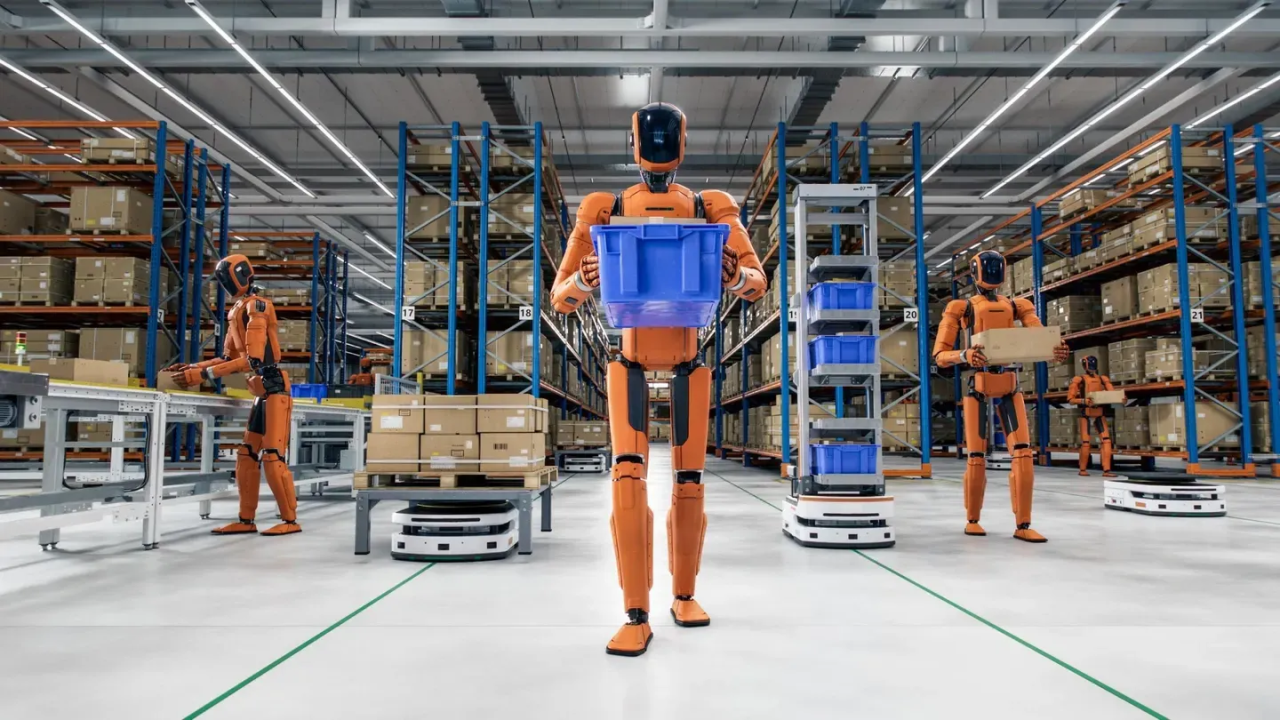
Workers Are Going On Strike Over Humanoid Robots, And This Is Just The Beginning
When workers go on strike because they fear robots taking their jobs, the age of humanoid automation suddenly feels very real.[...]

The AI Cold War Is Here, And Every Business Will Feel The Impact
In 2026, the decisions that will impact the future of AI and business are increasingly being taken outside of boardrooms and[...]

Humanoid Robots Are Coming, Here’s What Everyone Needs To Know
More than one billion humanoid robots could be living and working alongside us by 2050. That is Morgan Stanley's forecast, and[...]

How Maersk Is Using AI To Survive The New Era Of Tariff Chaos
In recent years, chaotic and unpredictable changes to international trade tariffs and regulations have created turbulence for companies importing and exporting[...]

AI Girlfriends Are Reaching Children, And We Need To Talk About What That Could Mean For Boys
What happens when a boy learns about intimacy from a girlfriend who is always available, endlessly customizable and incapable of saying[...]

How Siemens Is Bringing Generative AI To The Factory Floor
Generative AI is moving out of the chatbot and onto the factory floor. Siemens is putting the technology to work to[...]

Sign up to Stay in Touch!
Bernard Marr is a world-renowned futurist, influencer and thought leader in the fields of business and technology, with a passion for using technology for the good of humanity.
He is a best-selling author of over 20 books, writes a regular column for Forbes and advises and coaches many of the world’s best-known organisations.
He has a combined following of 4 million people across his social media channels and newsletters and was ranked by LinkedIn as one of the top 5 business influencers in the world.
Bernard’s latest book is ‘Generative AI in Practice’.
Social Media