

Humanoid Robots Are Coming, Here’s What Everyone Needs To Know
12 October 2026
More than one billion humanoid robots could be living and working alongside us by 2050.
That is Morgan Stanley’s forecast, and with companies including Tesla, Nvidia and Amazon investing heavily in the technology, the race to make humanoid robots mainstream is accelerating.
These are robots designed to walk, move, communicate and carry out physical tasks in a world built for humans. Today, most are still working in factories and warehouses. Tomorrow, they could be helping in hospitals, businesses and even our homes.
So, what exactly are humanoid robots, what can they already do, and why could they have such a profound impact on how we live and work?
Why Will This Be A Revolution?
Talk of a humanoid robot revolution inevitably brings to mind Terminator, The Matrix and other science fiction visions of machines turning against us.
The reality is far less dramatic, at least for now.
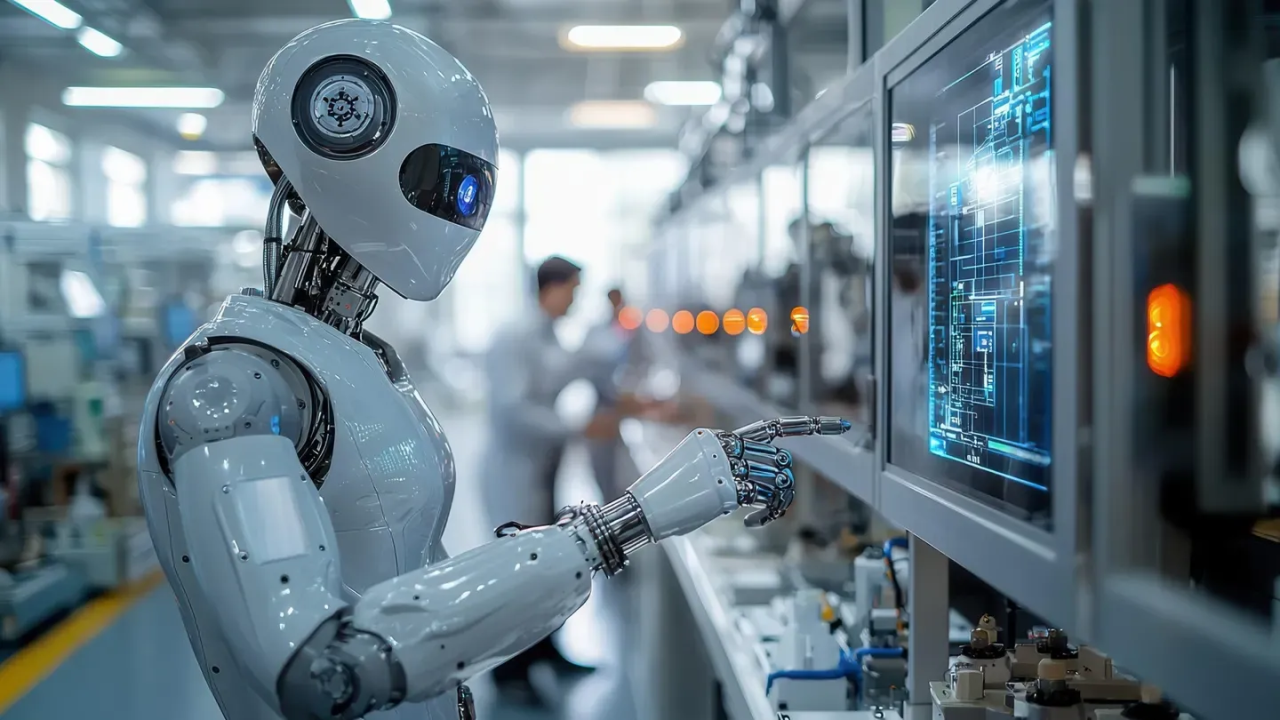
What makes humanoid robots so important is their shape. Give a robot arms, legs, hands and the ability to move and manipulate objects like we do and it can potentially carry out physical tasks that previously required a human.
That matters because the world around us was built for the human body. Our homes, factories and workplaces are full of stairs, doors, shelves, tools and machines designed for our hands and limbs.
A humanoid robot does not need the environment to be redesigned around it. In theory, it can step straight into spaces built for us and use many of the same tools we use.
Why Now?
So why are humanoid robots suddenly becoming viable? The biggest reason is AI.
We’re already familiar with AI that can answer questions, create images and help us work more efficiently. Now those same advances are giving robots the ability to understand instructions, make decisions and adapt to the physical world around them.
AI helps a humanoid work out how to balance, walk across uneven ground, pick up objects and coordinate its movements. Language models can also help it understand what we want, reason through problems and decide what to do next.
This is often called “embodied AI,” because intelligence is moving out of our screens and into machines that can act in the physical world.
That could make humanoids useful for everything from filling labor shortages to taking on dangerous, repetitive or physically demanding work.
What Can They Do?
Currently, the majority of operational humanoid robots are deployed in industrial settings. This includes:
Manufacturing plants, such as BMW’s Spartanburg plant, where they are reported to have contributed to the production of 30,000 vehicles to date.
Hazardous environments, where they are capable of withstanding high temperatures, dangerous fumes and chemicals, and even nuclear radiation. Tesla has said that its Optimus robots are intended for work of this sort.
Warehouse and logistics operations, where they will tirelessly transport and deliver objects and containers. Amazon is trialing them for this purpose.
We’re also increasingly seeing them perform impressive feats of strength and dexterity, with one humanoid recently setting a world record by jumping almost eight meters. Another recently smashed Usain Bolt’s record 100-meter sprint time at the World Humanoid Robotic Games in Beijing.
Who Is Making These Robots?
Some of the companies involved in designing and manufacturing humanoid robots include:
Tesla, which, drawing on its experience in batteries, AI and mass production, hopes its Optimus humanoid will become the default choice for mainstream consumer humanoids in homes and businesses.
US robotics specialist Figure AI has built its Figure 03 humanoid to work in factories and on production lines, and is now developing models designed for domestic use.
Boston Dynamics’ Atlas humanoid is currently working on production lines with Hyundai and is capable of replacing its own battery when needed, potentially allowing it to work indefinitely without a break.
Apptronik has also partnered with auto manufacturers including Mercedes-Benz and Jabil, who are piloting the use of its Apollo 2 robot in industrial settings.
And China’s Unitree is leading the way with affordable humanoids, with its G1 model available for purchase for around $13,000.
What Challenges Still Need To Be Overcome?
The human body is a hugely complex organism. And a robot capable of doing everything it can do has to be very complex, too.
Tasks such as fine motor control, balancing on uneven surfaces or while carrying heavy loads, and simultaneously coordinating multiple limbs require complex technical engineering and vast amounts of compute power.
Bringing millions of them online will require more investment in data centers and development of new batteries, energy-efficient processors and streamlined AI models.
We also need to be certain that they can safely work alongside people. Unlike factory machinery, they aren’t confined to specific areas and must be capable of sensing and reacting when there's a potential to cause harm.
Inevitably, the numerous cameras and sensors they need to see and navigate the world alongside us raise privacy and cybersecurity concerns.
Last but not least, there’s the issue of social acceptance. Will human workforces see them as useful assistants or rivals threatening to take their jobs? And will we trust them to provide care for the sick, elderly or those with disabilities?
Overcoming these challenges, particularly the last two, means manufacturers will have to convince us their robots are safe and reliable, and likely to improve our lives rather than make us obsolete.
What Will A World Shared With Humanoid Robots Look Like?
As humanoids become better and cheaper, we’ll increasingly see them spreading from factories and industrial settings into homes, education and healthcare.
Just like the cars they are frequently compared to, it could be commonplace for families to buy or lease them. In fact, with more of the world’s population gravitating to urban areas where privately owned cars are less essential, a humanoid robot capable of carrying out chores and providing companionship could be seen by many as a more essential product to own.
Rather than purchasing separate machines for cleaning, cooking, gardening or security, humanoids are designed to be general-purpose and could simply be trained to carry out the tasks we need them to do. By freeing us from time-consuming chores, more of our own lives will be focused on creativity, leisure, building personal relationships and strategic decision-making.
There’s also the inevitable fact that some people will choose to turn to robots for friendship, companionship, and perhaps even love, bringing its own set of social consequences.
Of course, this won’t happen overnight, and new challenges are likely to emerge as the number of humanoids around us increases.
Initially at least, their existence could widen the gulf between rich and poor, with those who can afford to be early adopters enjoying benefits and lifestyle enhancements that will take some time to trickle down to the less well-off.
Society will also have to answer questions about who exactly will benefit from the wealth they create. Will companies replacing human workforces with legions of humanoids have a moral obligation to mitigate the impact of widespread human redundancy on society?
This is a question that the public, businesses, and politicians will have to answer in the coming years.
Ultimately, all of us are likely to have to decide what roles humanoid robots will fill in our lives, and what we would prefer to remain exclusively human.
Frequently Asked Questions
Related Articles
The Hidden Costs Of AI Data Centers, And Who Really Pays
Behind every AI chatbot query and autonomous agent action sits a data center, and the biggest ones consume staggering amounts of[...]
The AI Agent Boom Has A Trust Problem. Here’s How Business Leaders Can Fix It
The most expensive mistake your company makes next year could come from an employee who never sleeps, never takes a holiday[...]

AI Is Making Us Faster. So Why Aren’t Businesses More Productive?
Paid partnership with Atlassian AI is becoming remarkably good at helping us complete individual tasks faster. AI can now write code,[...]
The Top 7 Technology Trends For 2026
Technology is moving into a new phase in 2027, and once again AI sits at the center of it. But this[...]
AI Is Growing Up: What World Summit AI 2026 Revealed About The Future Of Business
The AI industry is entering a new phase, where autonomous agents, business transformation, governance and human wisdom are taking center stage.[...]

How AI, Drones And Autonomous Vehicles Are Transforming The British Army
The British Army is entering a new era in which soldiers will increasingly fight alongside drones, robots and AI-powered systems. I[...]

Sign up to Stay in Touch!
Bernard Marr is a world-renowned futurist, influencer and thought leader in the fields of business and technology, with a passion for using technology for the good of humanity.
He is a best-selling author of over 20 books, writes a regular column for Forbes and advises and coaches many of the world’s best-known organisations.
He has a combined following of 4 million people across his social media channels and newsletters and was ranked by LinkedIn as one of the top 5 business influencers in the world.
Bernard’s latest book is ‘Generative AI in Practice’.
Social Media