
Job Search In The Age Of Artificial Intelligence – 5 Practical Tips
2 July 2021
If you haven’t searched for a job in recent years, things have changed significantly and will continue to evolve thanks to artificial intelligence (AI). According to a Korn Ferry Global survey, 63% of respondents said AI had altered the way recruiting happens in their organization. Not only do candidates have to get past human gatekeepers when they are searching for a new job, but they also have to pass the screening of artificial intelligence that continues to become more sophisticated. Recruiting and hiring new employees is an expensive endeavor for organizations, so they want to do all that’s possible to find candidates who will make valuable long-term employees for a good return on their recruitment investment.
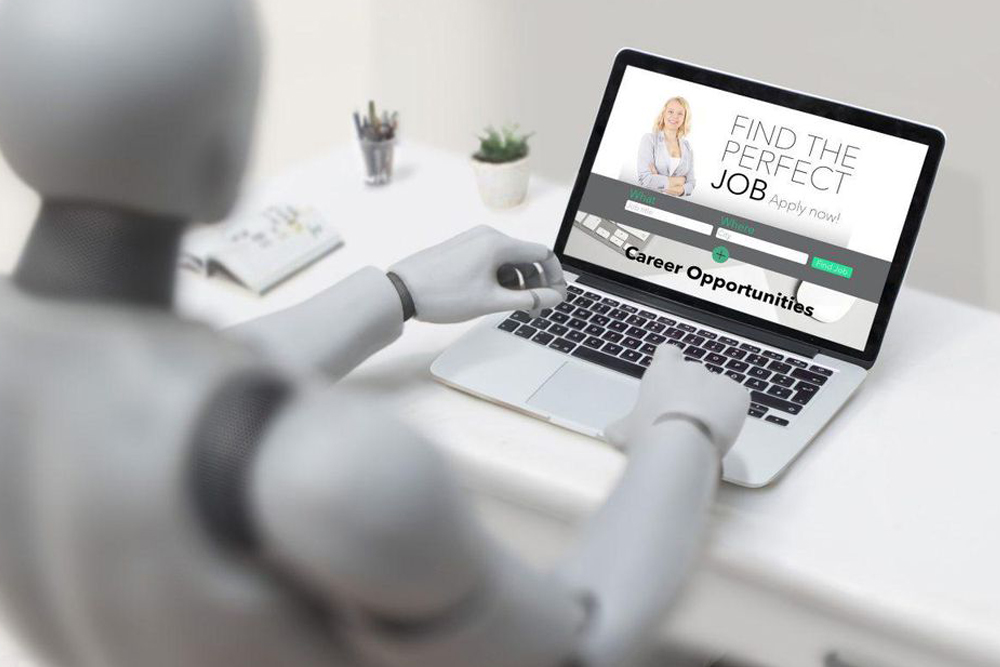
Here are a few things candidates and organizations need to keep in mind when AI is part of the job search.
How AI helps in the recruiting process
Just like in other industries, artificial intelligence has the potential to streamline the job search process and take over time-consuming tasks for humans. There are several ways artificial intelligence helps candidates and companies during a job search and throughout the recruiting and hiring process.
Candidates can use artificial intelligence job-seeking tools to find open positions that match their particular skill-set and discover organizations with the culture they want. This alone can save candidates an incredible amount of effort in an already time-consuming activity. Similarly, AI can conduct candidate outreach much more efficiently for companies so they can find candidates actually suited for the role.
When the CV screening process is automated, it is much more efficient—appreciated by candidates and human resources departments alike. Additionally, since recruiters won’t get bogged down in the CV review process, they have more time to nurture relationships with candidates.
AI-powered chatbots are responsive and quick to support a candidate during the application process. Having a chatbot handle inquiries from candidates is another way artificial intelligence frees up the time for human personnel to handle tasks only they can tackle.
Artificial intelligence helps organizations avoid the inevitable unconscious bias that seeps into the recruiting process when humans are determining which candidates to consider for a position. In addition, it can help companies identify growth opportunities for existing employees, training needs that set employees up for success and future promotions, and matches high-performers currently on staff to new opportunities.
Challenges presented by AI tools in the recruitment process
Candidates need to learn how to adjust their resumes and CVs to get through the artificial intelligence gatekeepers. If they don’t modify their approach, they won’t be matched with jobs and organizations that might be a good fit. They also need to be prepared to succeed if they are asked to an automated interview—where a candidate interacts with AI instead of a human. There are even businesses popping up that will help candidates “beat AI” in order to get a job.
Artificial intelligence allows organizations to scan multiple data points about each candidate. Not only are social media accounts reviewed, but it’s possible to critique multiple factors that make up the digital footprint of a candidate—something that would be impossible if only humans were assigned the task. This brings up interesting privacy questions regarding what information can be used to qualify candidates.
In addition to requiring a lot of data to work effectively, artificial intelligence can also learn human bias if the data set and algorithms they operate from have bias. Also, attitude, work ethic, and other attributes are difficult for a robot to critique but have also been a part of the hiring process.
Practical tips for job-seekers to prepare for AI in the job search
- Use keywords in your CV and cover letter that would be relevant for the position you seek
When you prepare your written materials to apply to a job, match the words you use with the terminology and keywords from the job posting. If they request someone who knows AP, be sure to have AP on your resume and cover letter and not accounts payable.
- Write like a human
Be sure your materials are still readable and grammatically correct. Don’t assume that since a bot will be reviewing your materials, you must stuff your CV with keywords to get past their algorithms. If you make it past the bots, humans will still review your CV, and they won’t be impressed by your skills if your written communication is barely intelligible.
- Have an online presence
While you must take care to have a respectable online presence, if you don’t have any at all, you might be at a disadvantage. Be sure your LinkedIn profile is up to date and depending on the role you seek, a personal website for your job search might also be helpful.
- Be sure your contact info is public
Make it easy for AI software and recruiters to contact you if they find you online. People can miss out on job opportunities if they have all of their online settings private. You can create an email address just for the job search and set up a Google Voice number that can be forwarded to your phone to take messages.
- Be prepared for digital interviews
Interviews conducted by AI bots won’t just be verifying what you say during the interview, but how you say it. Not only will word choices be assessed, but also facial expressions and body language. I have recently written about the ways Unilever is now using AI in their recruitment, which will give you more insights.
Artificial intelligence has changed the job search process. In order to compete, candidates must respond to the new reality.
Related Articles

The 8 AI Trends That Will Change Everything In 2027
In 2027, the AI hype train rolls on. But is it about to be derailed by bubbles bursting? 2027 could be[...]

The Hidden Costs Of AI Data Centers, And Who Really Pays
Behind every AI chatbot query and autonomous agent action sits a data center, and the biggest ones consume staggering amounts of[...]
The AI Agent Boom Has A Trust Problem. Here’s How Business Leaders Can Fix It
The most expensive mistake your company makes next year could come from an employee who never sleeps, never takes a holiday[...]

AI Is Making Us Faster. So Why Aren’t Businesses More Productive?
Paid partnership with Atlassian AI is becoming remarkably good at helping us complete individual tasks faster. AI can now write code,[...]
The Top 7 Technology Trends For 2026
Technology is moving into a new phase in 2027, and once again AI sits at the center of it. But this[...]

AI Is Growing Up: What World Summit AI 2026 Revealed About The Future Of Business
The AI industry is entering a new phase, where autonomous agents, business transformation, governance and human wisdom are taking center stage.[...]

Sign up to Stay in Touch!
Bernard Marr is a world-renowned futurist, influencer and thought leader in the fields of business and technology, with a passion for using technology for the good of humanity.
He is a best-selling author of over 20 books, writes a regular column for Forbes and advises and coaches many of the world’s best-known organisations.
He has a combined following of 4 million people across his social media channels and newsletters and was ranked by LinkedIn as one of the top 5 business influencers in the world.
Bernard’s latest book is ‘Generative AI in Practice’.
Social Media