
Leadership At Warp Speed: How To Drive Success In The Era Of Agentic AI
8 April 2025
The world has never changed this fast and will never move this slow again. This stark reality, shared by ServiceNow CEO Bill McDermott during our recent conversation, perfectly captures the transformative whirlwind businesses now face with the emergence of agentic AI – autonomous AI systems that can perform tasks without human intervention.
“The AI revolution is faster than all of them,” McDermott told me, comparing it to previous technological shifts. “I think people have underestimated the importance of technology, transparency, metrics, measurement, and the kinds of things that leaders have to put into their companies now to both get people moving again and to help people catch this wave.”
This isn’t hyperbole. We’ve entered what I’ve been calling an era of hyper-innovation, where AI capabilities double every few months rather than years. For company leaders, this acceleration creates both immense opportunity and existential threat.

The Control Tower Imperative
Perhaps the most significant insight from our conversation was McDermott's emphasis on the need for integration through what he calls an "AI agent control tower." This recognizes a fundamental problem most organizations face: decades of building siloed systems that can't effectively communicate.
"These companies are bogged down with these departmental systems that they keep investing in, keep upgrading," McDermott explained. "They have different release levels. Some are in the cloud; some are on-premise. Someone's in someone else's cloud, and the chaos is only growing. And then everybody in the industry is talking to them about agents for their silo, which is only going to exacerbate the complexity."
This fragmentation problem is particularly acute with AI implementation. Companies rushing to deploy AI agents in disconnected systems risk creating a new layer of incompatible technology, magnifying existing inefficiencies rather than solving them.
The solution? According to McDermott, organizations need "a single platform with one architecture, one data model, and one gorgeous user experience that serves as the control tower for AI business transformation." This approach enables the integration of multiple AI agents and diverse data sources – from structured database information to unstructured documents on personal devices.
The Human-AI Workforce Evolution
One of the most fascinating aspects of our discussion centered on how AI agents are essentially becoming "tenured employees" – working 24/7, without vacations or healthcare requirements. This shift is fundamentally changing workforce dynamics.
ServiceNow has already realized nearly half a billion dollars in economic value through AI implementations, with agents freeing up 3 million hours of employee capacity. They've seen an 85% customer self-service rate through AI agents (not chatbots), reducing issue resolution time by 80%.
"We now have a new workforce in addition to the human workforce," McDermott noted. At ServiceNow, they've estimated they can perform the same work with 10% fewer human employees, but as a growth company, they're focused instead on deploying AI agents to enable greater growth with greater efficiency.
This doesn't necessarily mean mass unemployment. As McDermott reflected, "In 1966, Time Magazine basically made the statement that with the evolution of the computer and then thereafter the personal computer, it would be likely that 90 percent of the jobs in corporations would no longer be necessary... Well, millions and millions of jobs later, we know that's not true."
Instead, McDermott envisions a renaissance in productivity: "This agentic AI workforce will do the soul-crushing work in every industry, in the tasks and productivity areas that humans don't want to do anyway." The future he describes is one of collaboration, where "thinking machines will build better thinking humans and better outcomes for the global economy."
Escaping The Legacy Trap
AI investment is surging across industries as organizations race to capitalize on its transformative potential. Yet McDermott identified a critical problem: "80 to 90 percent of the budget is going to keeping the trains running on time, as they've always have. And in a lot of cases, that also means upgrading the old tech, which is still old, to newer versions of the old tech, which is a major mistake."
This approach traps investment capital in legacy systems rather than funding AI innovation. His recommendation? "Stop doing what you've always done and take a fresh look at the art of the possible. And I would say you should start moving half of your IT discretionary budget to the AI revolution."
The consequences of maintaining the status quo are severe. "CEOs are really, really upset because they've thrown billions of investment at digital transformation only to find out that 85 percent of the digital transformation projects have not delivered a positive ROI for them," McDermott shared.
Leadership Principles For The AI Era
When I asked McDermott about leadership in this transformative time, his response revealed principles that apply across industries:
- Take care of customers above all else: "The only thing that really mattered was my customers. They were my only boss. And if they didn't come back and I didn't make them happy, then I lose the game to my competition."
- Increase your drive during inflection points: "When I see inflection points in markets like the one we're in right now, my intensity and my drive only increases. Because I know that I'm loving people, and I'm building trust with people by letting them know that they have to accelerate the pace."
- Understand the details to dream bigger: "Look into the details because the details will help you form a bigger dream. It's not just about technology. It's about what the technology can do for the dream."
- Think exponentially: "If you take 30 linear steps, you'll go 1 to 30. If you take 30 exponential steps, 1, 2, 4, 8, by the time you get to 30, you traveled around the world. You did a billion steps."
- Lead from the front lines: "The way I try to do my job is not do my job behind a desk. But be on the front lines with the people really understanding what we got to do to help the customer win in every industry."
A Decisive Moment
McDermott's parting wisdom should resonate with every business leader: "This is a do-or-die moment for both individuals and companies to catch this lightning-fast AI revolution."
The companies that will thrive aren't merely implementing AI – they're reimagining their entire organizational structure and technology stack to create integrated systems where AI agents work harmoniously with humans and each other. Those who cling to old ways of working risk being left exponentially behind.
As McDermott so powerfully stated, "If they don't catch the wave now, there's a great chance that they could get left behind, and there's an even greater chance that companies that don't catch this wave will, in fact, get left behind."
The future belongs to those brave enough to reverse engineer the world they want and lead their organizations through this transformative moment. The AI revolution waits for no one.

Related Articles

The Hidden Costs Of AI Data Centers, And Who Really Pays
Behind every AI chatbot query and autonomous agent action sits a data center, and the biggest ones consume staggering amounts of[...]

The AI Agent Boom Has A Trust Problem. Here’s How Business Leaders Can Fix It
The most expensive mistake your company makes next year could come from an employee who never sleeps, never takes a holiday[...]

AI Is Making Us Faster. So Why Aren’t Businesses More Productive?
Paid partnership with Atlassian AI is becoming remarkably good at helping us complete individual tasks faster. AI can now write code,[...]
The Top 7 Technology Trends For 2026
Technology is moving into a new phase in 2027, and once again AI sits at the center of it. But this[...]

AI Is Growing Up: What World Summit AI 2026 Revealed About The Future Of Business
The AI industry is entering a new phase, where autonomous agents, business transformation, governance and human wisdom are taking center stage.[...]
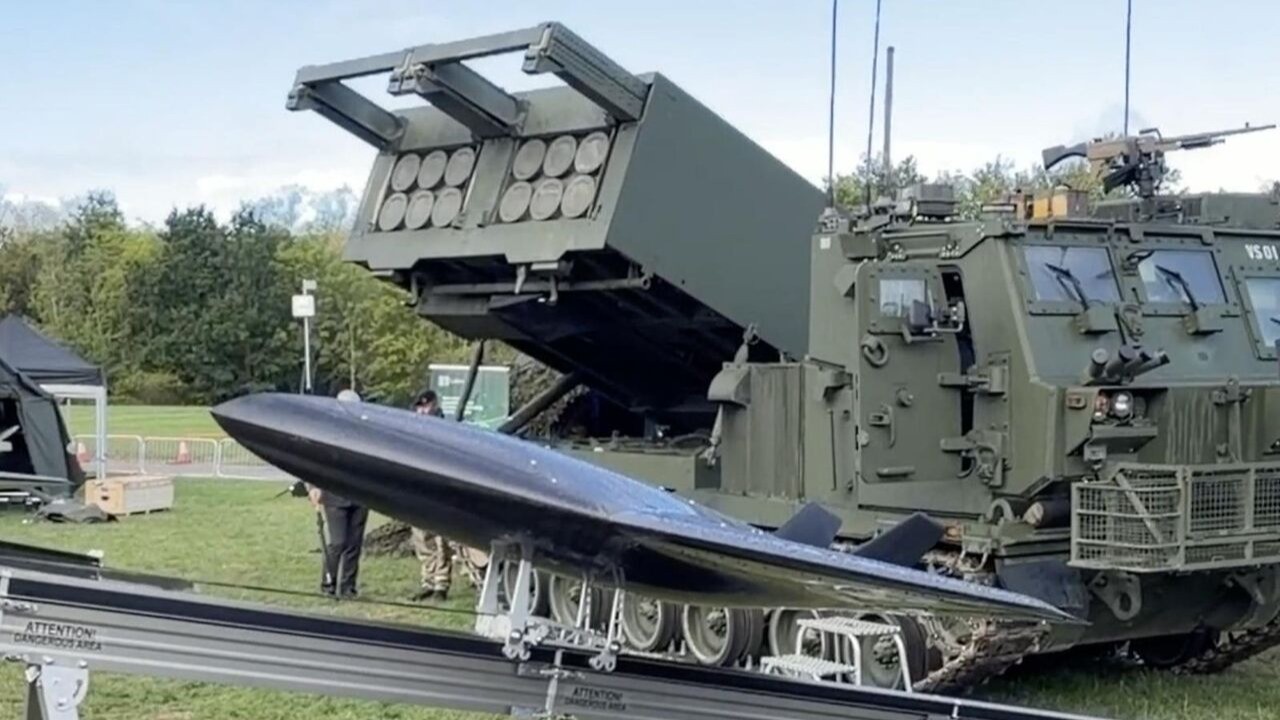
How AI, Drones And Autonomous Vehicles Are Transforming The British Army
The British Army is entering a new era in which soldiers will increasingly fight alongside drones, robots and AI-powered systems. I[...]

Sign up to Stay in Touch!
Bernard Marr is a world-renowned futurist, influencer and thought leader in the fields of business and technology, with a passion for using technology for the good of humanity.
He is a best-selling author of over 20 books, writes a regular column for Forbes and advises and coaches many of the world’s best-known organisations.
He has a combined following of 4 million people across his social media channels and newsletters and was ranked by LinkedIn as one of the top 5 business influencers in the world.
Bernard’s latest book is ‘Generative AI in Practice’.
Social Media