

The Big Ideas Shaping CES 2026 And What They Mean For The Future Of Technology
20 January 2026
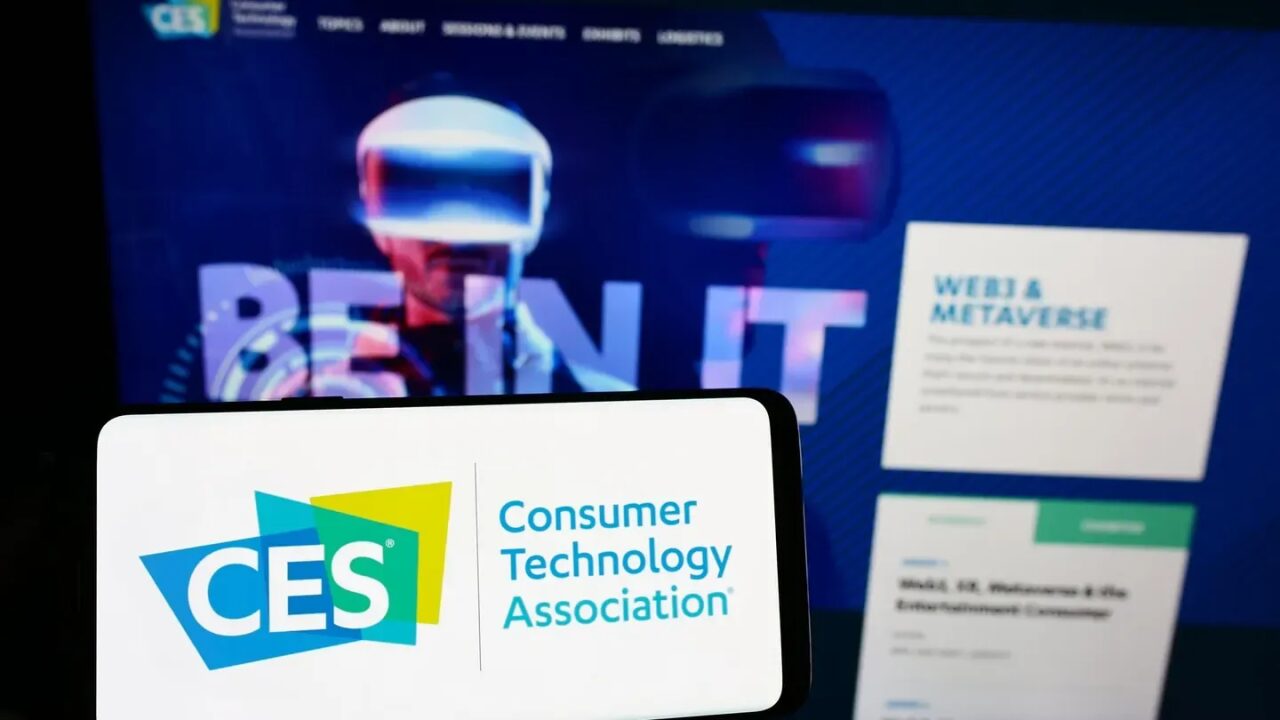
Every January, CES gives us a glimpse of the future, but this year feels different. The technologies on show at CES 2026 are no longer experimental curiosities or distant promises. They are shaping how economies compete, how governments regulate and how businesses decide where to invest, hire and grow. What happens at CES no longer stays in Las Vegas; it ripples through boardrooms and policy debates around the world.
Ahead of CES, I spoke with Gary Shapiro, CEO of the Consumer Technology Association and the long-time steward of the show. Our conversation ranged from artificial intelligence and robotics to tariffs, regulation and the growing tension between cooperation and competition on the global stage. Taken together, his insights offer a useful lens for understanding what CES 2026 really represents.
Why CES 2026 Feels Like A Turning Point
Artificial intelligence remains the headline story, but the narrative has matured. As Shapiro put it, “As every business leader knows by now, artificial intelligence is the headline.” What has changed is the focus. The conversation is moving away from novelty and toward implementation and impact.
AI is no longer confined to product features or customer interfaces. It is reshaping how organizations operate internally, from automating routine work to helping employees focus on higher-value tasks. Shapiro described how AI is already transforming everyday decision-making, saying that tasks that once took “three or four hours to figure out are done in a matter of seconds with AI.” That shift in efficiency is becoming impossible for leaders to ignore.
At CES 2026, this practical focus is visible across the show. A new area called The Foundry is dedicated to AI, cybersecurity, and blockchain, creating space for demonstrations and serious discussion rather than hype. Nearly half of CES is now focused on business-to-business and enterprise technology, reflecting the reality that CXOs are looking for tools that deliver measurable outcomes.
Mobility, Healthcare And Robotics Move To Center Stage
Beyond AI, CES 2026 highlights how technology is blending into the physical world. Mobility is no longer about cars alone. The show brings together the entire transportation ecosystem, including electric vehicles, autonomous systems, air mobility, and micromobility. As Shapiro noted, it spans vehicles that “go through the air, go under water, go on sidewalks or pavement.”
Healthcare technology is another major focus, driven by pressure on systems worldwide to improve outcomes while controlling costs. With shortages of healthcare professionals in many countries, technology is stepping in to help keep people out of hospitals and support more efficient care delivery. CES increasingly serves as a meeting point for innovators tackling these systemic challenges.
Robotics, once treated as science fiction, has firmly entered the mainstream. Robots on display are tools designed to work alongside humans in factories, hospitals, warehouses, and homes. This convergence of AI, robotics, and physical infrastructure is one of the most important themes to watch this year.
The Regulatory Debate That Shapes Innovation
One of the most consequential conversations surrounding CES 2026 is about regulation. Shapiro has been outspoken on this issue, arguing that the regulatory environment plays a decisive role in determining where innovation flourishes.
He believes the models that succeed are those that "reward innovation and don't discourage new entrants into the marketplace." Heavy regulatory burdens, particularly those that raise costs for startups, risk entrenching incumbents and slowing progress. In his view, large companies can absorb compliance costs, but smaller innovators struggle.
At the same time, Shapiro is clear that regulation cannot be ignored entirely. The challenge is balance. He points to healthcare as an area where access to large data sets can save lives, provided individual rights are respected. His preferred approach is “a cooperative model between government and industry with a voice for startups and others at the table.”
This debate is playing out globally, with different regions taking divergent paths. The choices governments make over the next few years will influence where talent flows and which ecosystems thrive.
Tariffs, Trade And The Cost Of Uncertainty
Technology does not exist in a vacuum, and CES 2026 is unfolding against a backdrop of trade tensions and economic uncertainty. Shapiro has described tariffs as “devastating” when they create unpredictability that undermines investment. While some level of tariff adjustment may be defensible, constant changes and unclear rules make it difficult for businesses to plan.
“The concern at this point is a lack of predictability,” he explained. When companies cannot forecast costs or supply chains, they delay investment. That hesitation has real consequences for innovation and growth.
Export controls raise similarly complex questions. Restricting access to advanced technologies may slow competitors in the short term, but it can also accelerate domestic innovation elsewhere. As Shapiro acknowledged, it is “a dual-edged sword.” Policymakers face difficult trade-offs, and the outcomes are rarely clear in advance.
Competing With Centralized Models Without Losing What Matters
A recurring question at CES 2026 is how open democracies can compete with centralized systems that align government, data and industry at a massive scale. Shapiro argues that the answer lies in cooperation among countries that share democratic values, free markets, and respect for privacy.
He also emphasizes the importance of human capital. For decades, one of the strongest advantages of the United States and its allies has been their ability to attract global talent. Education, immigration policy and investment incentives all play a role in sustaining that advantage.
Diversity and openness, he believes, fuel innovation by challenging complacency. “Complacency is the enemy of success,” he said, a sentiment that resonates as industries face rapid change.
The Technologies That May Define The Next Decade
Looking beyond the immediate headlines, several emerging areas deserve close attention. Quantum computing remains early but potentially transformative. Blockchain continues to find applications far beyond cryptocurrency, from supply chains to property rights. Energy, however, may be the most pressing constraint of all.
As AI, data centers, electric vehicles and advanced manufacturing scale, energy demand is rising sharply. Shapiro sees nuclear as a likely area of expansion, while acknowledging ongoing interest in alternatives such as fusion. Without reliable and sustainable energy, many of the innovations showcased at CES risk hitting hard limits.
What CES 2026 Signals For Business Leaders
CES has always been about more than gadgets. In 2026, it reflects a world where technology, policy, and strategy are deeply intertwined. Leaders navigating this environment need to pay attention to how quickly skills requirements are changing, how regulation shapes opportunity, and how global uncertainty affects investment decisions.
Shapiro believes the most effective leaders are those who listen closely to employees and customers, set clear direction, and adapt before circumstances force their hand. The lessons of recent disruptions still apply, innovation accelerates under pressure, and standing still is rarely an option.
CES 2026 does not offer simple answers, but it does provide clarity about the questions that matter most. The future of technology will be shaped as much by choices around collaboration, regulation and energy as by breakthroughs in code or hardware. For anyone trying to understand where the next decade is headed, that may be the most important insight of all.
Related Articles

Why The AI Infrastructure Race Is Moving Beyond GPUs
The AI revolution may be powered by algorithms, yet its progress increasingly depends on something far more physical: how many computers[...]

AI Tokenomics Explained: What Every Business Leader Needs To Know
Every time someone asks an AI model a question, summarizes a document or generates a piece of code, tokens are being[...]

Sign up to Stay in Touch!
Bernard Marr is a world-renowned futurist, influencer and thought leader in the fields of business and technology, with a passion for using technology for the good of humanity.
He is a best-selling author of over 20 books, writes a regular column for Forbes and advises and coaches many of the world’s best-known organisations.
He has a combined following of 4 million people across his social media channels and newsletters and was ranked by LinkedIn as one of the top 5 business influencers in the world.
Bernard’s latest book is ‘Generative AI in Practice’.
Social Media