

The Future Of Travel: AI, Chatbots, VR And Agents
17 February 2026
Travel and tourism have always evolved alongside technology, but what lies ahead is far more disruptive than anything the industry has experienced before. In 2026, artificial intelligence, automation and immersive digital experiences are fundamentally reshaping how we plan trips, move through airports, stay in hotels and engage with destinations.
Airlines, hotels and tour operators have weathered major shifts in the past, from online booking to price comparison platforms. This next wave, driven by AI agents, smart automation and data-driven sustainability, goes much deeper. It is changing the entire travel experience end to end, often invisibly, and at unprecedented speed. From booking and border control to in-room services and customer support, these are the technology trends every travel and hospitality leader needs to understand now.
1. AI Agents For Customer Experience
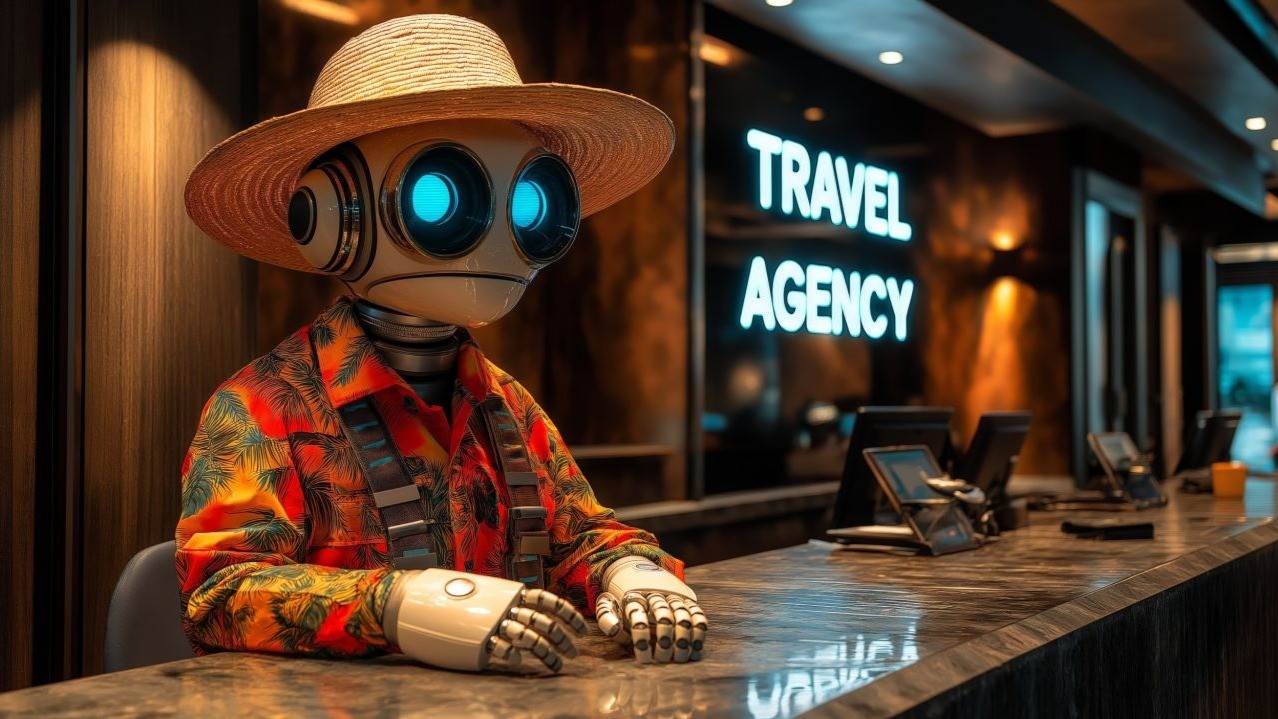
AI agents go beyond the AI assistant concept that’s become commonplace in the travel industry, providing end-to-end, always-on assistance. By communicating with external systems, they will proactively optimize customer experience, adapting to real-time changes like delays or weather reports. Travel aggregators, including Booking.com, Google, and Expedia, feature co-pilots that can personalize journey plans from start to finish. Another fantastic use case can be found at Heathrow airport, where the agentic assistant Hallie, accessible via WhatsApp, can resolve 90% of customer contacts without human intervention. Customer-focused agentic applications like this are clear indicators of the direction of travel in 2026.
2. Automation In Hotels And Hospitality
In 2026, automation is the invisible, data-driven nerve center of the hospitality experience. Robots, IoT and AI-driven predictive analytics are giving rise to the “smart hotel”. Marriott, for example, has introduced AI-driven housekeeping scheduling, driving what it calls “predictive hospitality”. And Accor has launched “smart rooms” designed to learn guests’ preferences for lighting, temperature and media, as well as improve accessibility. In one San Francisco hotel, robots deliver room service to your door. And, taking things to their logical extreme, Japan (where else?) even has a hotel staffed by robots, capable of responding to guest enquiries, operating lighting and air conditioning systems, and performing over 70 styles of dance.
3. Virtual Travel
Thanks to virtual and augmented reality (VR/AR), customers can use headsets to experience true-to-life recreations of hotel rooms, cruise ships and landmarks before they even step outside their front door. Expedia and Booking.com already integrate immersive room viewing into their booking platforms, and operators are developing digital twin models of entire resorts, attractions and even cities. This gives travelers the opportunity to plan their trips in an immersive way that becomes part of the travel experience itself, as well as offering opportunities for operators and local businesses to build connections with customers before they arrive and maintain them after they depart.
4. Marketing in The GenAI Age
In just two or three years, millions of us have quickly developed the habit of using generative AI tools like ChatGPT as travel buddies. Whether it’s translating menus, searching for attractions or navigating unfamiliar cities, chatbots have become indispensable travel companions. However, for operators in the travel and tourism sector, this means traditional marketing channels such as search engines and social media become less relevant. In 2026, they are adapting to this new paradigm, developing strategies to ensure their services are represented when travelers ask ChatGPT for personalized itineraries or local recommendations.
5. Sustainable Travel And Tourism Technology
While AI undoubtedly has an environmental cost, there are hopes that this can be offset when industries like travel and tourism apply it to reduce waste, cut carbon emissions, and operate more efficiently. Major travel aggregators, including Expedia and Booking.com, now highlight operator emissions, enabling customers to make sustainable choices. Airlines are using AI to optimize flight paths to minimize condensation trails, which are reported to account for 35 percent of the aviation industry’s contribution to global warming. Hoteliers are deploying AI and smart bins to cut kitchen waste, and mega-resorts like China’s Universal Beijing Resortare powered solely by renewable energy. Thanks to incoming legislation such as the EU Corporate Sustainability Reporting Directive, finding new ways to deploy green technology will be a key 2026 industry trend.
6. Biometrics: Beyond Border Control
Major chains including Marriott, CitizenM, Yotel and Accor are all piloting facial recognition technology and fingerprint scanners to enable frictionless check-in, room access and payments. The idea is that by integrating biometric systems, hotels can reduce waiting times and improve guest experience, as well as eliminate the financial and environmental expenses associated with single-use plastic keycards. With biometric identification systems operating at airports around the world, our unique biological indicators are increasingly becoming our passports, not just for crossing borders, but also for accessing facilities and services as we travel.
In 2026, one thing will be clear: travel and hospitality are entering a new era shaped by intelligent, data-driven technology. From AI agents and automation to biometrics and sustainability, the winners will be those organizations that use these tools to remove friction, enhance experiences and operate more responsibly.


Related Articles

Highlights Of The Adobe Summit London 2026: AI Coworkers, Smarter Marketing And The Future Of Customer Experience
The next customer visiting your website may not be a person. It could be an AI agent researching a purchase, comparing[...]
Is AI Making You Less Skilled? The Hidden Cost Of Letting Machines Think For You
Imagine you’re a great chef who decides to marry and live with a person who happens to be an even better[...]

Would You Bring A Dead Loved One Back As An AI Robot?
Would you bring someone you love back from the dead as a robot? It may sound like the premise of a[...]
5 Companies Winning With AI And What They Are Doing Differently
For many businesses, the AI journey starts with efficiency: automating tasks, streamlining processes and reducing costs. This can deliver significant value,[...]

Autonomous AI is here, but are enterprises ready?
Autonomous AI is starting to look less like a helpful chatbot and more like a new class of digital worker, one[...]
How JPMorgan Chase Is Building The AI-Powered Bank Of The Future
Global banking giant JPMorgan Chase has hugely ambitious plans for AI agents. They involve transforming virtually the entire company into a[...]

Sign up to Stay in Touch!
Bernard Marr is a world-renowned futurist, influencer and thought leader in the fields of business and technology, with a passion for using technology for the good of humanity.
He is a best-selling author of over 20 books, writes a regular column for Forbes and advises and coaches many of the world’s best-known organisations.
He has a combined following of 4 million people across his social media channels and newsletters and was ranked by LinkedIn as one of the top 5 business influencers in the world.
Bernard’s latest book is ‘Generative AI in Practice’.
Social Media