
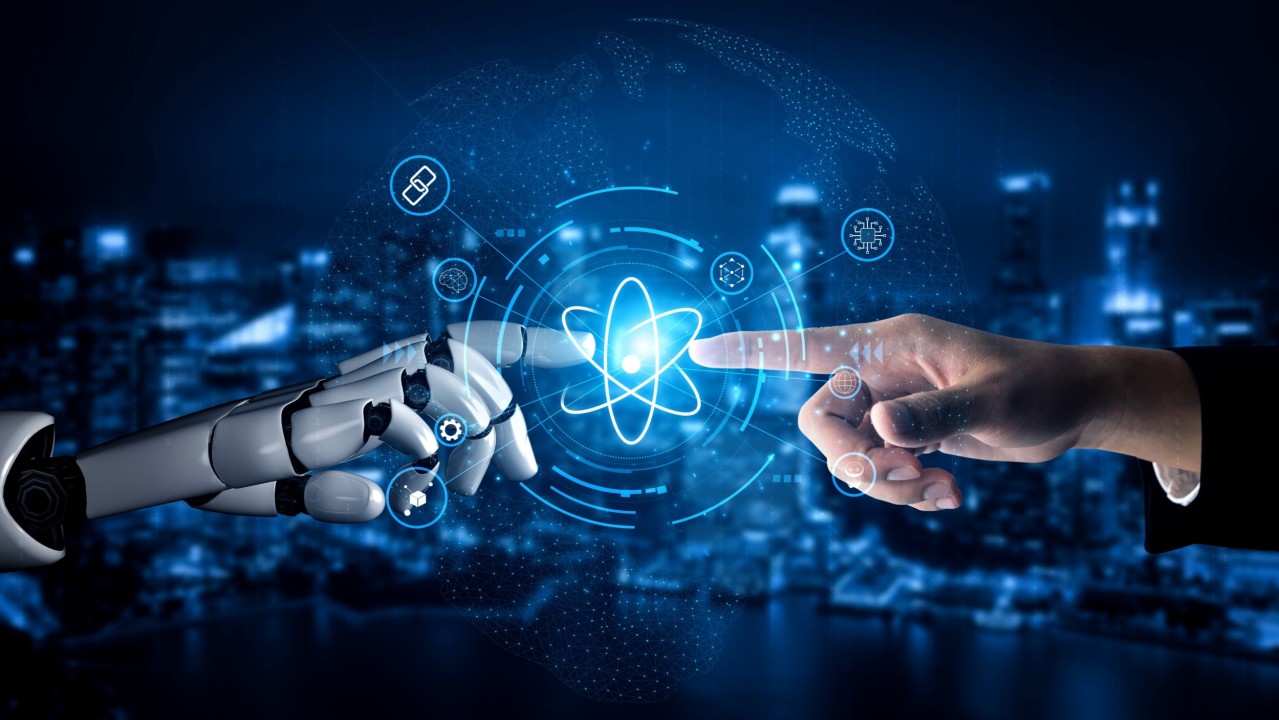
The Quantum Revolution Is Here, And It’s About More Than Just Computing
9 December 2025
When most people hear “quantum,” they immediately think of impossibly powerful computers solving problems that would take classical supercomputers millennia to crack. That’s certainly part of the story, but it misses the bigger picture. We’re entering the Quantum 2.0 era, where the manipulation of individual quantum particles will transform not just computation, but how we communicate, secure data, and sense the physical world around us.
I’ve been tracking quantum developments for years, and as Futurist in Residence at Nokia, I’ve had the privilege of visiting Nokia Bell Labs to see firsthand the groundbreaking research happening in their quantum labs and meet the brilliant scientists driving this work forward. What excites me most is the convergence of quantum technologies that will fundamentally redefine trust, security, and connectivity in our increasingly digital world. And Nokia, through its Bell Labs research division, is positioning itself at the center of this transformation with a comprehensive approach that extends far beyond the quantum computing race.
The 4 Pillars Of Quantum Innovation At Nokia
Let's start with what Nokia is actually working on, because their quantum strategy reveals something important about where this technology is heading.
First, there's quantum computing itself. Nokia Bell Labs is taking a distinctively different approach from many competitors by focusing on topological qubits. Traditional qubits are notoriously unstable, losing their quantum state within milliseconds due to the slightest environmental disturbance. As Ian Crawley, a Quantum Research Scientist at Nokia Bell Labs, explains, they're developing a topological qubit that is fundamentally more stable. Their approach creates quantum states that remain locked in place for days or weeks rather than milliseconds, a dramatic improvement that changes everything.
Peter Vetter, President of Nokia Bell Labs Core Research, puts the potential impact in perspective: "The topological qubit has the promise of being a very stable qubit. They're actually lasting longer to create the large-scale quantum computer that we need to simulate new materials, say for batteries or also in medical, for new protein design or drug design. If we can pull that off, that is revolutionary for the industry."
Nokia expects to demonstrate key advances in the coming year and aims to show a working topological qubit in 2026. This matters because stability is the single biggest barrier to practical quantum computing. Without it, you need massive error correction systems that require hundreds of thousands of qubits just to perform basic calculations. A truly stable qubit changes the economics and feasibility of quantum computing entirely.
Second, quantum networking is about connecting these quantum devices and enabling new forms of communication. In a related field, Nokia's research into quantum photon detection has already achieved transmission of 14 bits per photon, the lowest energy per bit communication system ever demonstrated at optical wavelengths. This opens possibilities ranging from more sustainable fiber optic networks to deep space communications with Mars missions or probes at the edge of our solar system.
Third, and perhaps most urgently relevant, is quantum security. This is where the rubber meets the road for businesses and governments today, because the quantum threat is already here, even if quantum computers aren't quite ready yet.
Fourth, quantum sensing represents a fascinating frontier that often gets overlooked in quantum discussions. Nokia Bell Labs is researching quantum photonic sensors and quantum magnetic field sensors that can detect phenomena we've never been able to measure before. These sensors could revolutionize optical and wireless communications, enable unprecedented positioning accuracy, and transform medical diagnostics by detecting the faint magnetic fields emitted by individual cells in the human body.
The Q-Day Problem Nobody Can Afford To Ignore
Here's what keeps security professionals awake at night: malicious actors are already harvesting and storing encrypted data today, waiting for the moment when powerful quantum computers become available to decrypt it. This "harvest now, decrypt later" attack doesn't require any current technological capability. It just requires patience and the certainty that quantum computers will eventually arrive.
Dimitrios Schoinianakis, a security research scientist at Nokia Bell Labs, has been sounding the alarm about Q-Day, the moment when Cryptographically Relevant Quantum Computers come online and render most classical encryption obsolete. Current estimates put this somewhere between 10 and 25 years away. That might sound distant, but as Schoinianakis points out, "Security doesn't work that way. If you wait until you see the threat, it is too late."
Consider what's at stake. Modern encryption protects everything from personal health records to critical infrastructure controls to state secrets. Quantum computers will eventually become powerful enough to break through most of the encryption we rely on today, exposing data that we assumed was safely protected.
The good news is that solutions are emerging. New post-quantum cryptography algorithms have been developed and standardized, specifically designed to resist quantum computer attacks. Nokia has made quantum-safe networking a top priority, implementing a defense-in-depth strategy that layers multiple encryption approaches, from these new algorithms to quantum key distribution, which uses the laws of quantum physics to make eavesdropping physically detectable.
What I find particularly smart about Nokia's approach is the emphasis on cryptographic agility, building systems that can accommodate new algorithms or switch between them without major disruptions. Because here's the reality: we can't be absolutely certain these first-generation post-quantum algorithms will withstand every possible attack. Security has always been a moving target, and quantum security will be no different.
Why Quantum Networks Matter Beyond Security
The networking piece deserves more attention than it typically gets. Quantum computers and quantum sensors will be highly distributed, and they'll need to communicate in ways that preserve quantum information. This quantum internet won't replace the classical internet; it will complement it, enabling distributed quantum computing that scales computational power across multiple quantum processors.
But there's another dimension here that excites me: quantum-enhanced classical communications. By applying quantum information theory to optical networking, Nokia researchers are pushing the fundamental limits of light-based transmission. René-Jean Essiambre's work on low-power quantum detection maximizes the information extracted from each photon, enabling extremely low-power transmission over tremendous distances.
Think about the implications. Satellite communications could function reliably even in severe weather. Deep space missions could maintain high-bandwidth connections. And conventional fiber networks could become dramatically more energy efficient at a time when data center power consumption is becoming a genuine sustainability challenge.
The Industrial And Societal Impact
Now let's talk about what all this actually means for businesses and society, because that's where quantum technologies move from fascinating physics to genuine transformation.
In pharmaceuticals and materials science, quantum computers will enable molecular-level simulation that's simply impossible with classical computers. We're talking about designing new drugs by accurately modeling how molecules interact with proteins, or discovering new battery materials by simulating atomic structures and behaviors. The trial-and-error approach that dominates these fields today could give way to precise computational design.
In logistics and optimization, quantum computers could tackle genuinely complex problems like global supply chain optimization or energy grid management. A classical computer trying to optimize routes for a global shipping company with millions of destinations faces an essentially unsolvable problem. A sufficiently powerful quantum computer could find optimal solutions that save enormous amounts of fuel and time.
In finance, quantum algorithms could revolutionize risk modeling and portfolio optimization, though they'll also threaten the cryptographic foundations of blockchain and cryptocurrency unless those systems adopt quantum-safe approaches.
But here's what I think gets overlooked: quantum technologies will transform networking itself. Communications networks will become more resilient, more efficient, and fundamentally more secure. In a world of increasingly sophisticated cyber threats and growing concerns about data sovereignty and privacy, quantum-safe networks aren't optional; they're essential infrastructure.
Why Nokia's Comprehensive Approach Matters
There's something worth noting about Nokia's quantum strategy that distinguishes it from many competitors. While various companies and research labs are chasing quantum computing breakthroughs, Nokia brings together quantum computing research, quantum networking expertise, quantum security solutions, and decades of experience building and securing the world's largest communications networks.
As Nokia's strategy makes clear, computing and communication are inextricably linked. You can't have powerful quantum computers without quantum networks to connect them. You can't have quantum networks without quantum-safe security to protect them. And you can't deploy any of this without deep expertise in building reliable, scalable network infrastructure.
Nokia Bell Labs has a relevant history here. Many of their greatest inventions, from the transistor to the solar cell to quantum dots, were rooted in quantum mechanics. This is Quantum 1.0 technology that shaped the modern world. Now they're applying that accumulated knowledge to Quantum 2.0, where we can manipulate individual quantum particles.
The topological qubit work is particularly interesting because if Nokia succeeds, it solves the stability problem that has plagued quantum computing and potentially enables much more practical, economical quantum computers. Instead of quantum computers that fill entire buildings and cost billions, you might fit equivalent power into a server rack at a fraction of the cost.
What Comes Next
I expect we'll see quantum security solutions deployed widely in the next few years, because the threat is immediate and the technology is ready. Post-quantum cryptography algorithms are being integrated into products and standards now. Companies and governments that aren't actively planning their quantum-safe migration are taking on significant risk.
Quantum networking will evolve more gradually, with early quantum internet connections emerging between research institutions and eventually scaling to connect quantum computers and enable new applications we haven't fully imagined yet.
Quantum computing breakthroughs will likely come in stages. We'll see incremental improvements in qubit stability and error correction, occasional dramatic demonstrations of quantum advantage for specific problems, and eventually, perhaps a decade or more from now, genuinely transformative quantum computers that can tackle problems classical computers cannot.
What excites me most is the convergence. When you combine quantum computers with quantum networks, quantum-safe security, and quantum sensing capabilities, you create an entirely new technological foundation. We're not just making our current systems faster or more efficient; we're enabling capabilities that were previously impossible.
The quantum revolution is unfolding right now, and companies like Nokia that are investing across the full spectrum of quantum technologies will play a defining role in shaping what comes next. For businesses and governments, the question is this: are you moving fast enough to keep pace with it?
To learn more about Quantum Computing at Nokia, click here: https://www.nokia.com/quantum/?did=D00000013015&utm_campaign=PoNAircover&utm_source=Other&utm_medium=social&utm_content=Quantum&utm_term=BernardMarr
#NokiaPartnership #Sponsored

Related Articles
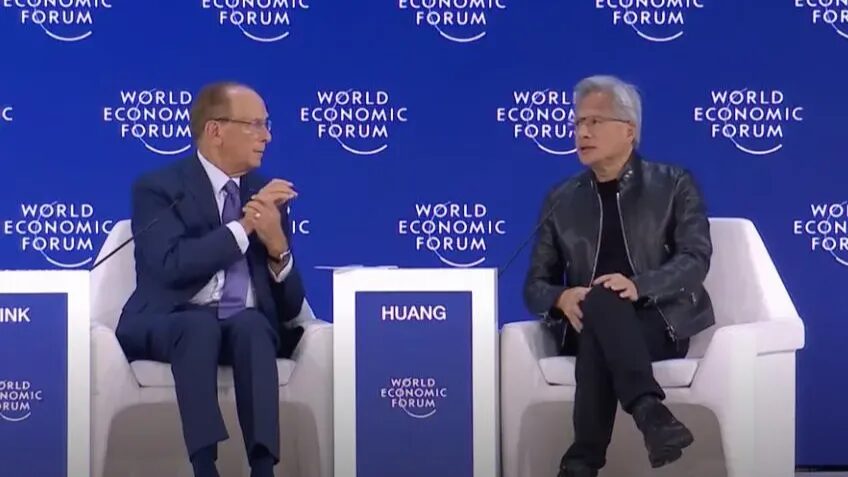
Davos 2026: Jensen Huang On The Five Layer AI Cake, The AI Bubble And Key AI Breakthroughs
By now, “smart” versions exist of just about every home appliance, gadget and gizmos we can think of. However, manufacturers continue[...]
Why Prompt Engineering Isn’t The Most Valuable AI Skill In 2026
By now, “smart” versions exist of just about every home appliance, gadget and gizmos we can think of. However, manufacturers continue[...]
Letting AI Browse The Web For You Sounds Great Until It Goes Wrong
By now, “smart” versions exist of just about every home appliance, gadget and gizmos we can think of. However, manufacturers continue[...]
The 8 Data Trends That Will Define 2026
By now, “smart” versions exist of just about every home appliance, gadget and gizmos we can think of. However, manufacturers continue[...]
7 Quantum Computing Trends That Will Shape Every Industry In 2026
By now, “smart” versions exist of just about every home appliance, gadget and gizmos we can think of. However, manufacturers continue[...]

5 Business Trends Every Company Must Prepare for in 2026
By now, “smart” versions exist of just about every home appliance, gadget and gizmos we can think of. However, manufacturers continue[...]

Sign up to Stay in Touch!
Bernard Marr is a world-renowned futurist, influencer and thought leader in the fields of business and technology, with a passion for using technology for the good of humanity.
He is a best-selling author of over 20 books, writes a regular column for Forbes and advises and coaches many of the world’s best-known organisations.
He has a combined following of 4 million people across his social media channels and newsletters and was ranked by LinkedIn as one of the top 5 business influencers in the world.
Bernard’s latest book is ‘Generative AI in Practice’.
Social Media