
What MWC 2026 Revealed About The Future Of AI At Work
21 May 2026
Something felt different at MWC 2026. Mobile World Congress has always been a place to spot the next big thing in connectivity, devices and digital infrastructure. This year, though, the mood had shifted. Walking the halls of Fira Gran Via, it became clear that AI is no longer something we only access through an app or a chatbot. It is starting to come to us, through our phones, in smart glasses and across the network itself.
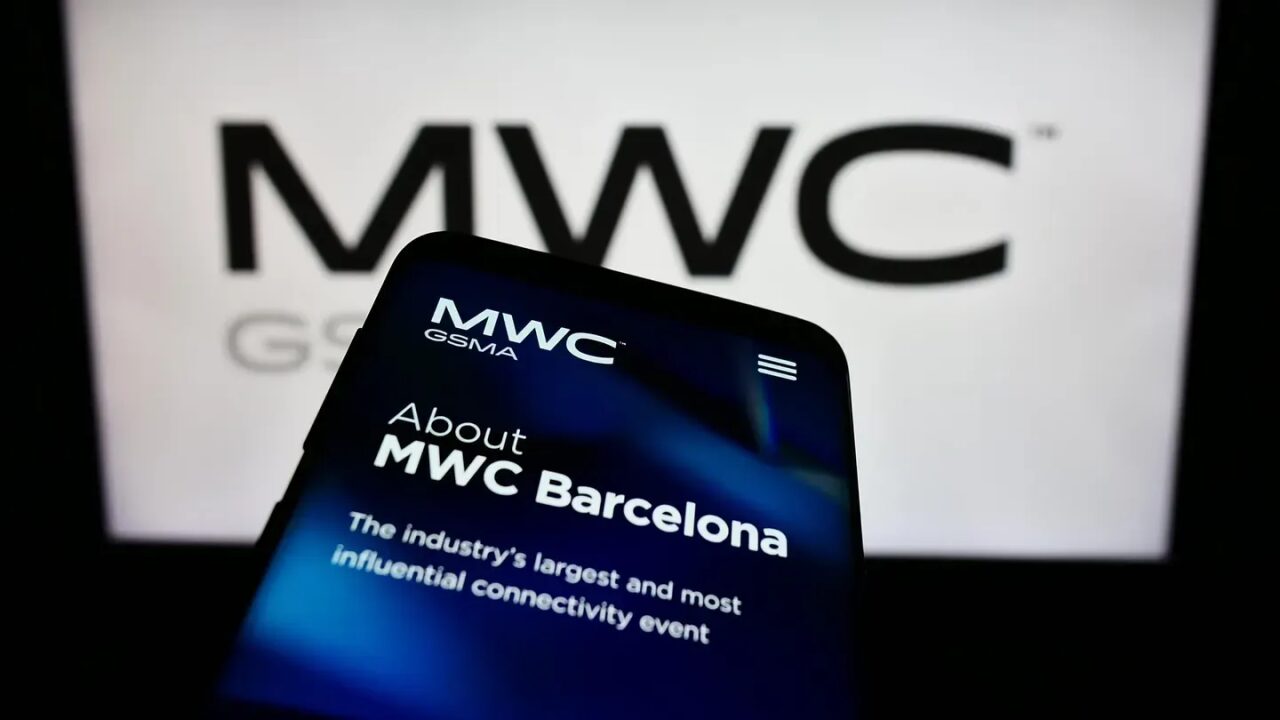
I spent three days on the show floor trying products, listening to keynotes and speaking with executives. What stood out to me was how quickly AI is moving from being a tool we use to becoming something more like a working partner. It is starting to see, listen, interpret and respond in real time, and that shift has major implications for business.
Your Next Device Will Watch, Listen And Respond
One of the most memorable demos I saw was Honor’s Robot Phone. It has a motorized camera that tracks you as you move, senses what is happening around it and reacts in a way that feels surprisingly lifelike. When the camera rises up, it feels less like waking a phone and more like activating a small robot that is ready to interact with the world.
The broader point here is that devices are becoming far more aware of context. They are beginning to understand what is happening around them and respond without needing constant instructions. For consumers, that may mean better videos or more helpful interactions. For businesses, the impact could be much more important.
Think about jobs where people are moving, using both hands or working in fast-changing environments. A field engineer does not want to stop and search through a manual. A nurse on a busy ward cannot keep breaking away to look something up on a screen. In these settings, a device that understands context and offers help in the moment becomes a very different kind of productivity tool.
For leaders, the important question is which roles benefit most when devices can understand their surroundings, and what rules need to be in place when those devices can also see and hear more of the workplace.
Smart Glasses Are Starting To Matter
The most interesting context aware interface trend I saw at MWC 2026 was smart glasses, especially display glasses from companies such as Meta and Alibaba.
One of my most striking experiences at the show was trying the Qwen AI glasses during a live conversation with someone speaking Chinese. I could hear their words translated into English as they spoke, while English captions appeared in front of my eyes in real time. It was one of those moments where you suddenly see the practical value of a technology.
This is where the enterprise opportunity becomes very real. When information appears directly in your line of sight, work becomes more continuous. You do not have to stop, pull out a device, unlock a screen and search for what you need. The information comes to you while you stay focused on the task in front of you.
The use cases are easy to understand. Real-time translation can remove friction in global collaboration. Hands-free navigation can help staff find the right place or asset on a large site. Contextual Q&A means a technician can look at a piece of equipment and ask what to do next, rather than leaving the job to find support. Each of these is a pain point organizations already recognize, but what is new is the way the technology can solve them.
Even more so than context aware phones, smart glasses move AI out of the screen and into the environment around us. AI becomes something people work alongside throughout the day. For glasses, it also raises some important questions. What can be recorded? Where is data stored? What does consent look like in practice? How do these tools connect with existing systems, knowledge bases and workflows?
Physical AI Is Showing Where The Cloud Falls Short
Robots and autonomous systems have been part of the MWC conversation for years. This year, they felt much closer to real commercial use. That also brought a major issue into focus. Cloud-only AI is often too slow or too limited for physical environments.
When decisions need to be made in milliseconds, or when sensitive operational data cannot leave a site, sending everything back to a distant cloud platform is not always practical. A practical example is a robot in a warehouse or on a production site. If it has to wait for a cloud response before it can react to an obstacle, that delay can create risk.
Edge computing is not new, but MWC 2026 showed that the discussion has moved on. We are now seeing networks and infrastructure designed to run AI workloads much closer to where data is created, with tighter links between connectivity and compute.
Satellites Matter More Than Ever
Another area of focus was satellite connectivity. Ground-based networks will continue to do most of the heavy lifting in places with strong coverage. Satellites matter when reach and resilience become more important, especially in remote locations.
As more AI-enabled work moves into the physical world, network failure becomes a much bigger issue. If operations depend on real-time data or autonomous systems, then loss of connectivity can quickly become a business risk. Satellite connectivity is starting to act as part of the resilience layer that makes edge AI dependable in real-world conditions.
Agentic AI Is Becoming The Operating Model
If one theme came up again and again in my conversations at MWC 2026, it was agentic AI. These are systems that can plan, decide and act with a degree of autonomy. They are moving from experimental projects into real-world use. Networks are a natural place to start because they are complex and constantly changing. AI agents can monitor conditions, spot likely faults and trigger or coordinate maintenance with far less human effort.
The same pattern is emerging in supply chains and cybersecurity, where work often depends on fast decisions across multiple connected systems.
Agentic AI changes the role of AI in the business. Traditional AI often helps people analyze information or make recommendations. Agentic AI goes further, it takes action. That also means the governance challenge becomes much more serious. Businesses need audit trails and accountability for what the system does. They also need to define where human oversight sits and which decisions can be handled independently.
The organizations that get the most value from agentic AI will be the ones that see it as an operating model, not just a feature. That means redesigning workflows, connecting systems properly, setting clear rules and measuring outcomes in a meaningful way.
What Leaders Should Do Now
MWC 2026 sent a very clear message. Enterprise AI is moving closer to action. It is moving into devices that understand their surroundings. It is moving into glasses that support people while they work. It is moving into networks designed to handle AI workloads as a core requirement. Agentic AI is becoming the coordination layer that connects all of this and turns capability into outcomes.
For leaders, the starting point should be practical. Focus on a small number of workflows where contextual AI can create clear value. Build the infrastructure needed to make those workflows reliable. Put governance in place before autonomous systems begin operating at scale. Set policies for new interfaces such as smart glasses early, so the organization is ready when pilot projects begin. What MWC 2026 revealed is that AI is moving out of the interface and into the real world of work, and that shift is only just beginning.
Related Articles
How To Get Your Business Data Ready For AI Agents
Give an AI agent bad data, and it can make bad decisions at machine speed. AI agents are ushering in a[...]
The Amazing Robot Innovations At The Goodwood Future Lab
A humanoid, a wheeled rover and a dog-like robot are trying to push a giant inflatable ball up a ramp. It[...]
How Klarna’s AI Agent Strategy Backfired But Became A Useful Lesson
Klarna’s AI customer service rollout looked like a textbook success. Its autonomous agent handled 2.3 million conversations in its first month,[...]
Revolut Is Building An AI Brain For Banking, And It Could Change Finance Forever
Revolut is taking a very different approach to AI in banking. While many financial services companies are using off-the-shelf AI tools[...]
Why No One Really Understands AI, And Why That Should Worry Us
AI may be the most powerful technology most of us have ever used without really understanding how it works. That should[...]
Highlights Of The Adobe Summit London 2026: AI Coworkers, Smarter Marketing And The Future Of Customer Experience
The next customer visiting your website may not be a person. It could be an AI agent researching a purchase, comparing[...]

Sign up to Stay in Touch!
Bernard Marr is a world-renowned futurist, influencer and thought leader in the fields of business and technology, with a passion for using technology for the good of humanity.
He is a best-selling author of over 20 books, writes a regular column for Forbes and advises and coaches many of the world’s best-known organisations.
He has a combined following of 4 million people across his social media channels and newsletters and was ranked by LinkedIn as one of the top 5 business influencers in the world.
Bernard’s latest book is ‘Generative AI in Practice’.
Social Media