
What We Didn’t See At CES 2026, And Why That Matters
3 March 2026
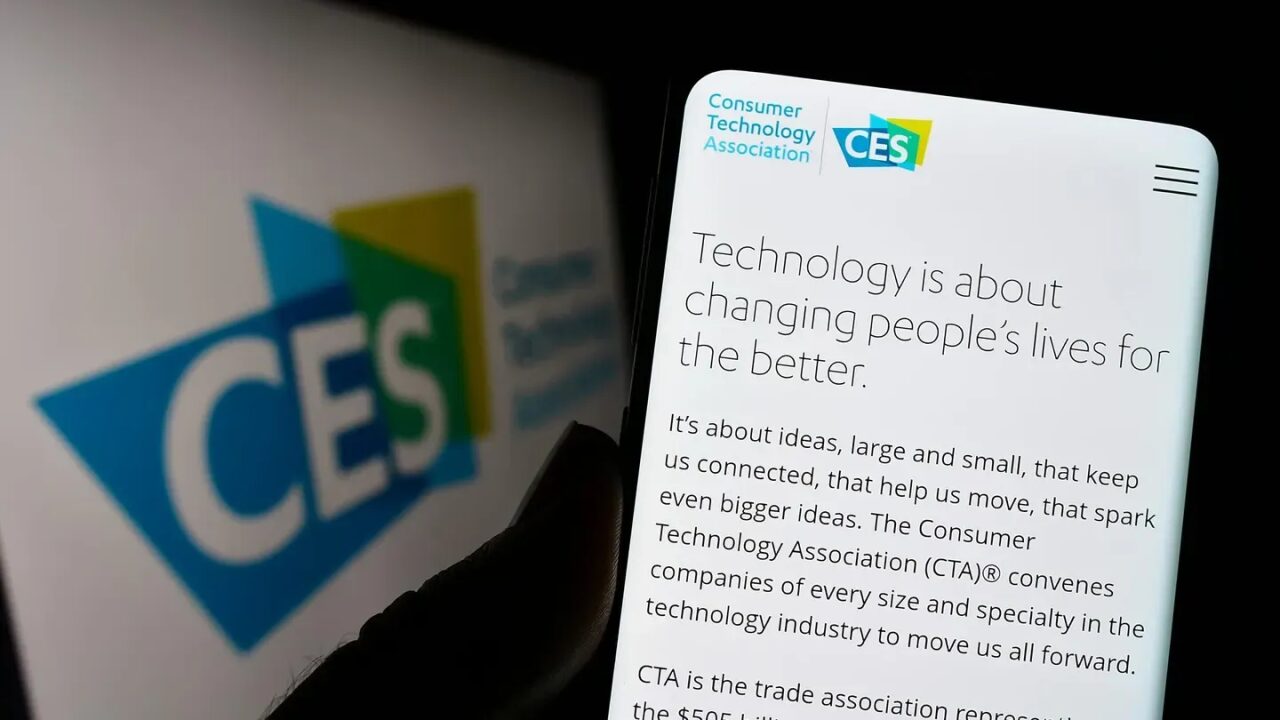
The curtains have fallen on CES 2026, where artificial intelligence, humanoid robots and connected smart home gadgets were the stars of the show.
The world’s largest consumer technology exhibition aims to showcase the toys, tools and gadgets we’ll spend our hard-earned money on over the next 12 months. And as they’re mostly built on breakthroughs that will also make their way into industrial and workplace technology, there are important takeawayson the subject of the future of work, too.
Behind the glitz and glamor of the headline-grabbing announcements, however, it often becomes apparent that what isn’t said is just as important as what is said.
While manufacturers are keen to talk up all the ways their latest products will improve our lives, details of societal, economic and environmental impact are often glossed over.
So here are some of the implications of this latest wave of consumer technology that we didn’t hear about in Las Vegas this year, and some thoughts on why understanding these strategic omissions is critical to understanding their real impact.
Human Jobs And Skills
At CES 2026, labor-saving devices were everywhere, from domestic robots to AI-driven content creation systems. These tools and applications will appear in workplaces as well as homes, but there was little discussion of their impact on human jobs. Many believe that the biggest challenges for businesses won’t be technological adoption, but transitioning workforces to be ready for the disruption that technology will cause. Though brimming with innovation, there was little on show in Vegas this year aimed at helping companies overcome the ever-widening gap between technological capability and human workforce readiness.
The Environmental Cost Of AI
Likewise, little was said about the enormous energy footprint required to train and run the AI products on display. While CES 2026 did feature panels and discussion forums on topics including the circular economy and cleantech, limited insight was offered into how these ideas and concepts are relevant to the very real, energy-hungry AI tools, services and appliances on display. While an area of the show dedicated to sustainable tech meant the topic wasn’t entirely ignored, meaningful discussion of how environmental impact will shape the next wave of AI-driven innovation was notably absent.
AI Governance And Legislation
With autonomous behavior and decision-making baked into the latest smart consumer tech, it would have been nice to see greater focus on the compliance, governance and safety frameworks needed for AI to be safely integrated into our day-to-day lives. This is clearly a blind spot, indicating that AI is evolving faster than guardrails can be put in place. This disconnect should be seen as a warning to business and everyday users of AI that when it comes to governance, vendor maturity varies wildly. Without robust internal policies to mitigate this, organizations could end up working with systems with risks that aren’t fully understood.
Privacy, Cyber Security And Data Protection
AI-powered home assistants and wearables capable of monitoring users’ emotional states were making headlines and collecting awards. But there was little mention of the fact that these devices are constantly collecting our voice, location, biometric, and behavioral data, and the risks this creates. Precise details about what data is stored and what is done with it were not always easy to discern; a reminder that clearly communicating data protection policies often takes a back seat to showing off features and functionality. This tells us that privacy and security are still very much an afterthought, and risks are only likely to increase as technology becomes more immersive and ingrained in our organizations.
The Real Value Proposition Of AI
There’s been a lot of talk over the past year of an AI bubble, and many argue that businesses must start proving they can generate real value to justify the huge investments flowing into AI. At CES, manufacturers showcased home-help robots and context-aware smart home appliances but offered little insight into how these innovations will recoup the vast sums spent on AI research and run-time cloud inference. We heard little about the one thing enterprise leaders need most: a clear path from impressive capability to sustainable business growth.
Final Thoughts
These omissions remind us that for enterprise, the challenge is often to look beyond the wow factor captured in headlines and focus on what isn’t being talked about.
The innovations unveiled in Las Vegas might change the world, but only if they’re thoughtfully integrated into the way we work and do business. This means discussing their impact on jobs, the environment, security, and the business’s bottom line is essential to unlocking their full potential in a safe way.
Related Articles

How Goldman Sachs Is Using Agentic AI For Software Engineering At Scale
The financial services industry depends on data, speed and accuracy. Unfortunately, a significant portion of its digital infrastructure is not up[...]

What Is The Singularity And Are We There Yet?
The singularity has long been one of the most fascinating and frightening ideas in technology: a point when machine intelligence surpasses[...]

Sign up to Stay in Touch!
Bernard Marr is a world-renowned futurist, influencer and thought leader in the fields of business and technology, with a passion for using technology for the good of humanity.
He is a best-selling author of over 20 books, writes a regular column for Forbes and advises and coaches many of the world’s best-known organisations.
He has a combined following of 4 million people across his social media channels and newsletters and was ranked by LinkedIn as one of the top 5 business influencers in the world.
Bernard’s latest book is ‘Generative AI in Practice’.
Social Media