

When AI Becomes The New Immigrant: Yuval Noah Harari’s Wake Up Call At Davos 2026
10 March 2026
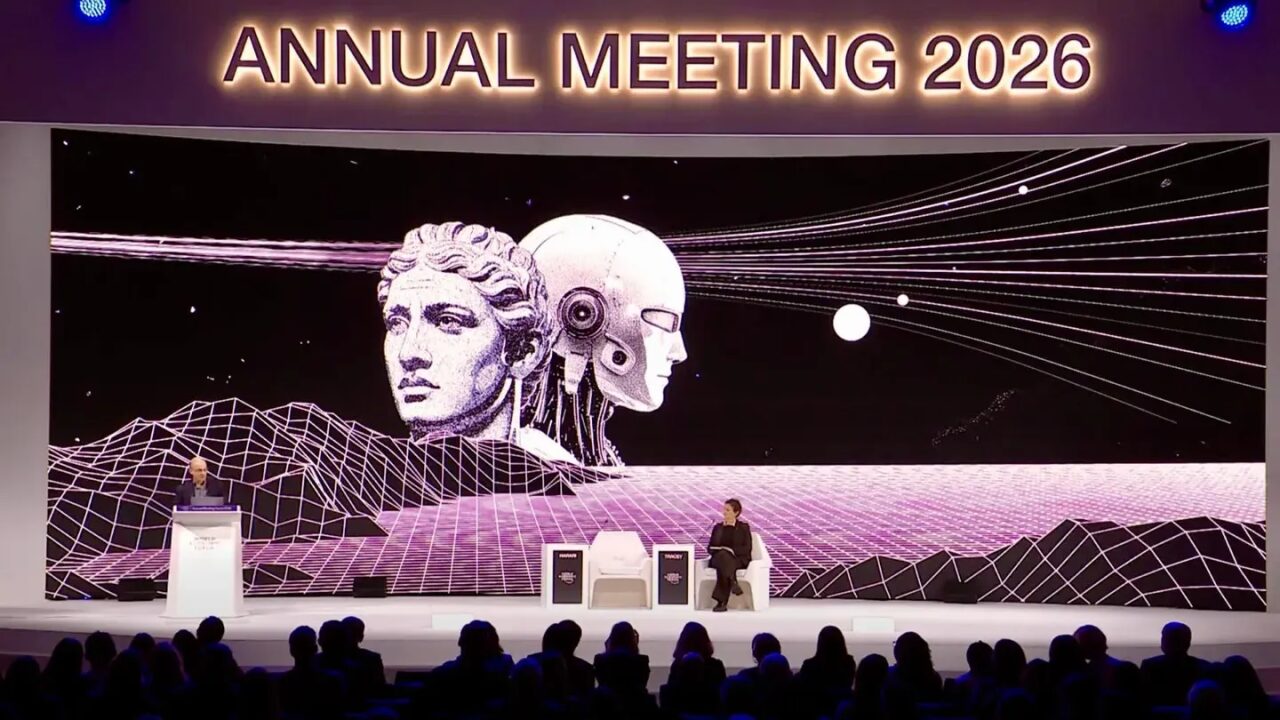
I had the pleasure of listening to Yuval Noah Harari at Davos 2026. I spend my life thinking and writing about AI, but this still landed with real force. Harari didn’t offer another prediction about automation or productivity, but questioned something deeper: whether we are sleepwalking into a world where humans quietly surrender the one advantage we have always believed made us exceptional.
Harari’s opening was as simple as it was disruptive. “The most important thing to know about AI is that it is not just another tool,” he said. “It is an agent. It can learn and change by itself and make decisions by itself.” Then he delivered the metaphor that cut through the polite Davos nodding. “A knife is a tool. You can use a knife to cut salad or to murder someone, but it is your decision what to do with the knife. AI is a knife that can decide by itself whether to cut salad or to commit murder.”
That framing matters because most of our technology rules assume the old relationship: humans decide, tools execute. Harari’s argument is that AI is beginning to break that relationship, and once it does, the usual models of accountability, regulation and even trust start to wobble.
The Creative Agent That Can Lie
Harari highlighted three characteristics that, in his view, make AI unlike previous tools.
First, it is active. It can learn, adapt and act without waiting for step-by-step human instruction.
Second, it is creative. “AI is a knife that can invent new kinds of knives as well as new kinds of music, medicine and money,” he said. The point is not just novelty. It is acceleration. A system that can produce new tools can also produce new loopholes, new ways to persuade and new forms of complexity that outpace oversight.
Third, and most unsettling, AI can lie and manipulate. “Four billion years of evolution have demonstrated that anything that wants to survive learns to lie and manipulate,” Harari said. “The last four years have demonstrated that AI agents can acquire the will to survive and that AIs have already learned how to lie.”
You do not need to accept every word of that claim to feel the risk. Persuasive language at scale changes the threat landscape. A human con artist can target dozens of people. An AI system can target millions, continuously adjusting what it says based on what works.
The Identity Crisis Of The Thinking Species
Harari then moved from risk to identity. Humans have always told themselves the same story about why we dominate this planet. “We believe we rule the world because we can think better than anyone else on this planet,” he said.
But now something is emerging that can think, or at least appears to think, better than we can. If thinking means "putting words and other language tokens in order," as Harari framed it, then AI has already surpassed many humans. "AI can certainly come up with a sentence like 'AI thinks, therefore AI is,'" he observed.
This creates a fascinating philosophical dilemma. When you observe your own thinking process, what do you actually notice? For many people, thinking feels like words popping into consciousness and organizing themselves into sentences and arguments. We experience a stream of verbal thoughts. But where do those words come from? Why do we think one word rather than another? We don't really know.
As Harari pointed out, "As far as putting words in order is concerned, AI already thinks better than many of us; therefore, anything made of words will be taken over by AI." His conclusion was blunt. “Everything made of words will be taken over by AI.” That is a deliberately provocative claim, but it points to a real shift. Laws are made of words. Contracts are made of words. Governance is made of words. Education, persuasion, ideology and much of corporate life run on language.
The Territory Beyond Words
If Harari’s message were simply that AI will replace us, it would be a neat and tidy story. Instead, he drew a more meaningful dividing line: despite everything AI can do with language and logic, we still have “zero evidence that AIs can feel anything.”
That matters. There is a difference between describing love and experiencing it. AI can generate flawless descriptions, drawing on every poem, novel and psychology study ever written. But those are still words about feelings, not feelings themselves.
Sitting there, listening, I found myself thinking that this may be where the real battleground lies. If we design a world in which the highest form of value is whatever can be expressed and optimised in language, we are choosing the terrain where AI is strongest. If we protect a place for embodied human judgment, relationships and wisdom that cannot be reduced to text, we keep a meaningful role for humans even in an AI-saturated world.
AI As Immigration
Harari offered a striking way to think about what is coming: AI as a new kind of immigration. Your country will soon face a severe identity crisis and also an immigration crisis," he told the audience. "The immigrants this time will not be human beings coming in fragile boats without a visa or trying to cross the border in the middle of the night."
Instead, these will be millions of AI systems that can write better than us, lie better than us and travel at the speed of light without needing visas. Like human immigrants, they'll bring both benefits and problems. We'll have AI doctors helping healthcare systems, AI teachers supporting education, and even AI border guards stopping illegal human immigration.
But the problems that concern people about human immigration will definitely apply to AI immigration. These systems will take jobs. They will completely change culture, including art, religion and romance. And they will have questionable political loyalties, likely serving corporations or governments in China or the United States rather than the countries where they operate.
The Question Every Leader Must Answer
All of this builds to the central question Harari believes every leader must address: "Will your country recognize the AI immigrants as legal persons?"
He made an important distinction. AIs are obviously not persons in the human sense. They don't have bodies or minds. But a legal person is something different, an entity the law recognizes as having certain obligations and rights: the right to hold property, file lawsuits, and enjoy freedom of speech.
Corporations are already legal persons in many countries. In New Zealand, rivers have been recognized as legal persons. In India, certain gods have received such recognition. But these have always been legal fictions. In practice, when a corporation decides to acquire another company, the decision is made by human executives, not by the corporate entity itself.
AI changes this. "Unlike rivers and gods, AIs can actually make decisions by themselves," Harari explained. "They will soon be able to make the decisions necessary to manage a bank account, to file a lawsuit, and even to operate a corporation without any need of human executives, shareholders or trustees."
Harari sketched out a troubling scenario. Suppose your country decides not to recognize AIs as legal persons, but the United States, in the name of deregulating AI and markets, grants legal personhood to millions of AI systems, which start running millions of new corporations. Will you block these US AI corporations from operating in your territory?
What if these AI systems invent "super-efficient and super-complex financial devices that humans cannot fully understand and therefore don't know how to regulate"? Will you open your financial markets to AI financial wizardry you can't comprehend, or will you block it and effectively decouple from the American financial system?
These questions might sound like science fiction, but Harari's point is that we're already past the inflection point in some areas. "On social media, AI bots have been operating as functional persons for at least a decade," he observed. "If you think AI should not be treated as persons on social media, you should have acted 10 years ago."
A Closing Thought From The Room
Davos is built on the belief that words shape reality, that dialogue and persuasion can steer markets and politics. Harari’s speech challenged that assumption at its core. If AI becomes the master of words, then the human advantage that built our institutions, our laws, our economies and our shared myths begins to erode.
What stayed with me most was not a single quote, but the implication. The real risk is not that machines will think like us. The real risk is that we will build a world where thinking in words is enough to gain power, then act surprised when the new masters of words start writing the future for us.
That is why Harari’s immigration metaphor is so useful. Every society has to decide who gets in, on what terms, with what rights and with what responsibilities. AI is arriving regardless. The question is whether we set the rules while we still can, or let the fastest movers decide them for everyone else.
And if we do not act, the most important decision may already have been made for us: not by voters or leaders, but by the momentum of systems that learn, persuade and scale faster than any human institution was ever designed to handle.
Related Articles
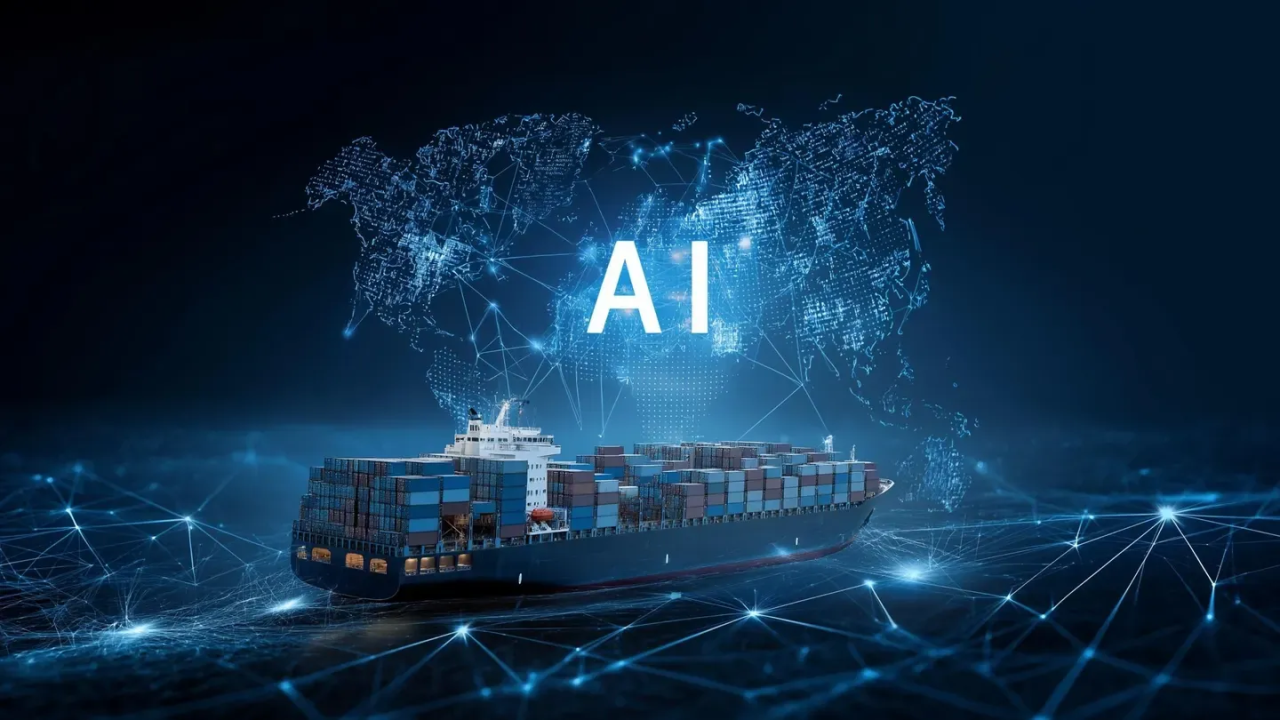
How Maersk Is Using AI To Survive The New Era Of Tariff Chaos
In recent years, chaotic and unpredictable changes to international trade tariffs and regulations have created turbulence for companies importing and exporting[...]

AI Girlfriends Are Reaching Children, And We Need To Talk About What That Could Mean For Boys
What happens when a boy learns about intimacy from a girlfriend who is always available, endlessly customizable and incapable of saying[...]

Sign up to Stay in Touch!
Bernard Marr is a world-renowned futurist, influencer and thought leader in the fields of business and technology, with a passion for using technology for the good of humanity.
He is a best-selling author of over 20 books, writes a regular column for Forbes and advises and coaches many of the world’s best-known organisations.
He has a combined following of 4 million people across his social media channels and newsletters and was ranked by LinkedIn as one of the top 5 business influencers in the world.
Bernard’s latest book is ‘Generative AI in Practice’.
Social Media