

What is Machine Vision And How Is It Used In Business Today?
2 July 2021
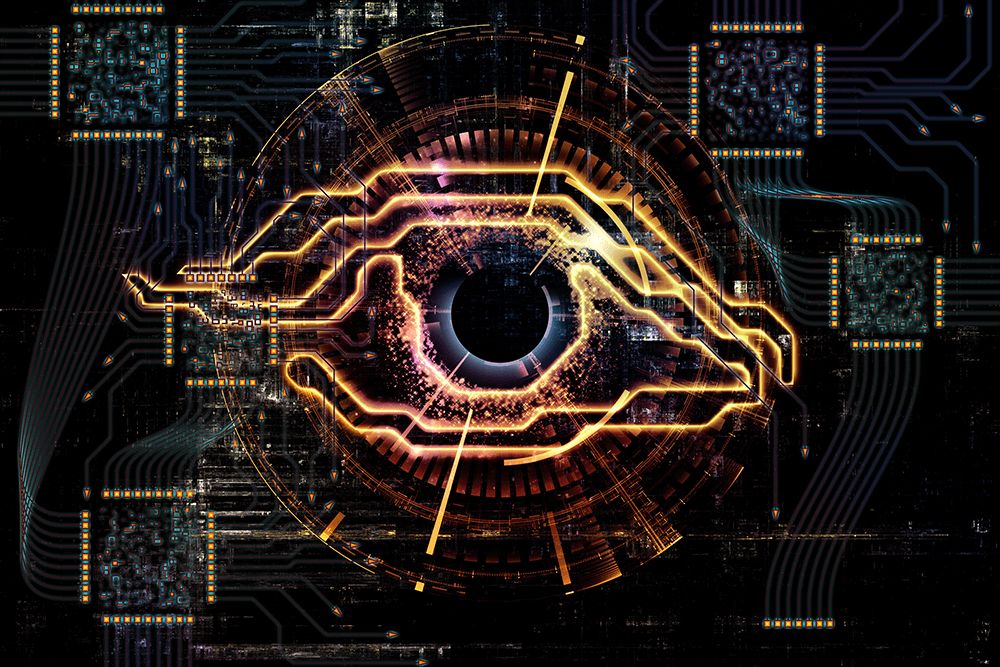
One of the simplest ways to understand a machine vision system is to consider it the “eyes” of a machine. The system uses digital input that’s captured by a camera to determine action. Businesses use machine vision systems in a variety of ways to improve quality, efficiency and operations.
How do machine vision systems work?
Some manufacturing facilities have used machine vision systems since the 1950s, but it was in the 1980s-1990s when things really started to expand. Regardless of an industrial or non-industrial application, a combination of software and hardware work together to make machine vision systems possible. Here are the typical components involved:
- Sensors
- Frame-grabber
- Cameras (digital or analogue)
- Lighting sufficient for cameras to capture quality images
- Software and computer capable of analysing images
- Algorithms that can identify patterns; important in some use cases
- Output such as a screen or mechanical components
Let’s look at how these components work together when machine vision is used to inspect a product in a manufacturing operation, a very common example of a machine vision system in practice.
The process begins when a sensor detects the presence of a product. The sensor then triggers a light source to illuminate the area and a camera to capture an image of the product or a component of the product. The frame-grabber (a digitising device) translates the camera’s image into digital output. The digital file is saved on a computer so it can be analysed by the system software. The software compares the file against a set of predetermined criteria to identify defects. If a defect is identified, the product will fail inspection.
What’s the difference between machine vision and computer vision?
Computer vision and machine vision are overlapping technologies. A machine vision system requires a computer and specific software to operate while computer vision doesn’t need to be integrated with a machine. Computer vision can, for example, analyse digital online images or videos as well as “images” from motion detectors, infrared sensors or other sources, not just a photo or video. Machine vision is a sub-category of computer vision.
How is machine vision used in business?
In addition to using machine vision for quality control purposes, it is helping businesses in many ways today for identification, inspection, guidance and more. Here are a few examples:
Correcting production line defects: In addition to using machine vision to identify defective products, machine vision can help determine where the problems are being introduced in a production line so corrective action can be taken.
Farming: Machine vision is used by harvesting machines to detect the location of grapes on the vine so that robotic harvesting machines can pick the bunches without destroying any grapes. Machine vision is also used as part of farm machinery to monitor crops and detect diseases on plants.
Inventory control and management: Machine vision is imperative in the process of reading barcodes and labels on components and products. This has important applications for inventory control, but also in the manufacturing process to ensure the correct components get added as products move down an assembly line. Machine vision is critical for the bin-picking done in warehouses by robots.
Product tracking and traceability: In heavily regulated industries such as pharmaceuticals, it’s important to be able to track ingredients, product serial numbers and monitor expiration dates which machine vision makes extraordinarily easier.
Measurements and calibration: Whether measuring the gap in a spark plug to ensure it fits specifications or identifying a gauge that needs calibrated, machine vision automates and makes the process quite efficient.
Safety: Whether on a construction site with heavy equipment or tracking food supplies, machine vision can improve safety with great efficiency.
As the technology continues to get more sophisticated, the use cases for machine vision will continue to grow.

Related Articles

5 Real-World Vibe Coding Success Stories That Show What AI Can Really Do
Not too long ago, building software meant either spending years learning to code or paying someone a hefty fee to do[...]

How To Design Multi-Agent Workflows That Actually Work
AI agents are increasingly being pitched as virtual workers capable of running entire business processes with minimal supervision. But there’s a[...]
How Instacart Is Using Physical AI To Reinvent The Grocery Store
The smartest computer in your local grocery store may soon be the cart rattling toward the cereal aisle. For years, retailers[...]
How Google Cloud Put An AI Agent Inside Formula E’s GEN4 Car
At 150 miles per hour, there is very little time to ask an AI assistant where you are losing speed. Yet[...]

Why The AI Race Is Really An Infrastructure Race
The most dangerous mistake in the AI race is assuming that the smartest model will win it. For the past few[...]
The 5 AI Scaling Mistakes That Could Derail Your Business
AI pilots can make AI look deceptively manageable. Scale is where reality arrives. A system that works brilliantly for 50 people[...]

Sign up to Stay in Touch!
Bernard Marr is a world-renowned futurist, influencer and thought leader in the fields of business and technology, with a passion for using technology for the good of humanity.
He is a best-selling author of over 20 books, writes a regular column for Forbes and advises and coaches many of the world’s best-known organisations.
He has a combined following of 4 million people across his social media channels and newsletters and was ranked by LinkedIn as one of the top 5 business influencers in the world.
Bernard’s latest book is ‘Generative AI in Practice’.
Social Media