
How Artificial Intelligence, IoT And Big Data Can Save The Bees
2 July 2021
Modern agriculture depends on bees. In fact, our entire ecosystem, including the food we eat and the air we breathe, counts on pollinators. But the pollinator population is declining according to Sabiha Rumani Malik, the founder and executive president of The World Bee Project. But, in an intriguing collaboration with Oracle and by putting artificial intelligence, internet of things and big data to work on the problem, they hope to reverse the trend.
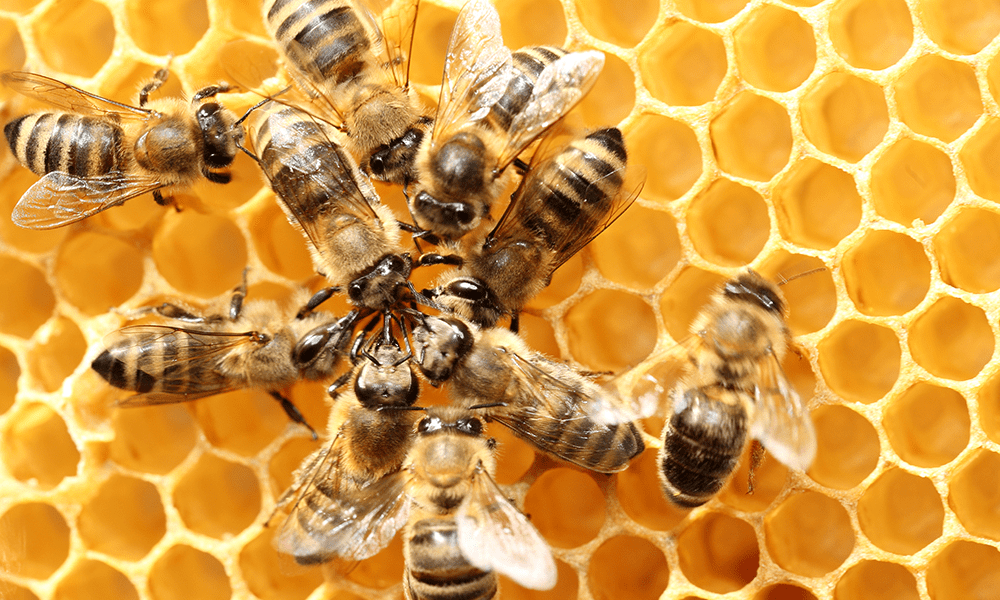
Why is the global bee population in decline?
According to an Intergovernmental Science-Policy Platform on Biodiversity and Ecosystem Services (IPBES) report, pollinators are in danger. There are many reasons pollinators are being driven to extinction, including habitat destruction, urbanisation, use of pesticides, pollution, fragmentation of natural flowering habitats, predators and parasites, and changing climate. However, until recently, with The World Bee Project’s work, there hasn’t been a global initiative to study bee populations or to research and attack the issue from a global perspective.
Why is it important to save the bees?
Did you know that bees, along with other pollinators, such as butterflies, are the reason plants can produce seeds and reproduce? According to the United States Department of Agriculture (USDA), 35 percent of food crops and three-quarters of the world’s flowering plants depend on bees and pollinators. In fact, in order to ensure the almond crop gets pollinated in California each year, most of the beehives in the United States are shipped to California to ensure it. In fact, bees help to pollinate 90% of the leading global crop types, including fruit trees, coffee, vanilla, and cotton plants. And, of course, healthy plants are critical in replenishing our oxygen supply thanks to photosynthesis.
If the pollinators aren’t alive or healthy enough to do their job, our global crop production, food security, biodiversity, and clean air is in peril. Honeybees are the world’s most important pollinators. As much as 40 percent of the global nutrient supply for humans depends on pollinators. Presently there are approximately 2 billion people who suffer deficiencies of micronutrients.
“Our lives are intrinsically connected to the bees,” Malik said.
Partnership to monitor global honeybee population
The World Bee Project is the first private globally coordinated organisation to launch and be devoted to monitoring the global honey bee population. Since 2014, the organisation has brought together scientists to study the global problem of bee decline to provide insight about the issue to farmers, governments, beekeepers, and other vested organisations.
In 2018, Oracle Cloud technology was brought into the work to better understand the worldwide decline in bee populations, and The World Bee Project Hive Network began.
How technology can save the bees
How could technology be used to save the bees? Technology can be leveraged to help save the bees in a similar way that it is applied to other innovative projects. First, by using internet-of-things sensors, including microphones and cameras that can see invasive predators and collect data from the bees and hives. Human ingenuity and innovations such as wireless technologies, robotics, and computer vision help deliver new insights and solutions to the issue. One of the key metrics of a hive’s health is the sounds it produces. Critical to the data-gathering efforts is to “listen” to the hives to determine colony health, strength, and behaviour as well as collect temperature, humidity, apiary weather conditions, and hive weight.
The sound and vision sensors can also detect hornets, which can be a threat to bee populations.
The data is then fed to the Oracle Cloud, where artificial intelligence (AI) algorithms get to work to analyse the data. The algorithms will look for patterns and try to predict behaviours of the hive, such as if it’s preparing to swarm. The insights are then shared with beekeepers and conservationists so they can step in to try to protect the hives. Since it’s a globally connected network, the algorithms can also learn more about differences in bee colonies in different areas of the world. Students, researchers, and even interested citizens can also interact with the data, work with it through the hive network’s open API, and discuss it via chatbot.
For example, the sound and vision sensors can detect hornets, which can be a threat to bee populations. The sound from the wing flab or a hornet is different from those of bees, and the AI can pick this up automatically and alert beekeepers to the hornet threat.
Technology is making it easier for The World Bee Project to share real-time information and gather resources to help save the world’s bee population. In fact, Malik shared, “Our partnership with Oracle Cloud is an extraordinary marriage between nature and technology.” Technology is helping to multiply the impact of The World Bee Project Hive Network across the world and makes action to save the bees quicker and more effective.
Here you can see a short video showing the connected beehive in augmented reality during my interview with Sabiha Rumani Malik – pretty cool:
Related Articles

AI Is Making Us Faster. So Why Aren’t Businesses More Productive?
Paid partnership with Atlassian AI is becoming remarkably good at helping us complete individual tasks faster. AI can now write code,[...]
The Top 7 Technology Trends For 2026
Technology is moving into a new phase in 2027, and once again AI sits at the center of it. But this[...]
AI Is Growing Up: What World Summit AI 2026 Revealed About The Future Of Business
The AI industry is entering a new phase, where autonomous agents, business transformation, governance and human wisdom are taking center stage.[...]

How AI, Drones And Autonomous Vehicles Are Transforming The British Army
The British Army is entering a new era in which soldiers will increasingly fight alongside drones, robots and AI-powered systems. I[...]
The Big AI Terms Everyone Is Getting Wrong: Open Source, Open Weight And Proprietary
Open source AI is everywhere right now. The problem is that a lot of what gets called “open source” isn’t actually[...]

Tokenmaxxing: The Dangerous New AI Trend Businesses Need To Stop
Some companies are encouraging employees to burn through as much AI as possible, and even ranking them by how many AI[...]

Sign up to Stay in Touch!
Bernard Marr is a world-renowned futurist, influencer and thought leader in the fields of business and technology, with a passion for using technology for the good of humanity.
He is a best-selling author of over 20 books, writes a regular column for Forbes and advises and coaches many of the world’s best-known organisations.
He has a combined following of 4 million people across his social media channels and newsletters and was ranked by LinkedIn as one of the top 5 business influencers in the world.
Bernard’s latest book is ‘Generative AI in Practice’.
Social Media