

AI Is Becoming A Scientist: How Self-Driving Labs Will Accelerate Discovery
21 May 2026
Imagine a science lab that runs itself. It creates hypotheses, designs experiments, operates lab equipment and analyzes results. It learns and improves until it achieves the goals we’ve given it. Maybe to create a new medicine or material.
This concept, called the self-driving lab (SDL), has huge implications for how we will advance human knowledge.
AI is already firmly established in science. It’s used to scan academic papers for hidden insights, simulate everything from atoms to galaxies, and predict the behavior of the building blocks of life.
In fact, Google DeepMind founder Demis Hassabis, who won a Nobel prize for chemistry in 2024, for work on protein folding, believes AI “could be the best tool ever for accelerating scientific discovery.”
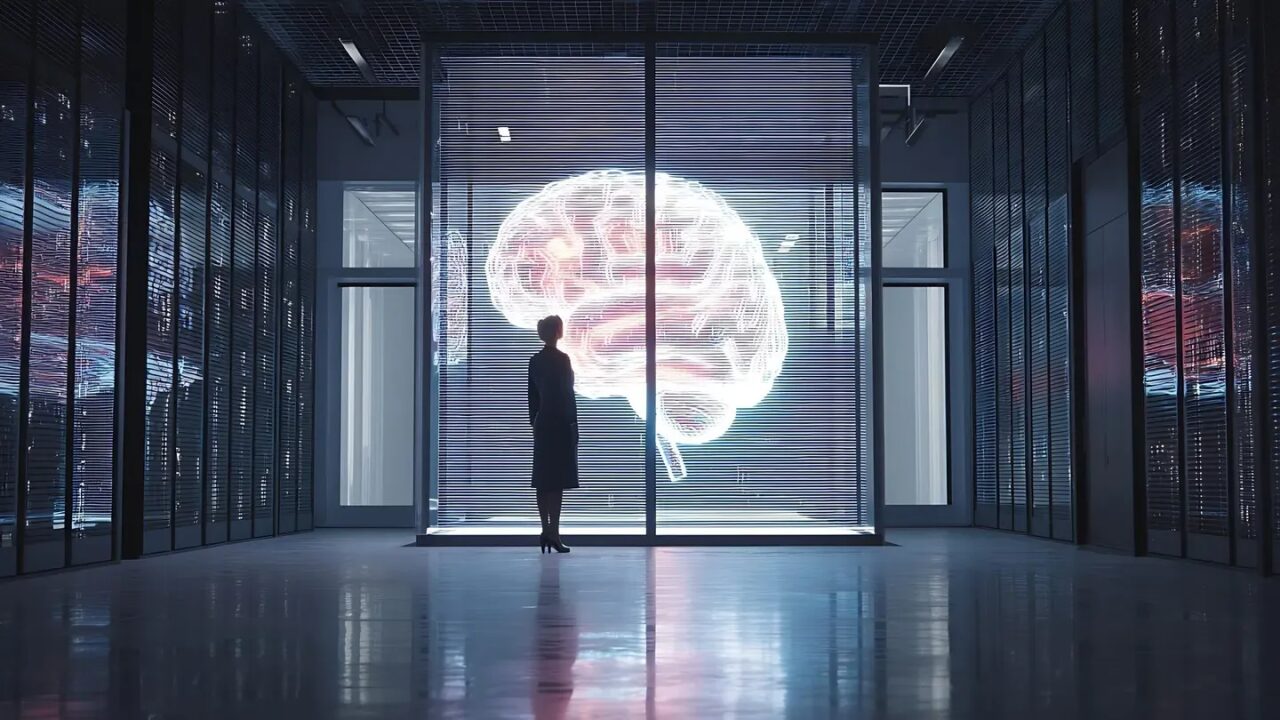
The self-driving lab concept is a step towards making that a reality. It doesn’t just automate scientific processes; it automates the process of science.
So, is building AI scientists and letting them go off and do their own thing in a “closed loop” system, unrestrained by the need to co-work with humans, the most efficient way to advance scientific discovery?
And given what we know about the risks of AI bias and hallucination, what guardrails are non-negotiable in order to keep us safe?
Let’s take a look at the possibilities and implications of AI becoming not just a scientific tool, but an active participant in the scientific process.
Automated Science And The Future Of Discovery
Fully automated science laboratories-in-a-box are a progression of the dark factory concept of manufacturing facilities that operate without humans. In an SDL, the machines carry out experiments.
This idea isn’t new; the discussion of using AI to design scientific experiments dates back to at least 1985. Thanks to advances in AI and robotics, now we can do it.
Don’t expect robotic science labs to suddenly become omnipresent overnight. They come with high overheads, and building them is still a complex engineering challenge. But internationally, pilots and prototypes are being spun up by researchers and organizations, in the hope they’ll become an everyday part of reality.
At Argonne National Laboratory, for example, there is an automated material laboratory where robots are working to create new conductive polymer materials. Instead of following instructions from a human, a “boss” AI agent decides how to run experiments.
And at the University of Sheffield, researchers built a self-driving lab to analyze the results of different chemical reactions, with machine-learning algorithms autonomously optimizing its operation.
Where attempts have been made to quantify the results, things look good. One study suggests that using SDLs regularly reduces the number of experiments required to reach a conclusion by 30-fold.
The leading thinkers in this field are focused on the fact that if SDL technology can be scaled effectively, it could mean discoveries that would otherwise take years or decades are made dramatically sooner.
Will It Work? And What About The Risks?
It’s a concept with immense potential, but it also poses significant challenges, both technological and ethical.
SDLs will need access to high-quality data that minimizes the risk of bias, sophisticated input devices such as scanners and cameras to investigate the physical world, and sufficient compute power to process the torrent of information they generate in real time.
But just as importantly, there needs to be safety and governance infrastructure. Science is dominated by ethics, and machine decision-making alone won’t be appropriate for every ethical choice that comes up during research.
How will a machine researching a new medicine or material weigh up the potential of a product being helpful to humans versus the chances it could hurt us?
And what about when causing harm inevitably becomes the point? It would be naïve to think that no one’s already thinking about (or trying) to use SDLs to create new weapons. The idea of machines designing new weapons on their own and then improving them iteratively is obviously terrifying.
This factor, more than any other, suggests it’s likely that human scientists will be needed in research programs for the foreseeable future, with their jobs becoming increasingly focused on making decisions that machines can’t.
In fact, the most important takeaway is probably that the success or failure of SDLs doesn’t really hinge on the technology, which is clearly available and works.
In the end, it’s likely to come down to how enthusiastically the wider scientific community, including corporate laboratories and public research units, embraces the concept.
But if a co-working model emerges, allowing human scientists to use SDLs to run experiments while they focus on strategy and developing those human ideas that lead to “Eureka” moments, the impact could unleash a new wave of progress.
Related Articles

How Maersk Is Using AI To Survive The New Era Of Tariff Chaos
In recent years, chaotic and unpredictable changes to international trade tariffs and regulations have created turbulence for companies importing and exporting[...]

AI Girlfriends Are Reaching Children, And We Need To Talk About What That Could Mean For Boys
What happens when a boy learns about intimacy from a girlfriend who is always available, endlessly customizable and incapable of saying[...]
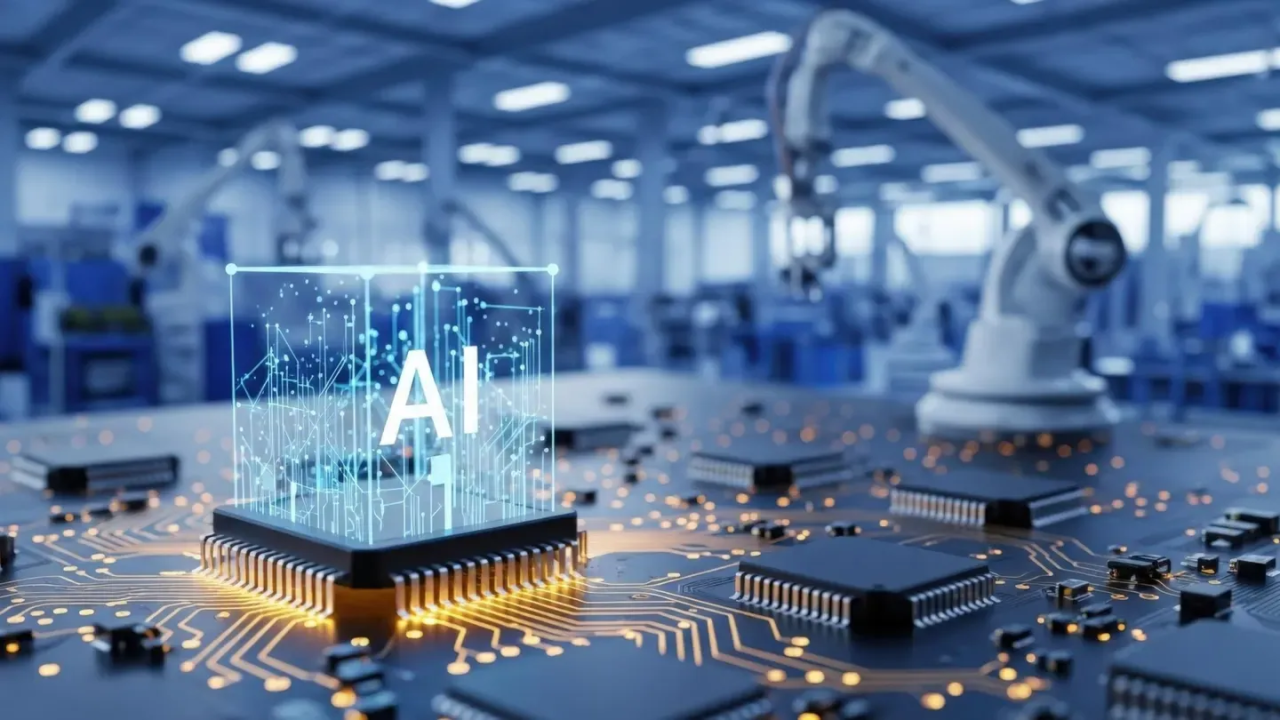
How Siemens Is Bringing Generative AI To The Factory Floor
Generative AI is moving out of the chatbot and onto the factory floor. Siemens is putting the technology to work to[...]

Can AI Really Blackmail Or Hack You?
If you’re one of the many people who feel scared about how powerful AI is becoming, recent events probably haven’t done[...]

Is AI Really Leveling The Playing Field, Or Making Big Tech Even More Powerful?
We often hear that AI will act to “democratize” access to many aspects of technology, from data analytics to coding. But[...]

The AI Skills Employers Actually Want In 2026
The AI jobs boom isn’t unfolding quite the way many people predicted. When ChatGPT arrived in 2022, we were told to[...]

Sign up to Stay in Touch!
Bernard Marr is a world-renowned futurist, influencer and thought leader in the fields of business and technology, with a passion for using technology for the good of humanity.
He is a best-selling author of over 20 books, writes a regular column for Forbes and advises and coaches many of the world’s best-known organisations.
He has a combined following of 4 million people across his social media channels and newsletters and was ranked by LinkedIn as one of the top 5 business influencers in the world.
Bernard’s latest book is ‘Generative AI in Practice’.
Social Media