

How AI, Drones And Autonomous Vehicles Are Transforming The British Army
27 October 2026
The British Army is entering a new era in which soldiers will increasingly fight alongside drones, robots and AI-powered systems.
I was invited by the U.K. Ministry of Defence to attend DVD (Defence Vehicles Dynamics) 2026, an event that brings together the Army and the companies developing its next generation of equipment. What I saw offered a fascinating glimpse of warfare in transition.
There were autonomous ground vehicles carrying supplies, drones conducting surveillance, AI helping commanders make decisions, virtual worlds for training soldiers, and counter-drone systems.
The common thread was clear. Technology is changing what military power looks like, and many of the lessons driving that change are coming directly from Ukraine.
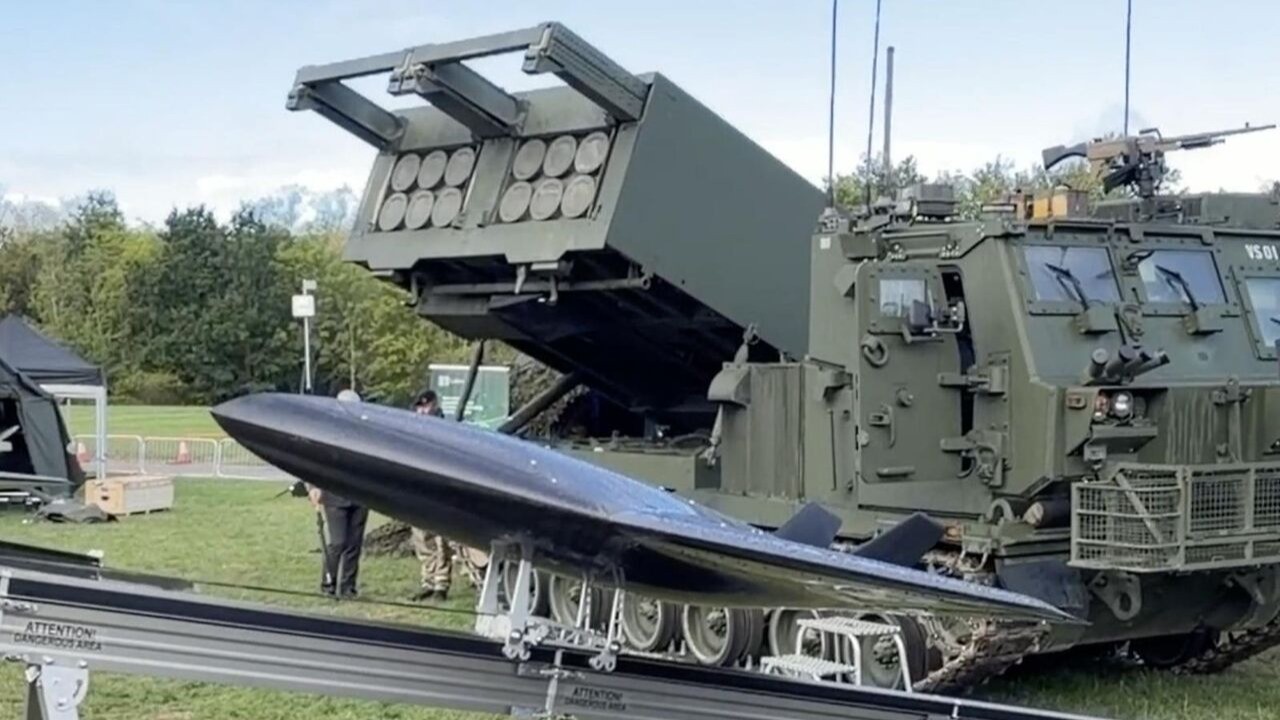
The Army’s New 20:40:40 Model
The wider context is the British Army’s emerging “20:40:40” model, recommended in the U.K.’s Strategic Defence Review. The idea is that a future force could consist of around 20% traditional crewed platforms, supported by 40% reusable autonomous systems powered by AI and capable of tasks such as surveillance, navigation, targeting support and operating with varying degrees of human oversight, with the remaining 40% made up of consumable weapons such as missiles, rockets and one-way attack drones.
This represents a significant shift in military thinking.
A tank, attack helicopter or armored vehicle can cost millions and require trained people to operate it. Increasingly, those expensive crewed platforms could become command nodes for large numbers of cheaper machines operating around them.
At DVD, Defence Minister Luke Pollard made clear that this shift is already influencing where the Army is investing, with major funding going into drones, autonomous systems and new weapons designed for a more technology-driven battlefield.
The scale of the wider transformation is considerable. The Defence Investment Plan commits £298 billion over four years (about $396 billion) across U.K. defense, including more than £5 billion (about $6.7 billion) for drones and autonomous systems and nearly £2 billion (about $2.7 billion) for a Digital Targeting Web supported by AI and software.
Drones Are Becoming Central To Warfare
Drones were probably my biggest takeaway from the event.
The British Army is introducing everything from small drones that can provide soldiers with immediate intelligence to the much larger Tekever AR5 surveillance aircraft. An initial six AR5s have been ordered, potentially increasing to 24 by 2029. The aircraft can carry up to 50 kilograms of surveillance equipment and draws on operational experience from Ukraine.
I also had the opportunity to fly a military drone myself. What struck me was how intuitive these systems can become. Drone operation is also moving closer to becoming a core military skill rather than something performed by a small group of specialists.
At the other end of the scale, the Apache helicopter is being reimagined as part of a human-machine team. Under Project NYX, autonomous aircraft could fly ahead of an Apache, gather intelligence and carry out missions while reducing the exposure of the helicopter and its crew. Four companies, Anduril, BAE Systems, Tekever and Thales U.K., were selected earlier this year to develop concepts for the program.
Then there are swarms. The Defence Science and Technology Laboratory has handed the Army a Swarm Capability Test Bed based on more than a decade of research in AI and autonomy. British Army operators have already completed eight weeks of experimentation with a swarm of eight drones.
The direction of travel points toward battlefields where machines operate in much larger numbers, working together and responding to changing conditions at speeds that would be impossible for people to manage individually.
And Every Drone Creates A Counter-Drone Problem
As drones proliferate, stopping them becomes equally important.
One of the systems I saw was Leonardo’s Falcon Shield. Its new containerized version combines command-and-control technology with long-range surveillance inside a standard ISO container, allowing the system to be transported by air, road or sea. Its open architecture can connect different sensors with systems designed to defeat hostile drones.
Falcon Shield can bring together radar, electronic surveillance and optical sensors with electronic warfare systems or physical weapons. The U.K. military version, Orcus, has been in RAF service since 2018 and has been deployed in the U.K. and overseas.
Another fascinating technology is DragonFire, Britain’s high-power laser weapon. The system has demonstrated the ability to destroy high-speed drones, with the MOD putting the operating cost at around £10 (about $13) per shot. A DragonFire system is scheduled to be installed on a Royal Navy Type 45 destroyer in 2027.
That changes the economics of defense. Using a missile costing hundreds of thousands of pounds to destroy an inexpensive drone is difficult to sustain at scale. Directed-energy weapons could create a very different cost equation.
AI Is Connecting The Battlefield
AI becomes especially important when all these systems start generating data.
The Army’s ASGARD program provides a useful example. It is part of an emerging digital targeting system designed to connect battlefield surveillance with decision-making and weapons, helping military personnel identify and engage targets faster. Trials have already taken place with British troops on NATO’s eastern flank.
There is an important human question here too.
During DVD, I spoke with people working on autonomous military systems and with Ukrainian personnel who have direct experience of the war. A recurring theme was the need to keep humans involved in decisions over lethal force.
The U.K.’s position is clear: humans, not machines, must remain accountable for lethal decisions. The challenge I see is maintaining that principle as autonomous systems become faster and more capable.
A recent example shows where this may be heading. Ukrainian sources claimed this month that a Ukrainian uncrewed naval vessel destroyed a Russian drone boat in what has been described as the first direct battle between two robotic naval vessels.
Training Soldiers Inside Digital Worlds
The transformation also changes how soldiers train.
I tried a virtual-reality system being developed as part of the Army’s new collective training environment. Wearing a headset, I found myself traveling in a military convoy through a digital twin of Riga when the vehicle ahead was attacked.
The experience was remarkably realistic. More interestingly, the same environment can be viewed at a much larger scale. Commanders can examine how events affect civilian movement, infrastructure and other parts of the city.
The MOD has signed a 15-year, £2 billion contract (about $2.7 billion) for this new training capability, with up to 60,000 soldiers expected to use AI, analytics and virtual environments each year. The program is also expected to support around 400 U.K. jobs, including roles in software engineering and AI.
This highlights another change. The skills required of tomorrow’s soldiers will increasingly overlap with those found in technology companies.
Operating drones with game-style controllers, understanding autonomous machines and interpreting data could become normal elements of military work. Some gaming skills may prove surprisingly useful for soldiers.
Robots On The Ground
The same transformation is happening beneath the drones.
Uncrewed ground vehicles, or UGVs, can transport ammunition and equipment into dangerous areas or help evacuate casualties without exposing additional soldiers. Some can operate remotely, while others can use increasing levels of autonomy.
ARX Robotics has begun manufacturing GEREON ground vehicles in the U.K. following an initial British Army order through Task Force RAPSTONE, a program created to rapidly test and deploy new military technology. The company says it plans to invest £45 million (about $60 million) in U.K. manufacturing capacity capable of producing up to 1,800 robotic vehicles annually, supporting at least 90 skilled jobs.
That connection between military transformation and industrial strategy was visible throughout DVD.
The government estimates that its Defence Investment Plan could create nearly 60,000 additional direct and indirect industry jobs by the end of the decade. These jobs increasingly span robotics, software, AI and advanced manufacturing.
The Battlefield Is Becoming A Technology Ecosystem
The most important lesson I took away from DVD was that the future of warfare cannot be understood by looking at individual pieces of equipment.
The real transformation comes from connecting them.
A drone spots something. AI helps interpret what it sees. A digital network moves that information to a commander. Another autonomous system might investigate further. A human decides what action to take. The appropriate weapon or platform can then respond.
That makes modern military capability increasingly dependent on software, data and interoperability alongside traditional firepower.
It also makes the speed of innovation critical. The war in Ukraine has demonstrated how quickly a successful technology can be copied, countered and replaced. The U.K.’s challenge will be turning promising demonstrations into operational capability fast enough to keep pace.
DVD offered a fascinating glimpse of what that future could look like. Soldiers will remain central, but their relationship with machines is changing dramatically. The most successful armies of the future will learn how to combine human judgment with autonomous systems, AI and a constant cycle of technological innovation.
Frequently Asked Questions


Related Articles

The AI Cold War Is Here, And Every Business Will Feel The Impact
In 2026, the decisions that will impact the future of AI and business are increasingly being taken outside of boardrooms and[...]

Sign up to Stay in Touch!
Bernard Marr is a world-renowned futurist, influencer and thought leader in the fields of business and technology, with a passion for using technology for the good of humanity.
He is a best-selling author of over 20 books, writes a regular column for Forbes and advises and coaches many of the world’s best-known organisations.
He has a combined following of 4 million people across his social media channels and newsletters and was ranked by LinkedIn as one of the top 5 business influencers in the world.
Bernard’s latest book is ‘Generative AI in Practice’.
Social Media