
How Instacart Is Using Physical AI To Reinvent The Grocery Store
22 September 2026
The smartest computer in your local grocery store may soon be the cart rattling toward the cereal aisle.
For years, retailers have made online shopping more personal and convenient, while the typical trip around a supermarket has remained stubbornly analog. Shoppers still hunt for products, keep a mental tally of spending and discover at the checkout that they have forgotten the yogurt.
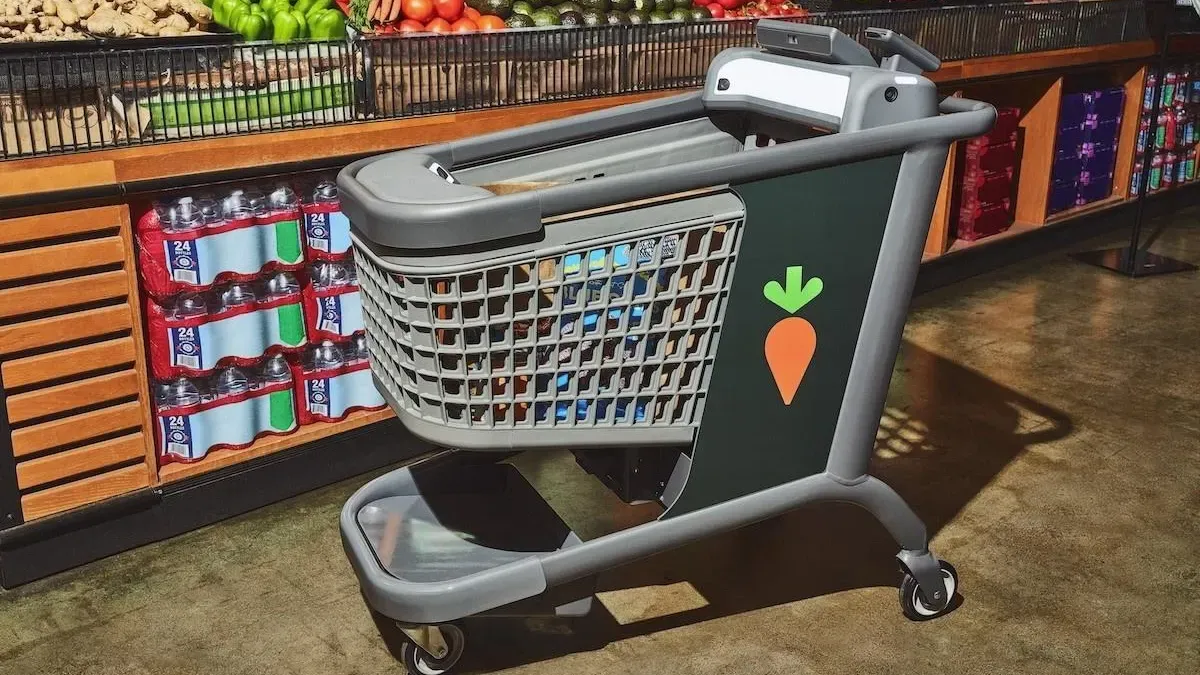
Instacart wants to close that gap. Its Caper Cart combines cameras, weight and location sensors, edge computing and a touchscreen to recognize products, track spending and deliver recommendations. The cart is the visible part of a larger strategy connecting shelves, inventory systems, ecommerce and in-store behavior.
David McIntosh, Instacart’s Chief Connected Stores Officer, told me the company sees the technology becoming far more than a novelty. “We definitely think that this can become the default way that people shop in store,” he said.
The Grocery Store Has A Data Problem
Online retailers can see searches, abandoned baskets, purchases and repeat behavior. A physical grocery store has a hazier view. It may know that a product sold, yet have limited insight into where the customer found it or why an apparent in-stock item is missing from the shelf.
Grocery creates an especially demanding environment for AI. A large store contains tens of thousands of products, many in similar packaging. Displays move, suppliers restock their products and customers leave items in unexpected places. Inventory records can say one thing while the shelf says another.
Instacart has processed more than 1.6 billion lifetime orders, giving it deep insight into grocery products, substitutions and shopping patterns. The company is using this data to build grocery-specific AI models that bring together its online-order history, product catalog data and growing in- store signals. A general model may understand a jar of pasta sauce in a photograph. A grocery model also needs to recognize it under poor lighting, know its location, detect that only two remain and understand what a shopper might cook with it.
A Shopping Cart That Thinks At The Edge
The Caper Cart uses basket-facing cameras, outward-facing shelf cameras, a certified scale, location signals and an NVIDIA Jetson computer. Sensor fusion combines these inputs to form a reliable interpretation of what is happening.
Vision has blind spots. Weight helps when products obscure one another. Location connects an item to where it was added. The system must understand products in bags, customers removing items, uneven floor tiles and someone leaning against the basket.
McIntosh compares the challenge to a miniature autonomous-driving system. Each cart receives several streams of information and must interpret them within a fraction of a second. Processing happens on the cart because supermarket connectivity can be unreliable, and sending every interaction to the cloud would create an irritating delay. The systems respond within hundreds of milliseconds, he explained.
This is physical AI in practical form, perceiving and responding to a messy environment under fluorescent lights, on bumpy floors and during the Saturday morning rush.
The Data Flywheel Behind The Cart
Instacart says thousands of Caper Carts are live across more than 100 cities, with its Caper business tripling year over year. The carts generate millions of sensor inputs each day. Every unusual interaction helps the models handle more real-world edge cases.
“You can imagine even frontier models have never seen the inside of a basket in a grocery store,” McIntosh said. They have no experience interpreting a changing weight signal as a cart rolls across floor tiles and a shopper leans on the handle. This specialized data is difficult to copy.
The flywheel now extends to the shelf. Instacart recently acquired Arpalus to accelerate Store View, its AI-powered shelf intelligence technology, which uses computer vision to turn shelf imagery into near real-time insights about inventory and availability v . Around 600,000 Instacart shoppers can capture shelf imagery using their phones, while Caper Carts gather more information as they move through aisles.
The result is a richer picture of product availability, display locations and purchases. Better shelf intelligence can improve online fulfillment, reduce substitutions and make recommendations more useful. A suggestion for a product in aisle five quickly becomes annoying when it has moved to aisle seven.
Convenience Meets Commercial Value
For shoppers, the value is refreshingly simple. The cart shows a running total, surfaces deals, weighs produce and tracks the basket. Customers can pay on the cart in some stores or transfer the order to self-checkout in others. They can leave everything packed rather than unloading a full weekly shop and putting it all back again.
Budget visibility may be the most important feature. McIntosh said more than 80 percent of North American shoppers are shopping to a budget. A running total gives customers control before checkout, including people using food assistance benefits who need clarity about eligible items and their remaining balance.
The commercial case is equally clear. A personalized ‘Did you forget?’ prompt shown as shoppers approach checkout drove nearly a 1% absolute sales lift, according to McIntosh. . The same screen can surface relevant discounts, discovery opportunities and where appropriate, sponsored recommendations at the point of decision. .
There is a tension here. A screen that helps someone control a grocery budget can also encourage another purchase. Retailers need transparent rules around data collection, personalization and sponsored recommendations. Customers should understand why they see a suggestion and retain meaningful control over their information. Trust will determine how far this experience can go.
Why Smart Stores Are Harder Than Smart Websites
The challenge reaches beyond model accuracy. “Every store is different. Every retailer is different,” McIntosh said. One chain may sell unusual bakery products, another may offer returnable beer crates, and each has its own checkout processes and staffing patterns.
Instacart’s answer is modularity. The carts resemble familiar carts, charge when stacked and connect to existing checkout workflows. Store associates need training and a reason to support the system. A clever AI demonstration that complicates daily operations will soon become expensive furniture.
This lesson applies well beyond grocery. Physical AI must fit the environment, the workforce and the customer journey. Technical performance earns a pilot. Operational fit earns a rollout.
From Recommendations To Retail Agents
The next stage moves from detection to action. Shelf intelligence can already identify a missing or misplaced product. In the future, a gentic AI could coordinate with a supplier, alert an associate, adjust an order or recommend a better display location. Store managers could query conditions in natural language and receive suggestions based on live data.
Over time, this could develop into a simulation showing how location, inventory, promotions and customer movement interact. Human oversight will remain essential where decisions affect pricing, suppliers, staffing or customer access. Useful agents will handle routine coordination and escalate decisions requiring judgment.
Instacart is also digitizing prepared-food ordering, shelf labels and trip planning. As these systems connect, the store starts to operate as an intelligent network rather than a collection of isolated technologies.
When Online And In-Store Become One Experience
McIntosh’s long-term vision is straightforward: “It’ll be one single unified mode that will be powered by Instacart.”
In that future, a list created online follows the customer onto the cart. In-store purchases improve future online recommendations. Shelf scans improve ecommerce availability. A forgotten-item prompt uses purchase history, live basket data and the shopper’s location in the store.
The broader lesson is that physical locations can become a unique source of AI advantage. Ecommerce companies have spent years learning from digital behavior. Store operators have millions of real-world shopping journeys. Turning them into useful intelligence requires edge computing, specialized models, operational integration and clear customer safeguards.
The humble shopping cart may become one of AI’s most consequential enterprise devices. It already has one essential advantage: it goes wherever the customer goes.
Frequently Asked Questions

Related Articles
AI Tokenomics Explained: What Every Business Leader Needs To Know
Every time someone asks an AI model a question, summarizes a document or generates a piece of code, tokens are being[...]
5 Ways To Measure The True ROI Of AI Agents
AI agents are moving rapidly from experimental pilots into the heart of everyday business operations. But as investment accelerates, one critical[...]
How To Get Your Business Data Ready For AI Agents
Give an AI agent bad data, and it can make bad decisions at machine speed. AI agents are ushering in a[...]
The Amazing Robot Innovations At The Goodwood Future Lab
A humanoid, a wheeled rover and a dog-like robot are trying to push a giant inflatable ball up a ramp. It[...]
How Klarna’s AI Agent Strategy Backfired But Became A Useful Lesson
Klarna’s AI customer service rollout looked like a textbook success. Its autonomous agent handled 2.3 million conversations in its first month,[...]
Revolut Is Building An AI Brain For Banking, And It Could Change Finance Forever
Revolut is taking a very different approach to AI in banking. While many financial services companies are using off-the-shelf AI tools[...]

Sign up to Stay in Touch!
Bernard Marr is a world-renowned futurist, influencer and thought leader in the fields of business and technology, with a passion for using technology for the good of humanity.
He is a best-selling author of over 20 books, writes a regular column for Forbes and advises and coaches many of the world’s best-known organisations.
He has a combined following of 4 million people across his social media channels and newsletters and was ranked by LinkedIn as one of the top 5 business influencers in the world.
Bernard’s latest book is ‘Generative AI in Practice’.
Social Media