

The 8 Biggest Healthcare Technology Trends To Watch In 2026
11 November 2025
In 2026, we will continue to see technology driving better healthcare outcomes and more efficient services.
Doctors, nurses, researchers and mental health specialists will have more tools than ever to assist in diagnosis and developing new treatments, while new wearable and connected technology unlocks new possibilities for treating patients outside of traditional hospital environments.
Of course, this also poses challenges around privacy and security, and raises important questions about what needs to be done to ensure healthcare professionals can still provide the essential “human touch”.
So here are what I believe will be the most important trends in this critical and fast-moving field of technological innovation.

1. Generative AI In Drug Discovery
2025 has seen generative AI achieve many milestone breakthroughs, including assisting in bringing new medicines and treatments to the clinical trial phase. Having achieved proof-of-concept, expect the floodgates to open in 2026 as researchers use it to speed up the analysis of candidates, simulate their interactions with the human body, and ultimately deliver new, more affordable cures to patients.
2. AI Agents In Healthcare
Agents build on the capabilities of AI chatbots and assistants like ChatGPT by enabling them to take action, carry out complex multi-step tasks, and interact with third parties. In 2026, healthcare providers will use this technology to build autonomous copilots that assist with managing the entire patient journey, from triaging symptoms to scheduling tests, analyzing results, flagging up anomalies and managing follow-up care. In labs, they will assist with managing and administering research work, and they will even be used directly by patients to monitor lifestyle, compliance with treatments, and, by catching warning signs earlier, enabling proactive delivery of healthcare.
3. From Remote Healthcare To Virtual Hospitals
In 2026, the concept of telemedicine — healthcare delivered remotely via technology — has evolved into virtual hospitals. These are hubs for the delivery of the entire spectrum of healthcare services, either directly to patients’ homes or by giving local and regional facilities access to the expertise of specialists located anywhere in the world. For example, Saudi Arabia’s SEHA Virtual Hospital connects 130 healthcare facilities with the capacity to treat 400,000 patients each year, and the UK NHS announced plans for its own Online Hospital. With a growing elderly population and worldwide shortages of healthcare specialists, initiatives like this will become increasingly vital to healthcare delivery.
4. AI For Medical Diagnosis
One of the most promising uses for AI in healthcare is spotting the warning signs of poor health at an earlier stage, when they can be treated more easily and cheaply. This year, we saw a growing number of tools cleared for use in clinical settings, including breast cancer screening and detection of strokes and heart problems. In 2026, there will be a wider rollout of this potentially life-saving technology, offering decision-making support to doctors and frontline medical workers. Rather than being replaced, professionals will spend less time examining scans and more time face-to-face with patients.
5. CRISPR X AI
The cutting-edge intersection of bioscience and computer technology. This year saw breakthroughs in the use of AI as a copilot for gene editing, allowing faster and safer experiments involving cutting and splicing genetic material. It’s hoped that in 2026 this will lead to powerful new therapies for cancer, as well as cystic fibrosis, muscular dystrophy, Huntington’s Disease, and many other genetic conditions. Over the next year, we may start to see clinical applications starting to emerge, signaling the beginning of a new era of personalized, precision medicine.
6. A Quantum Leap For Healthcare?
Quantum computers are emerging from the lab and into real-world use, and some of the most exciting applications are predicted to be in healthcare. By modeling systems at the quantum level, they open the way to more accurate simulations of protein folding, drug interactions and genetic processes, with progress being made by companies like IBM and Moderna. Although the technology is still in an early stage, 2026 could be the year we see signs that it is maturing beyond hype and beginning to drive real improvements in healthcare.
7. Robots In Real-World Healthcare Scenarios
From robot surgeons to hospital porters, robots will be increasingly visible in healthcare settings in 2026. Other real-world uses include caregiving robots supporting elderly populations in Japan and South Korea, and carrying out “busy work” in US hospitals in order to alleviate problems caused by workplace shortages and overworked human staff. While the potential for driving efficiency gains is clear, we will start to get clarity on exactly what the real-world impact on patient outcomes will be.
8. The Synthetic Health Data Revolution
Generative AI isn't just for creating text, pictures and videos; it can also simulate data, including patient data. This means that pharmaceutical companies and AI developers can use it to train and build models without the expense or security implications of handling real patient data. In 2025, it's already widely used to create diverse datasets needed for simulated clinical trials and to test the accuracy of AI-based diagnostic tools. As this use expands, we can expect to see it help deliver faster and safer innovation. But there will also be increased scrutiny as researchers assess the risk of “AI rot”, a potential danger when AI models are exposed to too much synthetic data.
Technology is rapidly reshaping every part of healthcare, from diagnosis to delivery. As we move through 2026, the challenge for leaders, policymakers, and practitioners will be to harness these innovations responsibly, keeping patient care, ethics, and human connection at the heart of progress.
Related Articles

What Is The Singularity And Are We There Yet?
The singularity has long been one of the most fascinating and frightening ideas in technology: a point when machine intelligence surpasses[...]
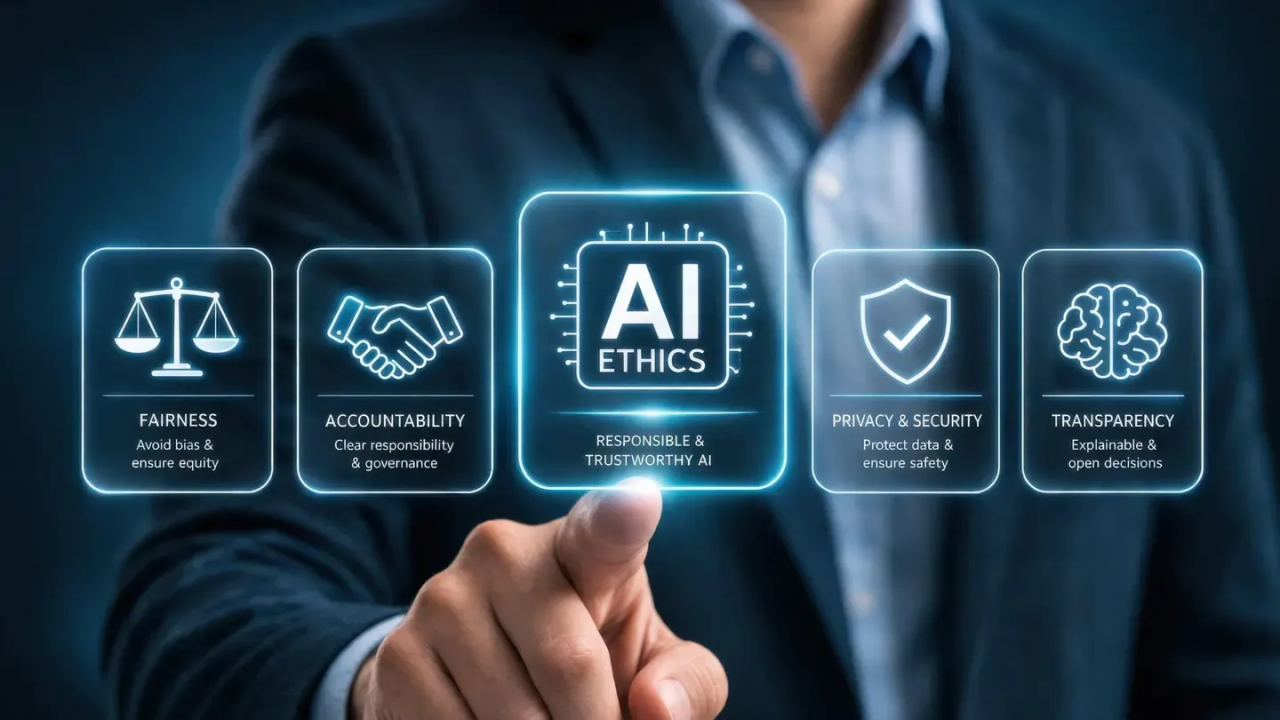
Why Responsible AI Could Be Your Biggest Competitive Advantage
Responsible AI is often treated as the price businesses must pay for using artificial intelligence. In reality, it could become one[...]

Why The AI Infrastructure Race Is Moving Beyond GPUs
The AI revolution may be powered by algorithms, yet its progress increasingly depends on something far more physical: how many computers[...]

AI Tokenomics Explained: What Every Business Leader Needs To Know
Every time someone asks an AI model a question, summarizes a document or generates a piece of code, tokens are being[...]

5 Ways To Measure The True ROI Of AI Agents
AI agents are moving rapidly from experimental pilots into the heart of everyday business operations. But as investment accelerates, one critical[...]
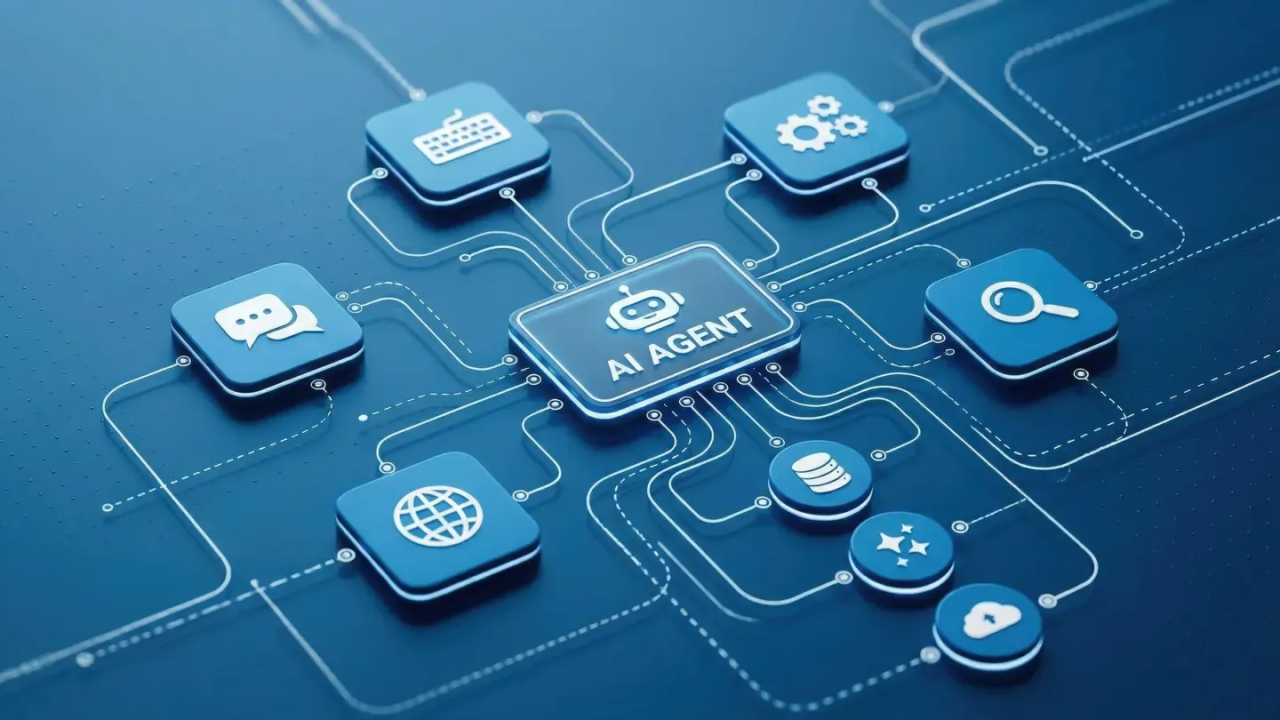
How To Get Your Business Data Ready For AI Agents
Give an AI agent bad data, and it can make bad decisions at machine speed. AI agents are ushering in a[...]

Sign up to Stay in Touch!
Bernard Marr is a world-renowned futurist, influencer and thought leader in the fields of business and technology, with a passion for using technology for the good of humanity.
He is a best-selling author of over 20 books, writes a regular column for Forbes and advises and coaches many of the world’s best-known organisations.
He has a combined following of 4 million people across his social media channels and newsletters and was ranked by LinkedIn as one of the top 5 business influencers in the world.
Bernard’s latest book is ‘Generative AI in Practice’.
Social Media