
The AI Agent Boom Has A Trust Problem. Here’s How Business Leaders Can Fix It
30 October 2026
The most expensive mistake your company makes next year could come from an employee who never sleeps, never takes a holiday and isn’t actually human.
Businesses are handing more decisions to AI agents that can act independently, access sensitive information and work with other systems. The productivity potential is enormous. Unfortunately, so is the potential for things to go spectacularly wrong.
At World Summit AI in Amsterdam, I sat down with Stijn (Stan) Christiaens , Co-founder and Chief Data Citizen at Collibra, to discuss a pressing question: How do we scale AI agents without losing control?
Our conversation reinforced something I’ve been telling business leaders for years. The biggest barriers to successful AI often lie in the data, governance and business processes surrounding the technology.

From Chatbots To Autonomous Decision-Makers
With chatbots, a person asks a question and decides what to do with the answer. AI agents can plan tasks, make decisions and take action with far less human involvement. Eventually, businesses could have hundreds or thousands operating across customer service, finance and supply chains.
Christiaens calls this a "very complex ecosystem of automation."
If a chatbot gives you an incorrect answer, you might catch it. If an autonomous agent makes the same mistake, passes faulty information to another agent and triggers actions across multiple systems, the consequences can spread quickly before anyone notices.
Collibra's 2026 Hallucination Tax Report, conducted with The Harris Poll, found that nine in ten organizations are actively deploying autonomous AI agents. Yet 76% of the data and AI decision-makers surveyed reported critical roadblocks when moving agents from pilots into production.
Clearly, enthusiasm is running ahead of organizations' ability to deploy these systems reliably.
The Hidden Cost Of AI Hallucinations
On my way to Amsterdam, I asked an AI assistant to recommend interesting sessions at World Summit AI. It confidently suggested several presentations that weren't on the agenda. It had been merging the current agenda with last year's.
A slightly annoying mistake for me. Potentially a costly one if an AI agent acts on similarly outdated information inside a business.
Collibra calls the accumulated cost of these errors the "hallucination tax": time spent verifying outputs, correcting mistakes, investigating failures and repairing customer relationships.
Its research found that 87% of surveyed decision-makers said their teams regularly spent time checking whether information used by their AI agents was accurate and current. When people must double-check everything, promised productivity gains start to evaporate.
Worse, some errors remain hidden for months. Imagine a service agent repeatedly applying an outdated refund policy, or an AI system making financial recommendations from inconsistent figures. The damage can include lost revenue, regulatory trouble and eroded trust.
For Christiaens, the response comes down to two challenges: context and control.
Why Governed Context And Control Matter
Even the smartest AI model doesn't automatically understand your organization's customers, policies, contracts or internal rules. It also can't reliably distinguish approved information from obsolete material unless the surrounding system helps it do so.
That's the idea behind governed context: providing AI with relevant business knowledge whose meaning, quality, ownership and permitted use are understood.
Christiaens stressed the importance of "the right context at the right place at the right time."
Imagine hiring a brilliant executive who knows nothing about your company. Intelligence alone won't stop them from making terrible decisions. An AI agent faces the same problem, except it can make mistakes much faster and at a much larger scale.
Then there's control. Which agents exist? What information can they see? Which actions are they allowed to take? How do you intervene when something goes wrong?
A customer service agent may need one customer's account details. It certainly shouldn't have access to everybody's confidential records.
Collibra is developing solutions to address these questions, including Live Map for enterprise context and Guardian Agents with Agent Contracts to help define and enforce boundaries around agents. Whatever platform businesses use, they need visibility and safeguards that work while AI is operating, rather than checks performed after the damage is done.
Helvetia Baloise's AI Air Traffic Control
One of the most practical presentations I saw in Amsterdam came from Christiaens and Helvetia Baloise leaders Dennis Steppuhn, Group AI Portfolio & Steering Lead, and Filip de Loecker, Group Head Data & AI Governance.
The Swiss insurance group is integrating operations after a major merger while exploring AI across underwriting, claims and customer service. In a heavily regulated industry, innovation must coexist with clear accountability.
Their approach uses an appealing analogy: an air traffic control tower for AI.
Some aircraft are preparing to take off, others are airborne, and several may be heading for the same destination. Without a shared view, you risk collisions and wasted effort. Enterprise AI can become similarly chaotic when every department launches its own agents.
Helvetia Baloise uses Collibra as a central inventory of AI use cases, models and agents. That visibility helps teams spot duplication, assess risk and prioritize projects. Structured assessments and assigned responsibilities support each stage of the AI lifecycle.
The organization also has a network of AI ambassadors connecting local teams with central leadership. They share experience, uncover opportunities to reuse solutions and keep governance grounded in what people actually do.
In a particularly neat example of AI managing AI, the company has connected an inventory agent to its governance information. Employees can ask what solutions already exist before building another one.
Crucially, Helvetia Baloise tracks three measures: AI maturity, the value and feasibility of projects in its portfolio, and actual financial benefits.
I particularly like that final measure. Too many businesses boast about how many AI projects they've launched. I'd rather know what those projects have achieved.
The Real Transformation Is Still Ahead
When I asked Christiaens what would separate AI winners from losers over the next decade, he compared today's moment with the Industrial Revolution.
Early factory owners installed steam engines into existing production systems. The bigger gains came when factories and processes were redesigned around what the technology made possible.
I believe we're repeating that pattern with AI. Businesses are adding agents to old workflows and celebrating incremental savings when the real opportunity is to rethink the workflows themselves.
If we designed a process from scratch today, where would human judgment be essential? What could agents handle? How would we measure results, establish accountability and prevent errors from spreading?
Answering those questions takes leadership and organizational change. It also requires rethinking governance. Good oversight can make AI deployment faster by giving people confidence that autonomous systems will operate within sensible boundaries.
As Christiaens put it, "trust is hard to build and easy to lose."
A decade from now, I suspect we'll wonder why so many businesses spent their time forcing AI into processes designed decades ago.
The winners will rethink how their organizations operate and build the foundations to make autonomous AI reliable. After all, there's little point in technology that works at extraordinary speed if you're simply using it to do the wrong things faster.
For more information about Collibra and to request a demo, visit their website.
#Sponsored
Frequently Asked Questions
Related Articles

Tokenmaxxing: The Dangerous New AI Trend Businesses Need To Stop
Some companies are encouraging employees to burn through as much AI as possible, and even ranking them by how many AI[...]

Who Really Controls Your AI And Data? Why Every Business Should Care
Every business using AI should be asking a simple question: Who actually controls the technology and data we increasingly depend on?[...]
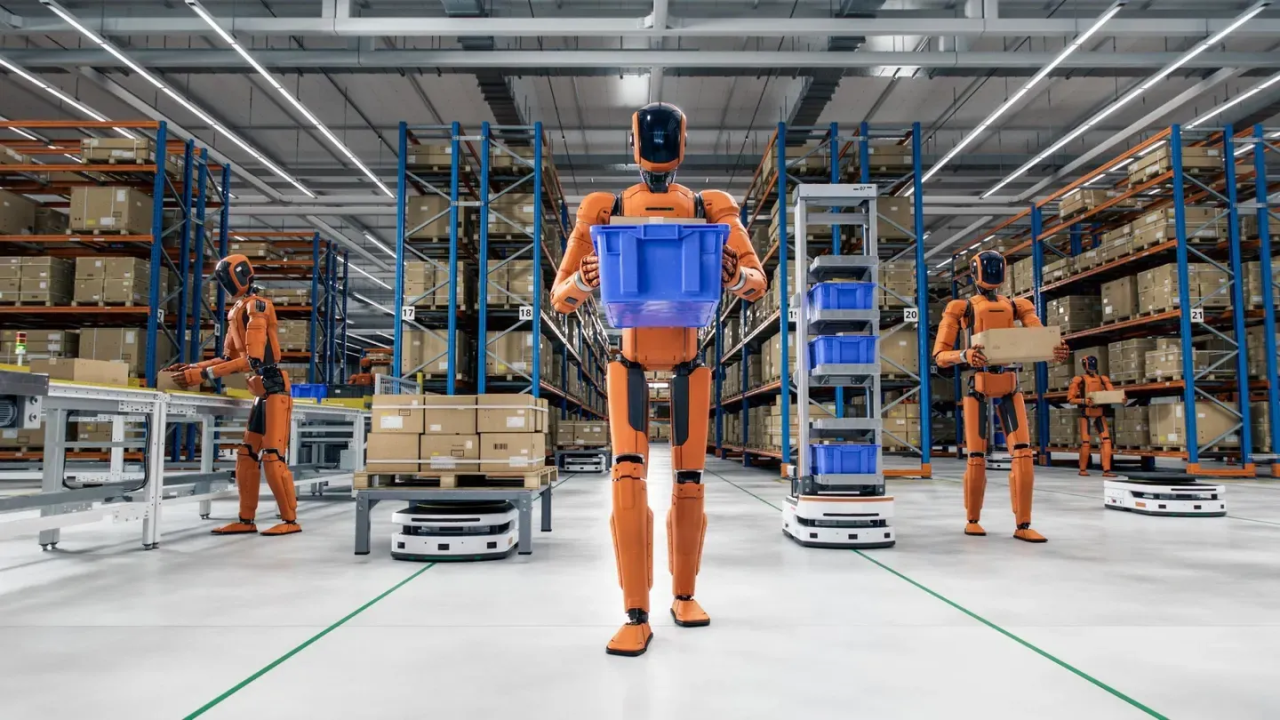
Workers Are Going On Strike Over Humanoid Robots, And This Is Just The Beginning
When workers go on strike because they fear robots taking their jobs, the age of humanoid automation suddenly feels very real.[...]

The AI Cold War Is Here, And Every Business Will Feel The Impact
In 2026, the decisions that will impact the future of AI and business are increasingly being taken outside of boardrooms and[...]

Humanoid Robots Are Coming, Here’s What Everyone Needs To Know
More than one billion humanoid robots could be living and working alongside us by 2050. That is Morgan Stanley's forecast, and[...]
How Maersk Is Using AI To Survive The New Era Of Tariff Chaos
In recent years, chaotic and unpredictable changes to international trade tariffs and regulations have created turbulence for companies importing and exporting[...]

Sign up to Stay in Touch!
Bernard Marr is a world-renowned futurist, influencer and thought leader in the fields of business and technology, with a passion for using technology for the good of humanity.
He is a best-selling author of over 20 books, writes a regular column for Forbes and advises and coaches many of the world’s best-known organisations.
He has a combined following of 4 million people across his social media channels and newsletters and was ranked by LinkedIn as one of the top 5 business influencers in the world.
Bernard’s latest book is ‘Generative AI in Practice’.
Social Media