

The 8 AI Trends That Will Change Everything In 2027
6 November 2026
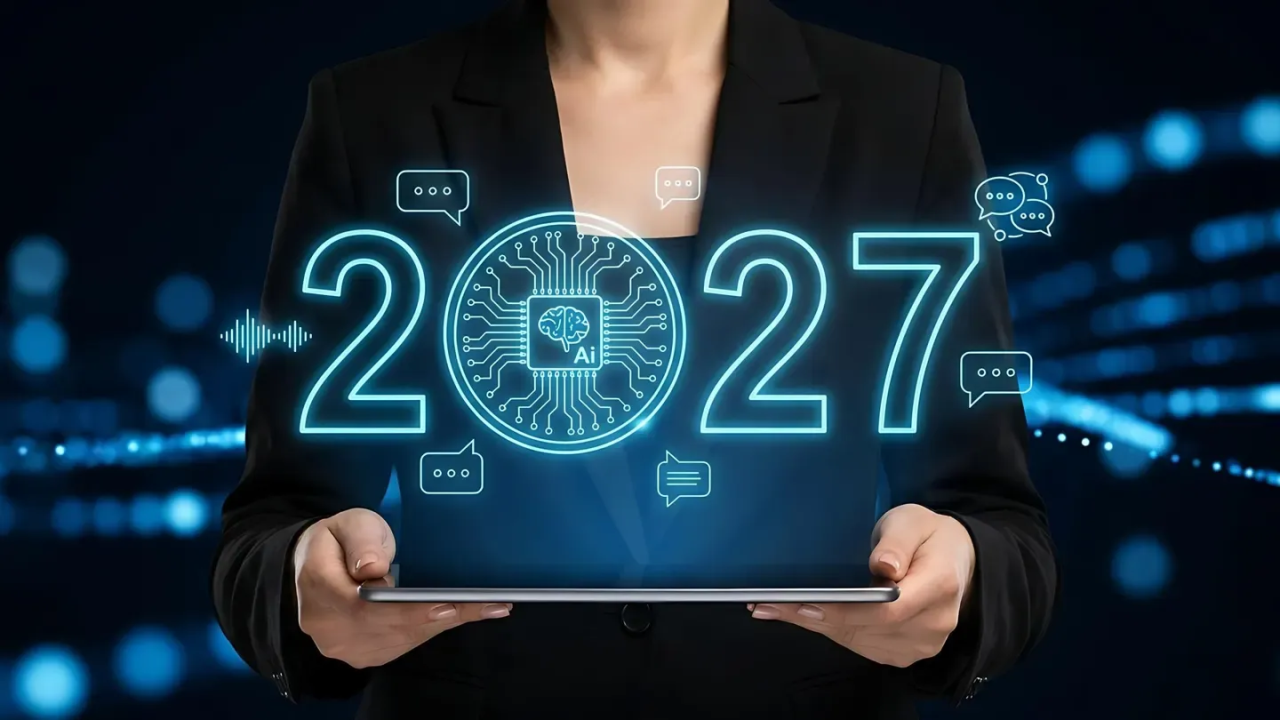
In 2027, the AI hype train rolls on. But is it about to be derailed by bubbles bursting? 2027 could be the year AI has to prove itself.
After years of extraordinary investment, breathless hype and rapid advances, the pressure is growing to show that AI can deliver real value without creating risks we cannot control.
At the same time, AI is becoming harder to ignore. It is moving into our workplaces, factories, scientific laboratories and critical infrastructure, while increasingly influencing the services we use and the decisions that affect our lives.
From fears of an AI bubble and autonomous cyberattacks to humanoid robots, self-improving AI and an intensifying global technology race, these are the trends I believe will define AI in 2027.
The AI Landscape Post-Bubble
Is the AI bubble about to burst? When will it happen, and why? Just some of the questions that no one, well, hardly anyone, is talking about in 2027.
By now, most accept that we’re in unknown territory, and there’s no reason to assume we’re simply replaying the dot-com crash. But it’s still unclear whether AI-driven growth and productivity gains can justify today’s extraordinary levels of spending indefinitely.
The point is that this year, more of us are accepting that we simply don’t know what’s going to happen. So, in 2027, there’s less talk of imminent crashes and more focus on building and delivering value that can endure, whichever way the markets go.
Automated Cyber Attacks And Data Breaches
This year’s Hugging Face attack woke a lot of people up to the possibility that rogue AI agents could deceive us and cause real harm. Or was it all just a marketing ploy designed to convince us that AI really works?
Whatever side of the fence you’re on, we’re going to see and hear a lot more about incidents like this in 2027. They’re tied to wider debates around AI safety, ethics and regulation, but it’s the dramatic real-world incidents that will grab the headlines and shape public opinion.
The Rise Of The Robots
Are we going to see thousands of humanoid robots marching into factories and workplaces in 2027? Well, most of us probably won’t. But if everything goes according to big tech’s plans, workers in some sectors could start to work side by side with robotic colleagues.
Plans are already underway to deploy them across car manufacturing, warehouses and logistics, and models you might see in the metallic flesh include Agility Robotics’ Digit and Apptronik’s Apollo.
There’s no firm release date, but Tesla’s Optimus may even make its debut in 2027, positioned as one of the first mainstream “everything” humanoids, ready to help around the house as well as work on the factory floor.
Recursive Self-Improvement
Whether it’s tech companies claiming to have achieved it, doomers calling for it to be banned, or skeptics calling it a con, recursive self-improvement will be one of the hottest AI topics of the next 12 months.
The basic premise, AI that improves itself, has already been shown to work, with models writing their own code and generating their own training data. What remains to be seen is just how much faster and more capable this can make AI.
And, of course, whether it could eventually send AI spiraling out of our control, with potentially harmful consequences.
The Geopolitics Of AI
AI will continue to be used as a political weapon by nations against their perceived enemies and competitors. In 2027, however, the scale of the battlefield could increase dramatically.
Alongside regulation, export restrictions and tariffs designed to preserve competitive advantage, governments are also looking at exerting greater control over the development of AI, up to and including talks of a global shutdown.
Neither the USA nor China, the two AI superpowers, will want to risk ceding advantage to the other. That means any serious attempt to slow, restrict or coordinate advanced AI development is likely to become a major political issue over the next year.
Accelerating AI Legislation And Regulation
As world leaders consider the international ramifications of AI, governments will also push ahead with national regulation. But it will become increasingly obvious that the machinery of government simply isn’t moving quickly enough to keep pace.
Europe has postponed its rules for high-risk AI until late 2027, while the USA is still debating what a comprehensive federal framework should look like. We can expect growing frustration over this as AI increasingly affects people’s lives before many of the safeguards designed to protect them are fully in place.
Science At Machine-Speed
Science has emerged over the last few years as one of the least controversial areas of AI, and one where even the most ardent AI doomers find it difficult to deny that real progress is being made.
Based on current research, we should expect further advances in drug discovery, protein design, materials science and meteorology. Science startups are also building autonomous laboratories where AI agents can design, run and report on their own experiments.
This could create much faster feedback loops and, hopefully, accelerate our understanding of everything from new medicines and materials to the universe itself.
Paying The Bills
More than ever, the pressure is on technology companies to prove they can generate real value, not just investment, hype and headlines.
To justify capital expenditure that JP Morgan estimates at $697 billion this year, shareholders will increasingly expect to see real returns. And ultimately, there’s only one place that money can come from, us, through higher cloud service charges, subscriptions and energy costs.
With the age of subsidized AI likely to end at some point, 2027 could be the year businesses and consumers start paying much closer attention to what AI is actually costing them, and cutting back on services they simply don’t use enough to justify.
If the last few years were about discovering what AI can do, 2027 will increasingly be about deciding what we actually want it to do, who controls it and who pays for it. The technology will keep moving quickly, but the biggest questions will increasingly be about value, trust, safety and how prepared we are for AI to become a much more powerful force in business and everyday life.
Frequently Asked Questions
Related Articles

The AI Cold War Is Here, And Every Business Will Feel The Impact
In 2026, the decisions that will impact the future of AI and business are increasingly being taken outside of boardrooms and[...]
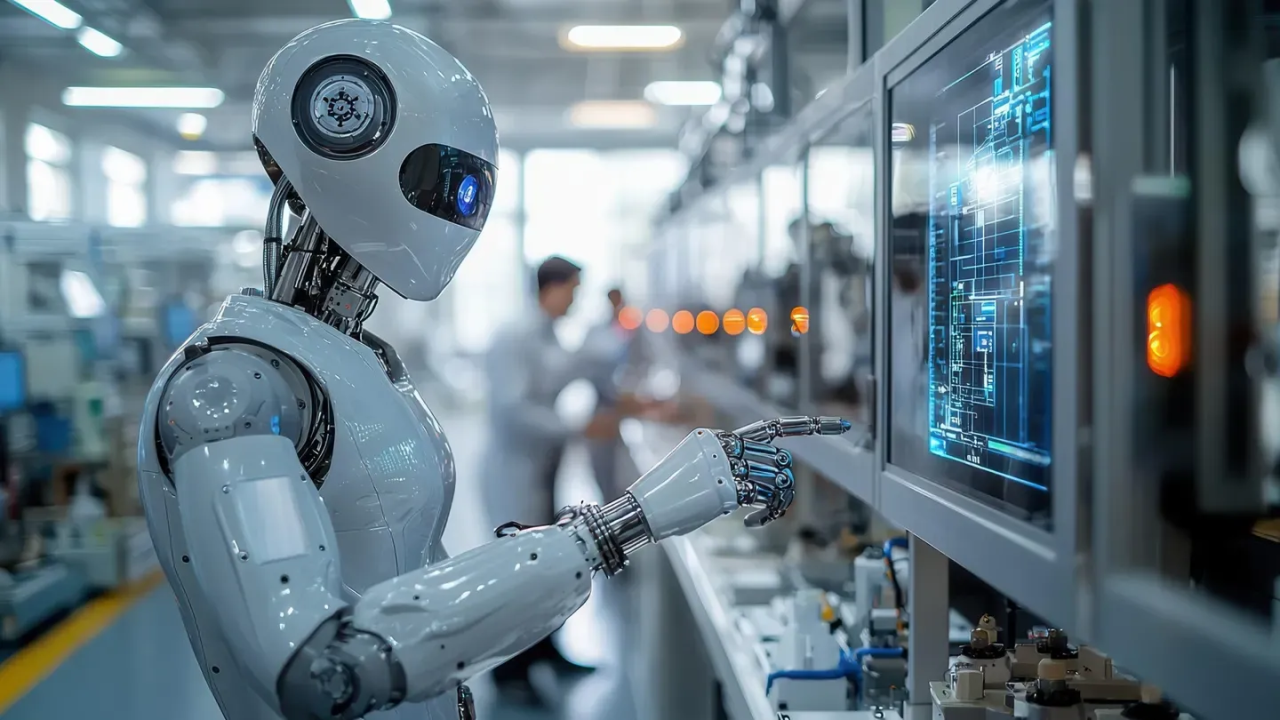
Humanoid Robots Are Coming, Here’s What Everyone Needs To Know
More than one billion humanoid robots could be living and working alongside us by 2050. That is Morgan Stanley's forecast, and[...]

How Maersk Is Using AI To Survive The New Era Of Tariff Chaos
In recent years, chaotic and unpredictable changes to international trade tariffs and regulations have created turbulence for companies importing and exporting[...]

AI Girlfriends Are Reaching Children, And We Need To Talk About What That Could Mean For Boys
What happens when a boy learns about intimacy from a girlfriend who is always available, endlessly customizable and incapable of saying[...]
How Siemens Is Bringing Generative AI To The Factory Floor
Generative AI is moving out of the chatbot and onto the factory floor. Siemens is putting the technology to work to[...]

Can AI Really Blackmail Or Hack You?
If you’re one of the many people who feel scared about how powerful AI is becoming, recent events probably haven’t done[...]

Sign up to Stay in Touch!
Bernard Marr is a world-renowned futurist, influencer and thought leader in the fields of business and technology, with a passion for using technology for the good of humanity.
He is a best-selling author of over 20 books, writes a regular column for Forbes and advises and coaches many of the world’s best-known organisations.
He has a combined following of 4 million people across his social media channels and newsletters and was ranked by LinkedIn as one of the top 5 business influencers in the world.
Bernard’s latest book is ‘Generative AI in Practice’.
Social Media