
The True Value Of Data And AI In Human Resources
3 January 2024
As we venture deeper into the digital era, the scope and possibilities of data and artificial intelligence (AI) in human resources (HR) are expanding at an unprecedented rate.

As I discuss in my new book ‘Data-Driven HR: How to Use AI, Analytics and Data to Drive Performance’ (2nd edition), HR is no longer just a supporting actor in companies. People management departments are now stepping into the spotlight and are actively guiding and informing business strategies with rich, data-derived insights.
By deploying AI tools, HR is becoming more adept at providing better experiences for employees — and these technologies are also being used to streamline HR processes and services.
Let’s dig into the three most significant areas where data and AI are bringing considerable value and fundamentally influencing the way businesses operate.
The Three Pillars Of Data-Driven HR: Decision-Making, Employee Services, And Efficiency
Data and AI can create value in organizations in three crucial ways:
● Facilitating a more informed decision-making process
● Improving service delivery to employees (and potential candidates)
● Optimizing HR service efficiency
Let's dive deeper into each of these.
Empowering Decisions With Data-Driven HR Insights
HR professionals are now using data and AI to equip decision-makers with critical information, create valuable people-centric reports, and enlighten leaders about what's happening on the ground from moment to moment.
AI can also forecast upcoming people-related issues, acting as an early warning system, which can help organizations future-proof their systems and processes. For example, AI could predict a skill deficit so HR could ramp up recruiting in a particular area.
Juniper Networks, a networking hardware firm, uses LinkedIn data and analytics to track where high-performing employees come from and understand where they migrate when they leave Juniper. This information allows the company to understand career trajectories better and make more informed decisions to attract and retain talent.
Google's Project Oxygen is another instance of data-driven decision-making in HR. The project aimed to identify the characteristics of effective managers within Google. By analyzing data sets, the project identified the key characteristics of successful managers and then developed specific training programs and feedback mechanisms to improve management quality across the company.
Enhancing Service Delivery For Employees
The primary role of HR revolves around catering to the organization's workforce. This can include:
● Providing exceptional recruitment services
● Delivering opportunities for training and development
● Creating and implementing comprehensive wellness programs
● Designing safe working conditions
By leveraging data and AI, HR teams can improve all of these services and provide more value to employees throughout their journey in the organization.
Walmart, for example, uses AI to guide employees in choosing the most suitable medical providers for their needs.
IBM uses AI in its HR operations to provide a better experience for its employees. For instance, the AI virtual assistant "Watson" helps IBM employees with different queries, ranging from company policies to technical support, offering personalized answers and reducing response times.
Boosting HR Service Efficiency
AI can be a game-changer for HR teams looking to improve efficiency.
Using data and AI can help HR teams automate procedures with chatbots, create better onboarding processes, leverage metaverse environments for more immersive training, and more.
Johnson & Johnson deployed an AI-based writing tool, Textio, to identify unconscious bias in their job listings. Upon identifying a masculine tilt in the language of many of their job postings, they made some AI-driven adjustments that led to a 9% uptick in female applicants.
Unilever employs AI to streamline the initial stages of its recruitment process. Candidates are asked to play a number of games that test their logic, aptitude, reasoning, and appetite for risk. Then the HR team uses machine learning algorithms to assess candidates’ suitability for the role they have applied for, by matching their profiles against previously successful employees. This approach has not only improved the efficiency of Unilever's recruitment process but also provided a more engaging candidate experience.
Reimage HR Through Data And AI
Data and AI are more than just buzzwords — they are the drivers of meaningful, beneficial change within HR. As businesses move forward in this digitally connected world, prioritizing the three HR domains we’ve discussed above can create a significant difference in achieving strategic goals and building a work environment where employees thrive.
Related Articles

The Hidden Costs Of AI Data Centers, And Who Really Pays
Behind every AI chatbot query and autonomous agent action sits a data center, and the biggest ones consume staggering amounts of[...]

The AI Agent Boom Has A Trust Problem. Here’s How Business Leaders Can Fix It
The most expensive mistake your company makes next year could come from an employee who never sleeps, never takes a holiday[...]

AI Is Making Us Faster. So Why Aren’t Businesses More Productive?
Paid partnership with Atlassian AI is becoming remarkably good at helping us complete individual tasks faster. AI can now write code,[...]
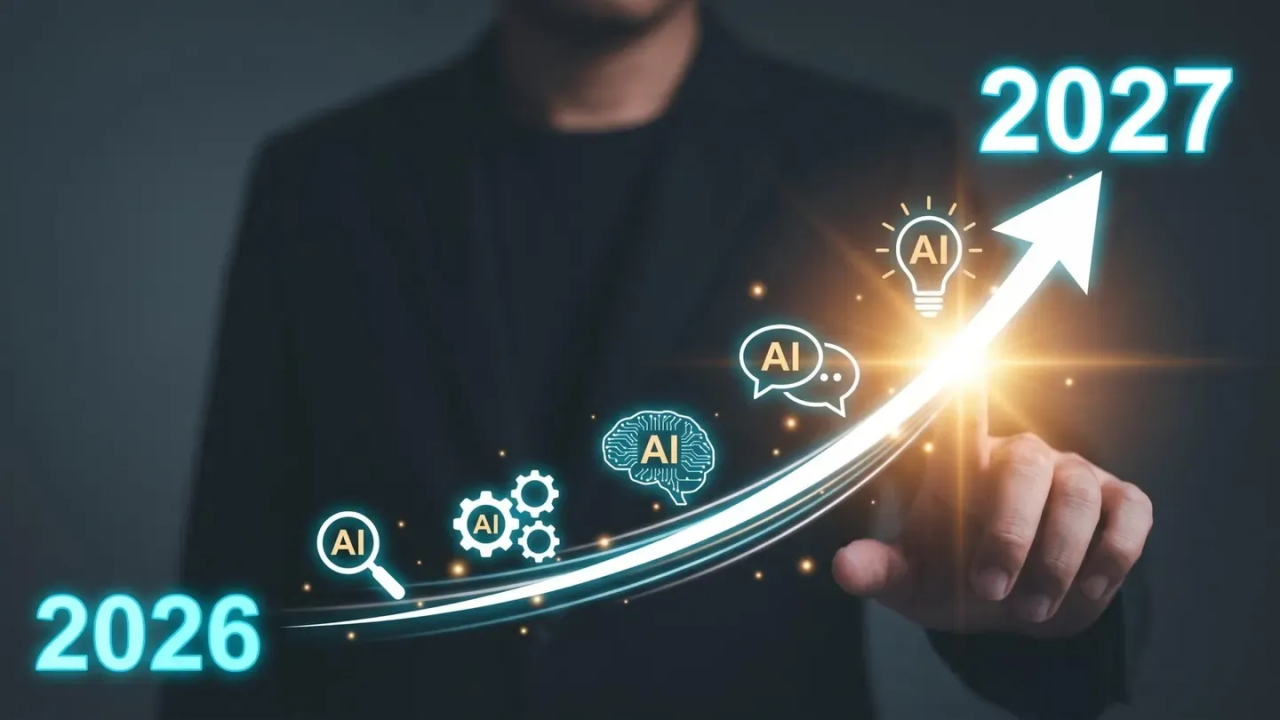
The Top 7 Technology Trends For 2026
Technology is moving into a new phase in 2027, and once again AI sits at the center of it. But this[...]

AI Is Growing Up: What World Summit AI 2026 Revealed About The Future Of Business
The AI industry is entering a new phase, where autonomous agents, business transformation, governance and human wisdom are taking center stage.[...]

How AI, Drones And Autonomous Vehicles Are Transforming The British Army
The British Army is entering a new era in which soldiers will increasingly fight alongside drones, robots and AI-powered systems. I[...]

Sign up to Stay in Touch!
Bernard Marr is a world-renowned futurist, influencer and thought leader in the fields of business and technology, with a passion for using technology for the good of humanity.
He is a best-selling author of over 20 books, writes a regular column for Forbes and advises and coaches many of the world’s best-known organisations.
He has a combined following of 4 million people across his social media channels and newsletters and was ranked by LinkedIn as one of the top 5 business influencers in the world.
Bernard’s latest book is ‘Generative AI in Practice’.
Social Media