

What is Computer Vision And The Amazing Ways It’s Used In Business
2 July 2021
It turns out that something most humans take for granted—the ability to see, process and then act on visual input—is extraordinarily difficult to replicate in machines. That’s precisely what computer vision (CV) aims to do. While perhaps not as advanced as human sight, computer vision has developed to the point it’s very useful in business today. Here’s more about what computer vision is and how it’s used in business.
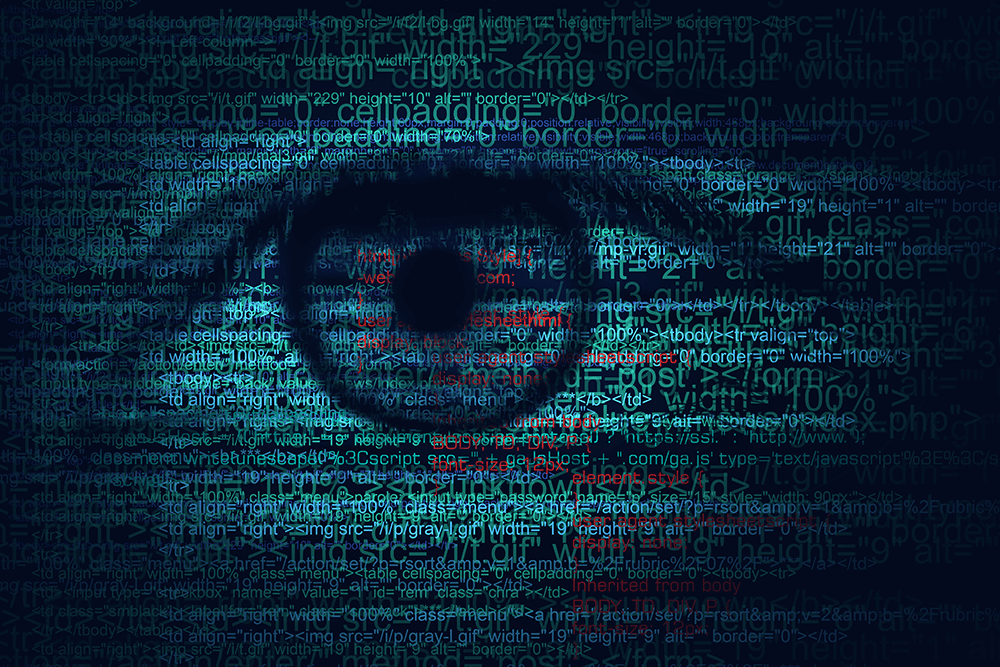
What is computer vision?
Computer vision describes the process when a computer using artificial intelligence algorithms can identify and process images (photos, videos, etc.) and then create an appropriate output from the analysis because the computer can actually “understand” the content. Specifically, computer vision can classify, identify, verify, and detect objects. The developments with computer vision in recent years were facilitated by machine learning technology—in particular, the iterative learning process of neural networks—and significant leaps in computing power, data storage, and high-quality yet inexpensive input devices.
There are three main components to computer vision.
1. Acquire the image: When a digital camera captures an image, it creates a digital file composed of zeros and ones.
2. Process it: Algorithms are used to determine basic geometric elements to build images out of the binary data.
3. Analyse and understand: In this final step of computer vision, the data is analysed. High-level algorithms are used to then make decisions based on the images.
Since the very youngest of humans can process images and understand them, the challenges of replicating that ability in machines were underestimated. What first seemed like a simple problem to solve, turned out to require decades of research. There’s a lot of complexity in the visual world, and there is still a lot unknown about how human vision works and how the brain perceives visual input.
Although the field of computer vision has overcome many challenges thus far, there are still hurdles to tackle depending on what the computer vision is being used for and the data it’s able to acquire. Computer vision requires a lot of data processing power and memory, plus its results can be impacted by the quality of the images/data. Computer scientists are still working on optimising computer vision for all applications.
How is computer vision used in business?
There are endless applications where the ability to extract meaning from “seeing” visual data is useful. Computer vision combines with other technologies such as augmented and virtual realities to enable additional capabilities.
Facial recognition, powered by computer vision, is used for surveillance and security systems as well as the technology behind Facebook that identifies people to “tag” in photos. China uses facial recognition technology in police work, payment portals, and more. Even retail stores use the technology to monitor inventory, track customers through the store, and allow customers to bypass the cash register by paying virtually when facial recognition technology puts the items on their bill.
Many car manufacturers from Ford to Tesla are scrambling to get their version of the autonomous vehicle into mass production. Computer vision is a critical technology that makes autonomous vehicles possible. The systems on autonomous vehicles continuously process visual data from road signs to seeing vehicles and pedestrians on the road and then determine what action to take.
Computer vision in medicine helps in diagnosing disease and other ailments and extends the sight of surgeons during operations. There are now smartphone apps that allow you to diagnose skin condition using the phone’s camera. In fact, 90 percent of all medial data is image-based—X-rays, scans, etc. And a lot of this data can now be analysed using algorithms.
Digital marketing: By using computers to sort and analyse through millions of online images, marketers can bypass traditional demographic research and still target marketing to the right online audience and do this work dramatically quicker than humans could. Marketers even use computer vision to ensure ads are not placed near content that is contradictory or problematic for its audience.
Financial institutions use computer vision to prevent fraud, allow mobile deposits, and display numerical information visually.
In manufacturing, computer vision makes things more efficient, effective, and safe. It’s used in predictive maintenance to identify an issue before any breakdowns occur as well as in quality control measures. The quantity of items a machine can verify outpaces human’s ability to do the same dramatically.
The agriculture industry uses computer vision to make operations more successful by monitoring fields looking for signs of disease or pests so swift action can be taken to eradicate it. John Deere introduced a semi-autonomous combine harvester that can find the optimal route through crops after analysing the quality of grains that are harvested.
Handwriting extraction and analysis: Computer vision can translate handwritten meeting notes or creative brainstorming into digital formats which make it easier to share with others in the company.
The applications of computer vision are so varied that it is hard to imagine a business that couldn’t benefit from it.
Related Articles
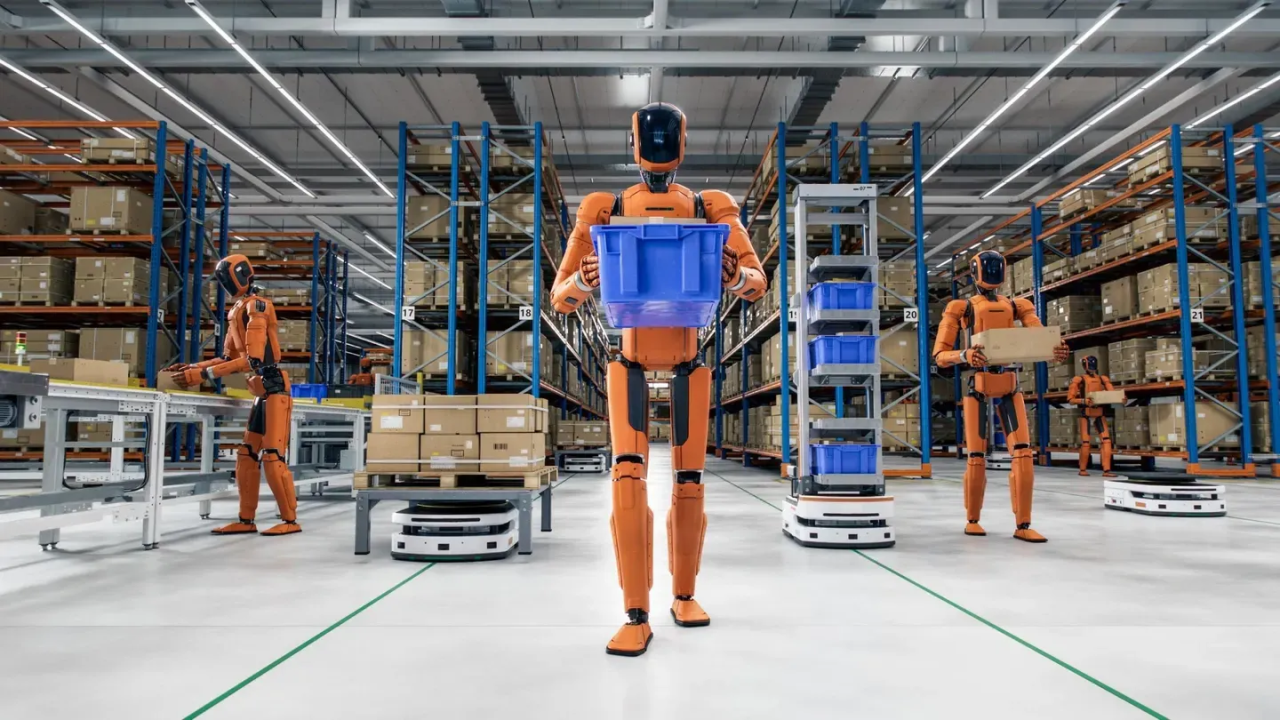
Workers Are Going On Strike Over Humanoid Robots, And This Is Just The Beginning
When workers go on strike because they fear robots taking their jobs, the age of humanoid automation suddenly feels very real.[...]
The AI Cold War Is Here, And Every Business Will Feel The Impact
In 2026, the decisions that will impact the future of AI and business are increasingly being taken outside of boardrooms and[...]
Humanoid Robots Are Coming, Here’s What Everyone Needs To Know
More than one billion humanoid robots could be living and working alongside us by 2050. That is Morgan Stanley's forecast, and[...]

How Maersk Is Using AI To Survive The New Era Of Tariff Chaos
In recent years, chaotic and unpredictable changes to international trade tariffs and regulations have created turbulence for companies importing and exporting[...]

AI Girlfriends Are Reaching Children, And We Need To Talk About What That Could Mean For Boys
What happens when a boy learns about intimacy from a girlfriend who is always available, endlessly customizable and incapable of saying[...]
How Siemens Is Bringing Generative AI To The Factory Floor
Generative AI is moving out of the chatbot and onto the factory floor. Siemens is putting the technology to work to[...]

Sign up to Stay in Touch!
Bernard Marr is a world-renowned futurist, influencer and thought leader in the fields of business and technology, with a passion for using technology for the good of humanity.
He is a best-selling author of over 20 books, writes a regular column for Forbes and advises and coaches many of the world’s best-known organisations.
He has a combined following of 4 million people across his social media channels and newsletters and was ranked by LinkedIn as one of the top 5 business influencers in the world.
Bernard’s latest book is ‘Generative AI in Practice’.
Social Media