
How JPMorgan Chase Is Building The AI-Powered Bank Of The Future
12 August 2026
Global banking giant JPMorgan Chase has hugely ambitious plans for AI agents. They involve transforming virtually the entire company into a connected ecosystem of intelligent, automated processes that shape every aspect of the client experience.
The scale of the transformation is enormous. More than 230,000 staff already use its proprietary AI platform, LLM Suite, to draft reports, automate compliance processes, identify fraudulent activity, analyze markets and provide customer support.
JPMorgan has topped the Evident AI maturity index for four consecutive years, not by bolting chatbots onto existing systems, but by treating AI as an organization-wide transformation rather than a series of isolated pilots.
The result is one of the clearest pictures we have yet of what an agentic enterprise looks like. Automated customer interactions, augmented decision-making and entire workflows managed end-to-end by machines.
So, what can we learn from this about how AI will reshape other businesses? And where does it leave the human workers trying to figure out where they fit in now?
The Agentic Bank
Top-level thinking about enterprise AI on this scale starts with workflows rather than tools.
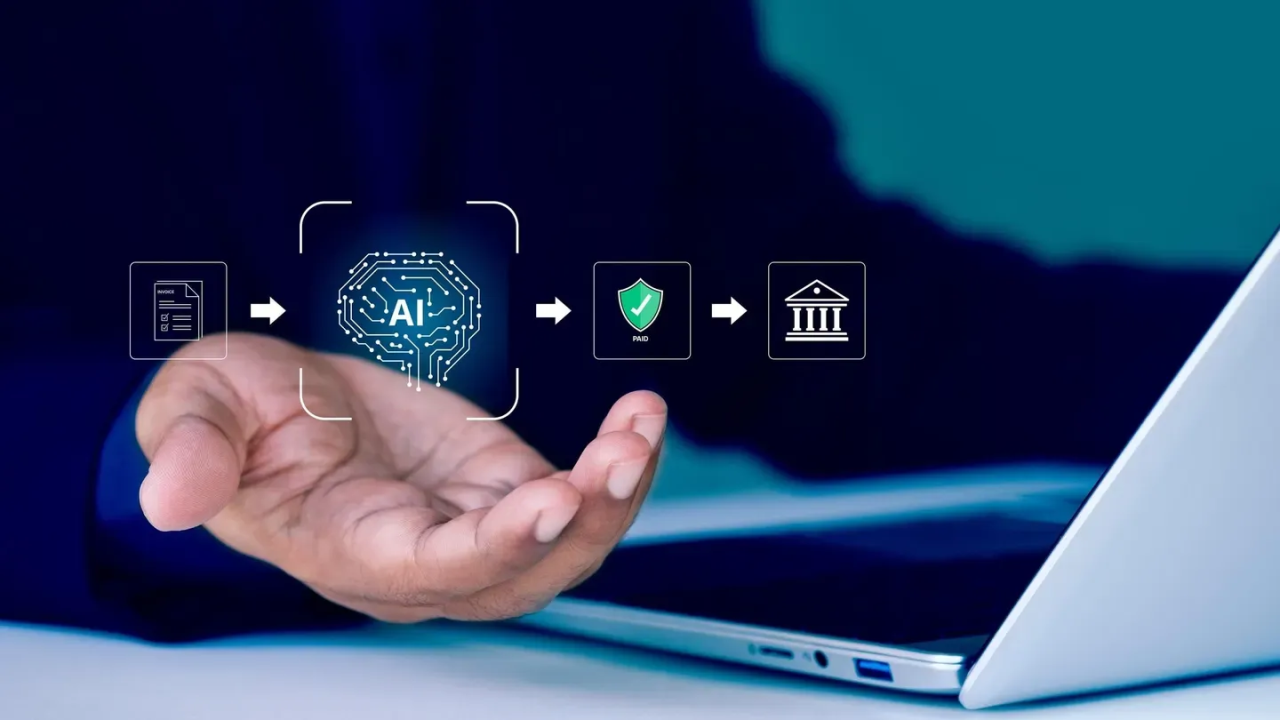
Many tasks in financial services involve taking prescribed, repetitive actions and decisions based on strict logic. They often involve cooperation between multiple departments, systems and data sources. AI agents are built for exactly this. Unlike generative AI chatbots that simply respond to questions, they take action, interact with external systems and are “always on”, capable of managing real-time running processes.
One agent might gather and verify information, one might conduct compliance checks, and another might generate personalized reports for individual stakeholders. Working together, they can manage workflows that required multiple people to pass tasks between different departments.
JPMorgan has built agentic services, including its COiN platform for automating analysis of legal documents, CoachAI, which provides real-time advice to wealth managers and its intelligent call center assistant, EVEE.
Software engineers at the bank also have access to their own proprietary coding assistant, optimized for tasks they frequently encounter, such as migrating legacy systems to newer infrastructure.
Tying it all together is LLM Suite, which gives workers across every department access to agentic tools, data and systems. The idea is to make AI available wherever it’s needed, not just where IT have got round to deploying it.
The results so far are significant. JPMorgan says that employees using LLM Suite have made efficiency gains of 30% to 40%, and the COiN platform has automated legal work that would otherwise have taken 360,000 hours to complete.
In total, the bank saved around $2 billion per year up until 2025 thanks to its AI initiatives, according to CEO Jamie Dimon.
But questions still remain around how much trust should be placed in autonomous machine decision-making and what this means for people doing the work today.
Where Do Humans Fit In?
JPMorgan believes its agentic transformation will drive growth by automating time-consuming processes and improving customer experience. The idea is that machines will take on high-volume repetitive work, freeing humans to do more useful things.
But what really happens to those humans?
Well, the bank has been upfront about the fact that some of them will have to go. In 2025, it told investors that AI would enable a 10 percent headcount reduction in operations and account services, noting that this was a conservative estimate.
Dimon himself has said that he believes AI will eliminate jobs, and anyone who disagrees should “stop sticking their heads in the sand.”
But so far, its headcount has remained steady. Reports suggest that while there has been a reduction in administrative and support functions, the number of employees in client-facing and technical roles has increased.
One proposal being considered involves reducing the ratio of junior bankers to senior bankers from 6:1 to 4:1. In addition to automating routine work, this would allow seniors to spend more time mentoring and developing each junior.
Critically, the bank treats managing this displacement of workers as a strategic objective. Its retraining and redeployment programs are specifically designed to retain experience and skills the bank has invested in developing.
Put together, we can see the bank has a suite of strategies aimed at managing the impact and maximizing the opportunities offered by AI agents. But while this all might seem simple to a company with an $18 billion technology budget, what can the rest of us take from it?
What Can We Learn From JPMorgan Chase About Agentic AI Strategy?
JPMorgan’s agentic ambitions are possible because it has prioritized new ways of thinking as well as the new technologies becoming available.
By focusing on workflows, not tools, it can apply AI directly to strategic priorities like reducing waste or improving the customer experience. Businesses that struggle often take the easy approach of bolting chatbots onto existing services and hoping good things happen. Unfortunately, without strategic direction, they rarely do.
It also understands that building connected infrastructure so AI can access the thousands of tools and applications its employees use every day is a key challenge. Building the connective tissue that links AI to those tools is what will separate the genuinely agentic companies from those with a collection of pilots and proofs-of-concept.
And while it is transparent in its views on the reality of human redundancy and displacement, it is also proactively putting measures in place around training and reskilling. The idea is to ensure the company can reduce headcount where needed while retaining skills and experience. This is likely to be considerably cheaper than losing trusted people and having to retrain their replacements from scratch.
These are strategic moves that account for billions in infrastructure spending at big banks like JPMorgan. But smaller businesses can do many of the same things: start with workflows, build connected infrastructure and make people beneficiaries of your strategy rather than casualties.
Related Articles
Workers Are Going On Strike Over Humanoid Robots, And This Is Just The Beginning
When workers go on strike because they fear robots taking their jobs, the age of humanoid automation suddenly feels very real.[...]

The AI Cold War Is Here, And Every Business Will Feel The Impact
In 2026, the decisions that will impact the future of AI and business are increasingly being taken outside of boardrooms and[...]

Humanoid Robots Are Coming, Here’s What Everyone Needs To Know
More than one billion humanoid robots could be living and working alongside us by 2050. That is Morgan Stanley's forecast, and[...]
How Maersk Is Using AI To Survive The New Era Of Tariff Chaos
In recent years, chaotic and unpredictable changes to international trade tariffs and regulations have created turbulence for companies importing and exporting[...]

AI Girlfriends Are Reaching Children, And We Need To Talk About What That Could Mean For Boys
What happens when a boy learns about intimacy from a girlfriend who is always available, endlessly customizable and incapable of saying[...]

How Siemens Is Bringing Generative AI To The Factory Floor
Generative AI is moving out of the chatbot and onto the factory floor. Siemens is putting the technology to work to[...]

Sign up to Stay in Touch!
Bernard Marr is a world-renowned futurist, influencer and thought leader in the fields of business and technology, with a passion for using technology for the good of humanity.
He is a best-selling author of over 20 books, writes a regular column for Forbes and advises and coaches many of the world’s best-known organisations.
He has a combined following of 4 million people across his social media channels and newsletters and was ranked by LinkedIn as one of the top 5 business influencers in the world.
Bernard’s latest book is ‘Generative AI in Practice’.
Social Media